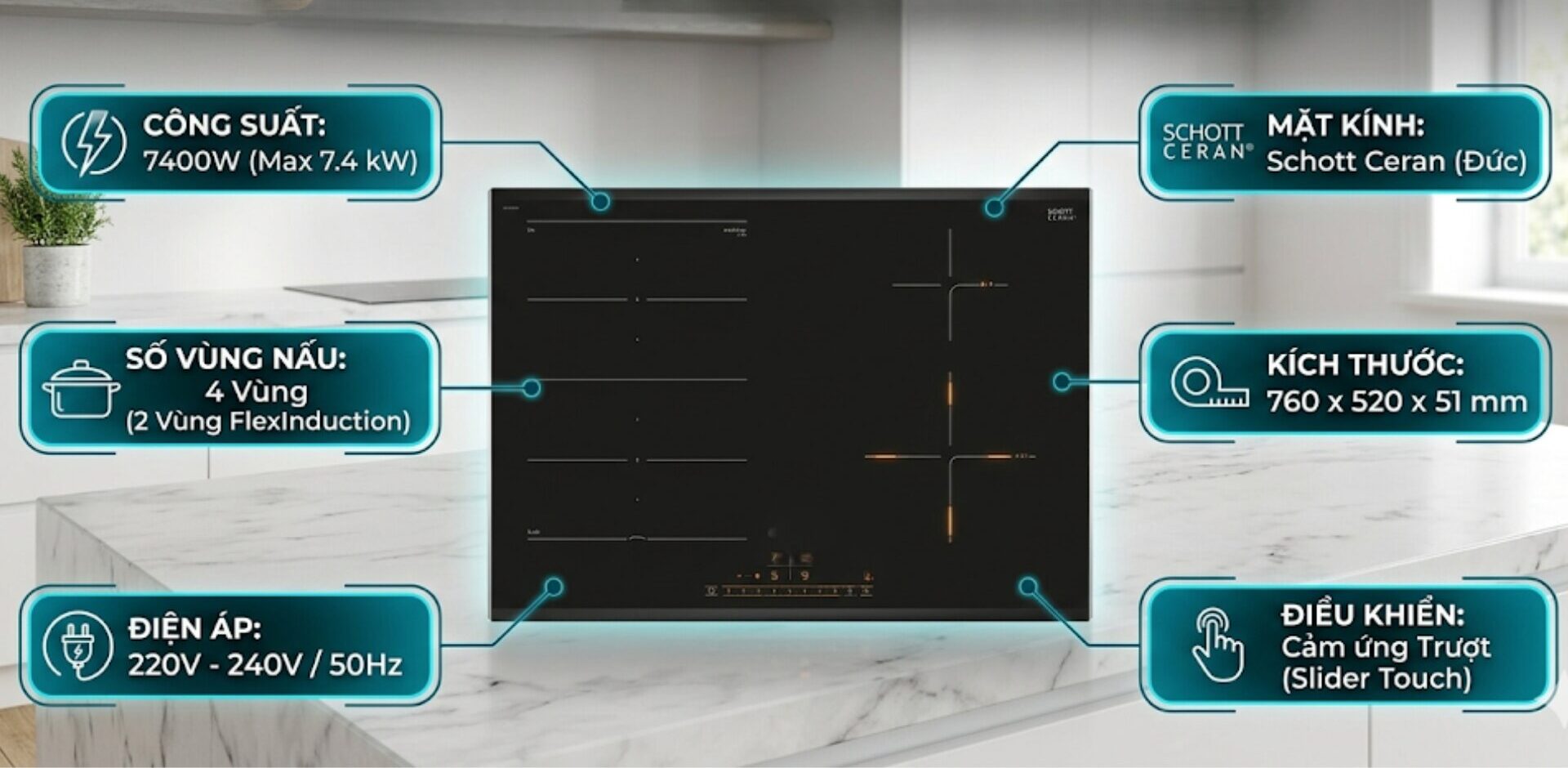
During use, the situation of the induction cooktop fan making loud noises abnormally can cause discomfort and concern about the lifespan of the cooktop. So what does this phenomenon warn about? How can it be thoroughly resolved? The following article from Köcher will help you accurately identify 6 causes of the induction cooktop fan making loud noises and guide you on how to quickly and safely handle it at home.
Overview table of signs, causes, and quick solutions
When you detect the induction cooktop fan making loud noises, you can quickly identify the issue based on the sound characteristics through the following summary table:
| Sound | Causes | Quick Solutions |
| Consistent humming | The fan is operating at full capacity to dissipate heat; light dust accumulation. | No need to worry too much, this is a normal reaction. Regularly clean the air vents. |
| Squeaking / creaking | The fan is dry, bearings are worn, or the motor is malfunctioning due to high friction. | Apply specialized lubricant to the fan shaft or replace the fan motor if it is too worn. |
| Clattering | The fan’s fixing screws are loose, the fan blades are misaligned, or there are small foreign objects stuck. | Turn off the cooktop, remove the cover to tighten the positioning screws or adjust the position of the fan blades. |
| Abnormal loud and soft sounds | The cooktop is operating at an overloaded power level or the ventilation system under the cooktop is blocked. | Reduce the cooking power, clear the space under the cooktop to create a cool airflow. |
6 causes of the induction cooktop fan making loud noises
The cooling fan plays an extremely important role in cooling the electronic components inside the induction cooktop while cooking. The issue of the induction cooktop fan making loud noises often arises from the following technical causes and usage habits:
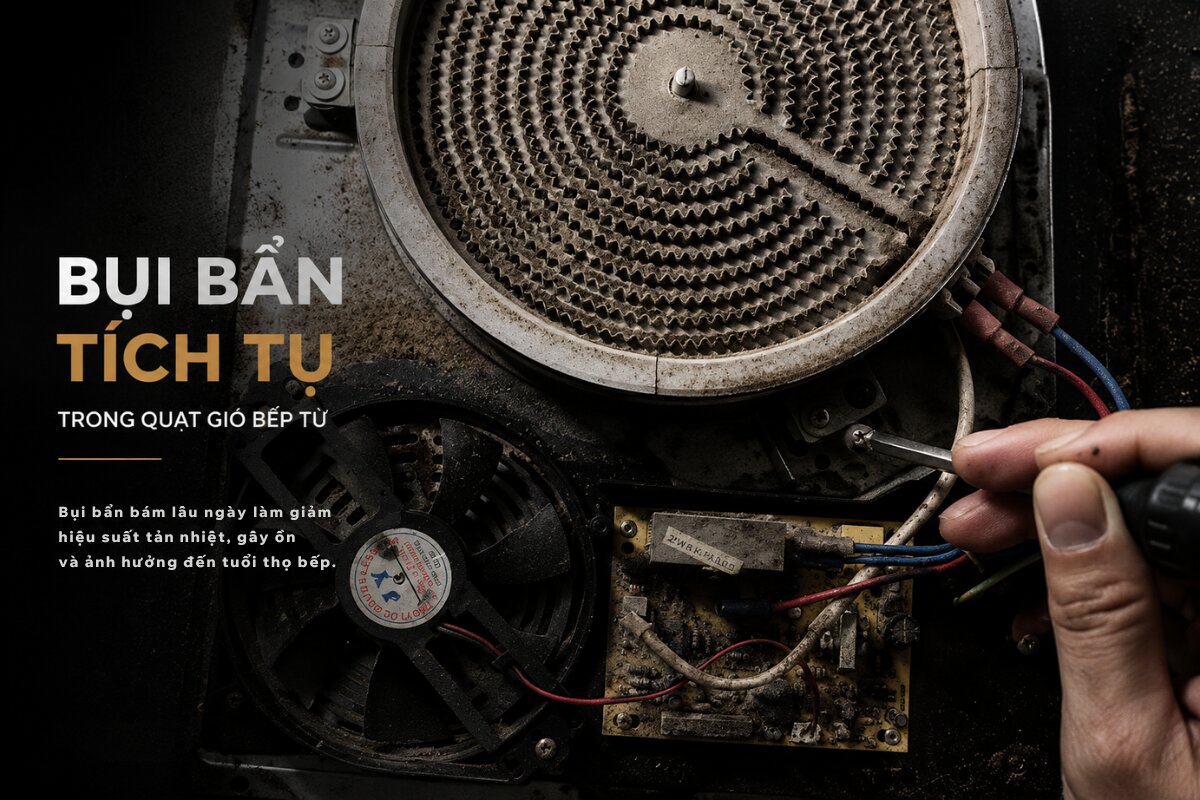
Dust accumulation in the fan causing the induction cooktop fan to make loud noises
- Signs: The fan emits a heavy humming sound, the airflow is uneven, and the amount of hot air escaping is minimal even though the fan is still running continuously.
- Causes: After a long period of use in a kitchen environment filled with grease and fine dust, dirt will cling tightly to the fan blades as well as the heat dissipation vents. This increases the weight of the fan blades and obstructs the airflow, leading to the phenomenon of the induction cooktop fan making loud noises.
Fan with dry lubricant on the rotating shaft
- Signs: The sound coming from the bottom of the cooktop is a squeak, sounding dry like metal rubbing against each other, and the volume increases over cooking time. However, due to the small size of the induction cooktop fan, technicians usually only discover the fault after removing the fan.
- Causes: The layer of oil on the fan motor’s rotating shaft has dried up due to the high temperatures radiating from the cooktop over time. When there is no lubricant, the fan shaft rubs directly against the bearings, causing extremely loud noise. If not addressed in time, the situation of the induction cooktop fan making loud noises due to dry lubricant can burn out the fan motor.
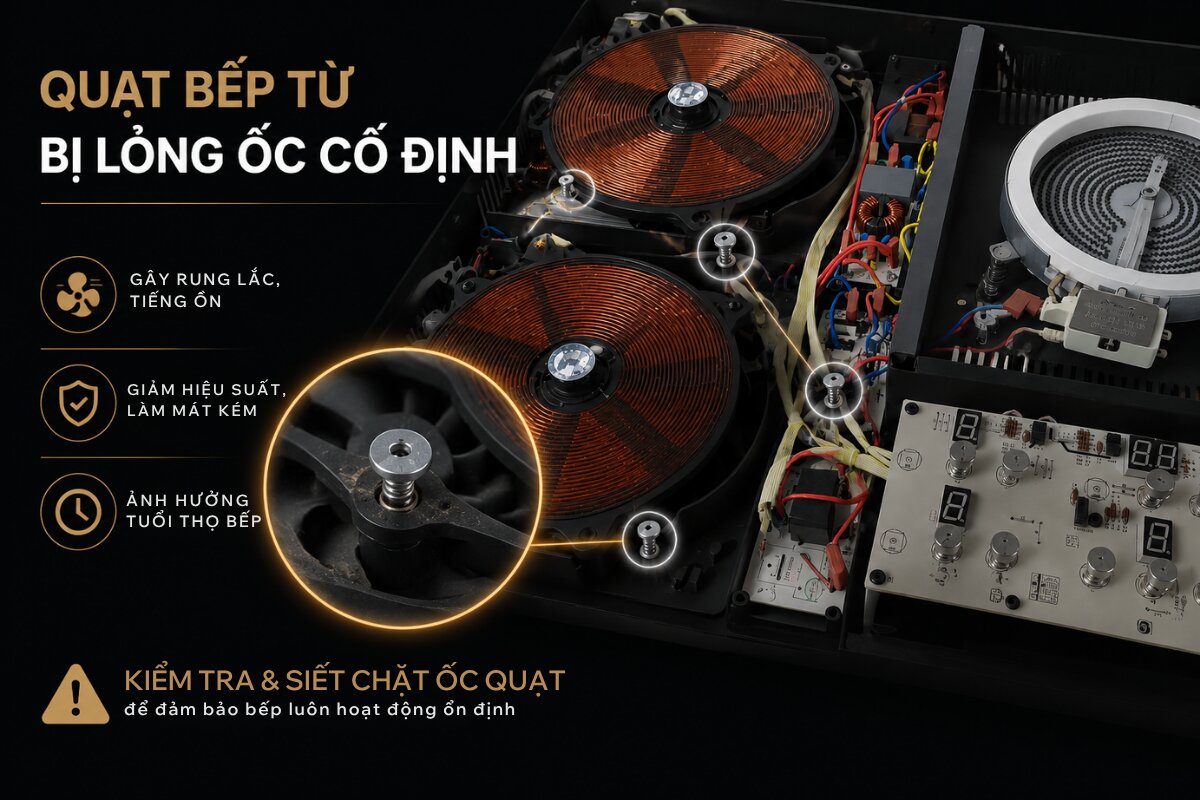
Loose fixing screws on the fan
- Signs: A clattering sound, strong vibrations at the lower part of the cooktop, especially this sound appears right when the induction cooktop is turned on.
- Causes: On low-quality cooktops, the transportation process or mechanical vibrations when the fan continuously rotates loosen the screws that fix the fan frame to the cooktop body, causing the clattering noise of loose screws.
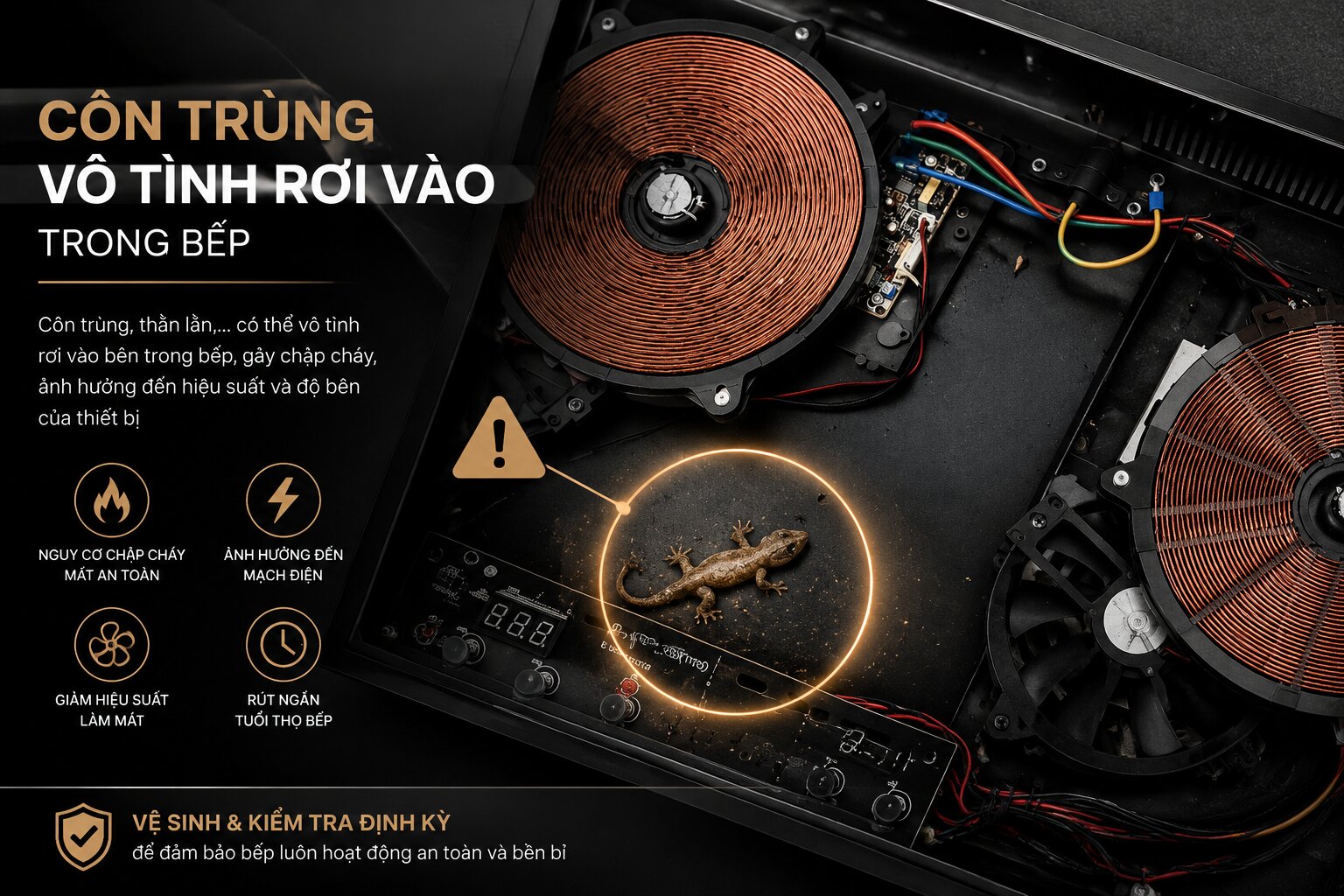
Foreign objects falling into the fan blades
- Signs: A “clack clack” sound appears from the cooktop chamber as soon as the cooling fan starts operating.
- Causes: Small foreign objects from outside such as insect remains (cockroaches, small lizards), hair strands, paper scraps, or food debris accidentally fall through the ventilation gap at the bottom of the cooktop and get stuck in the fan blades. When the fan rotates, these foreign objects continuously collide with the fan blades causing the issue of the induction cooktop fan making loud noises. However, this case is quite rare because the structure of the cooktop is very sealed.
Cooktop operating at high power for a long time
- Signs: The fan runs continuously, the cooktop shows signs of heating up quickly at the cooktop body and glass surface.
- Causes: When you continuously cook at maximum power (Booster) for a long time, components such as the inductor coil and power module (IGBT) will generate a huge amount of heat. To protect the circuit, the control system will automatically increase the fan speed to the maximum to rapidly dissipate heat, causing the induction cooktop fan to make loud noises more than usual.
Induction cooktop installed in a non-ventilated area
- Signs: The fan makes loud noises accompanied by the cooktop automatically shutting off, indicating an overheating error (such as error E1, E2) after about 10 – 15 minutes of cooking.
- Causes: When installing the built-in induction cooktop, if the cabinet space underneath is too cramped, blocked, or contains too many items, the hot air emitted from the cooktop will not be able to escape. The cooling fan must suck back the hot air to cool down, causing a significant reduction in efficiency, forcing the fan to speed up to the maximum, creating the sound of the induction cooktop fan making loud noises.
How to fix the induction cooktop fan making loud noises in detail at home
To completely resolve the issue of the induction cooktop fan making loud noises and ensure the device operates smoothly and durably, please follow the detailed instructions below:
Regularly clean the air vents, fan blades, and cooling chamber:
Before cleaning, make sure to unplug or turn off the circuit breaker of the induction cooktop. Use a handheld vacuum cleaner to remove dust from the air vents at the bottom of the cooktop.
If you have technical expertise, you can disassemble the cooktop to wipe off the dust on each fan blade with a soft damp cloth or cotton swab (note that this only applies to cooktops that are out of warranty). This helps address the issue of the induction cooktop fan making loud noises due to dust obstruction.
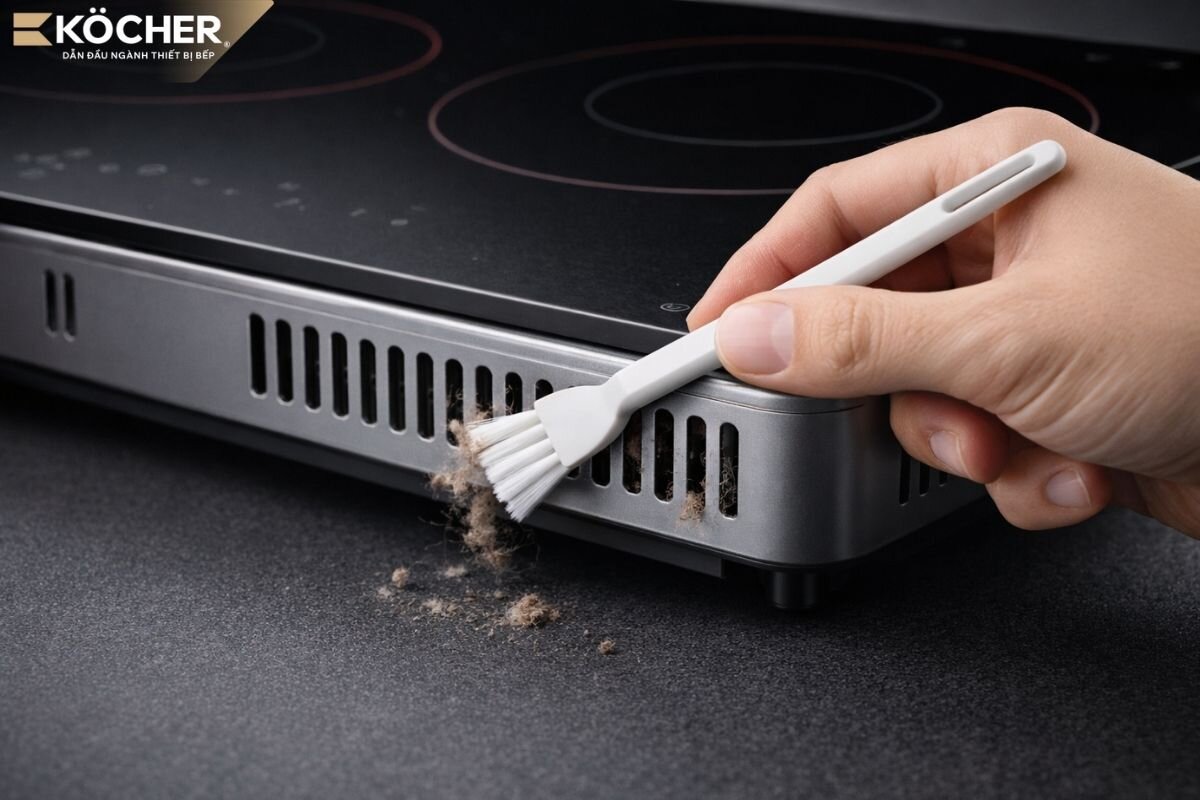
Apply specialized lubricant or replace the fan if the motor is worn:
If you determine that the squeaking noise is due to dry lubricant, you should apply 1 – 2 drops of specialized machine oil. Then, gently rotate the fan blades a few times to allow the oil to soak evenly. If the fan shaft is already loose, and the bearings are too worn causing the induction cooktop fan to make loud noises continuously, the best solution is to replace it with a new cooling fan with the same specifications.
Tighten screws and adjust the fan position
Check the entire system of screws fixing the fan to the plastic frame of the cooktop. If you find any loose screws, use a screwdriver to tighten them securely. At the same time, manually rotate the fan blades to see if they are rubbing against anything or colliding to adjust the fan’s position for balance.
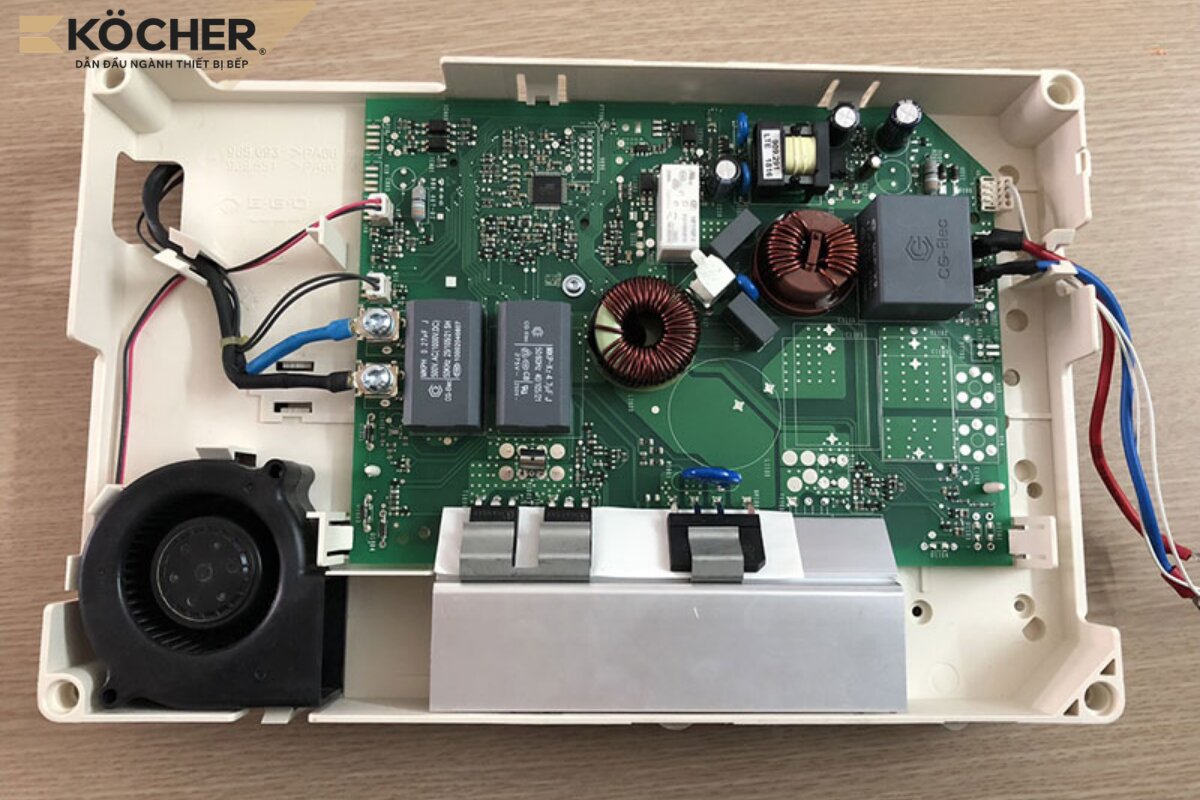 Open the cooktop cover to tighten the screws
Remove foreign objects and check the fan blades
Use medical tweezers or long tweezers to carefully remove any foreign objects, hair strands, or insects stuck inside the fan system. After removing them, check carefully if the fan blades are chipped or cracked. Chipped fan blades can also cause imbalance and lead to the induction cooktop fan making loud noises.
Reduce the cooktop power
Limit using the cooktop at maximum power continuously for many hours. When boiling water or cooking food, you should proactively lower the power to a medium level to maintain heat, helping the internal components not to overheat and the fan not to overwork.
Turn off the cooktop and let the fan run out, then turn it back on
When you just turn off the cooktop, the glass surface and internal components are still very hot. The cooling fan will continue to run for about 1 – 3 minutes to completely cool down the cooktop. If after about 10 – 15 minutes of restarting, the induction cooktop fan makes loud noises, it may be due to damaged components that need to be replaced.
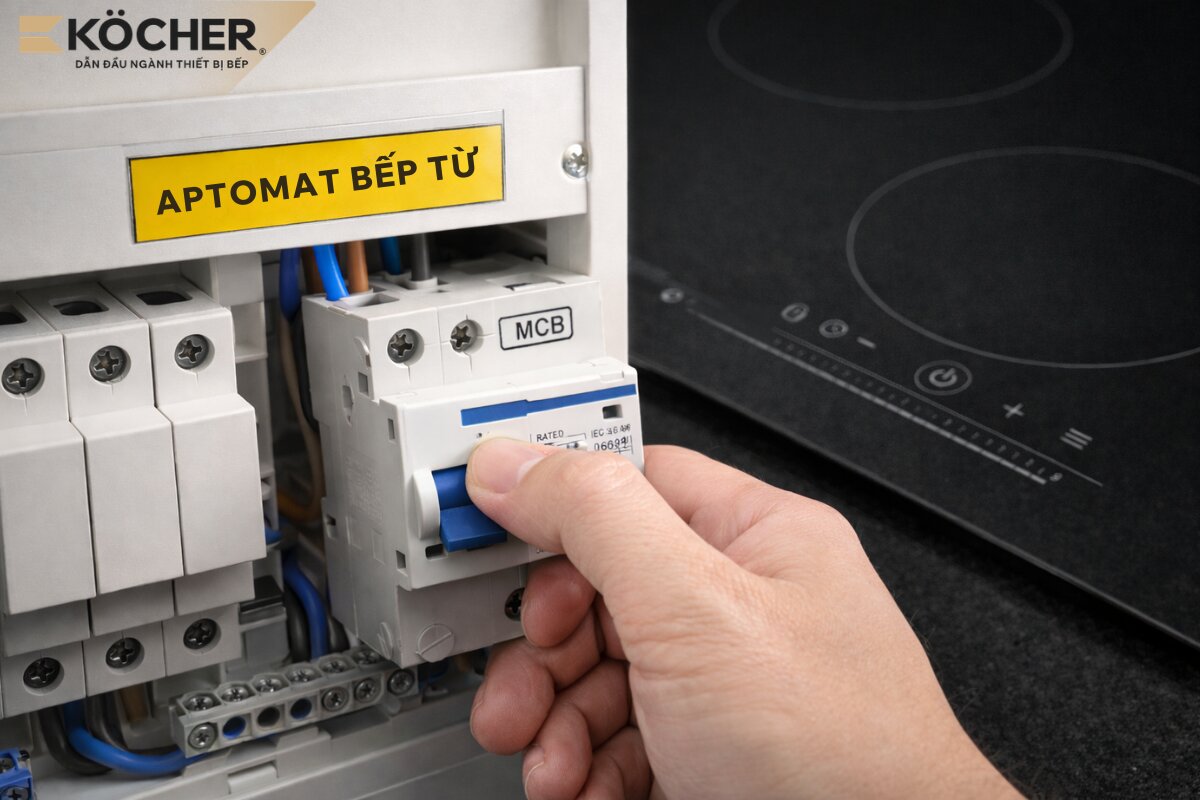 Disconnect the induction cooktop from the power source and wait about 10 – 15 minutes to address the issue of the induction cooktop fan making loud noises
Create space for the air intake/exhaust vents
For built-in induction cooktops, you need to ensure that the cabinet space underneath has a minimum clearance of 10 – 15cm from the bottom of the cooktop to the items below. Avoid stacking too many items, plastic bags, or objects that block the cooktop’s air intake vents under the cabinet, allowing hot air to escape more easily and preventing the phenomenon of the induction cooktop fan making loud noises.
The phenomenon of the induction cooktop fan making loud noises can be handled at home if the cause is due to dust, loose screws, or lack of lubricant. However, if you have applied the above measures and the noise persists, or the sound comes from the internal circuit components rather than the fan, please contact the warranty center or a professional repair service for the safest technical support.
|
For detailed information about the product, please contact Köcher – The pioneering German technology induction cooktop as per the information below:
|