When it comes to electric stoves and induction stoves, many families are still confused about which type to choose that suits their needs and kitchen space. Both are modern kitchen appliances that use electricity and have a luxurious design, but they operate on completely different principles and have distinct advantages and disadvantages. The article below will help you compare in detail to make the most suitable choice.
Distinguishing Electric Stoves and Induction Stoves
Before comparing, you need to understand the nature of each type of stove to avoid confusion when choosing:
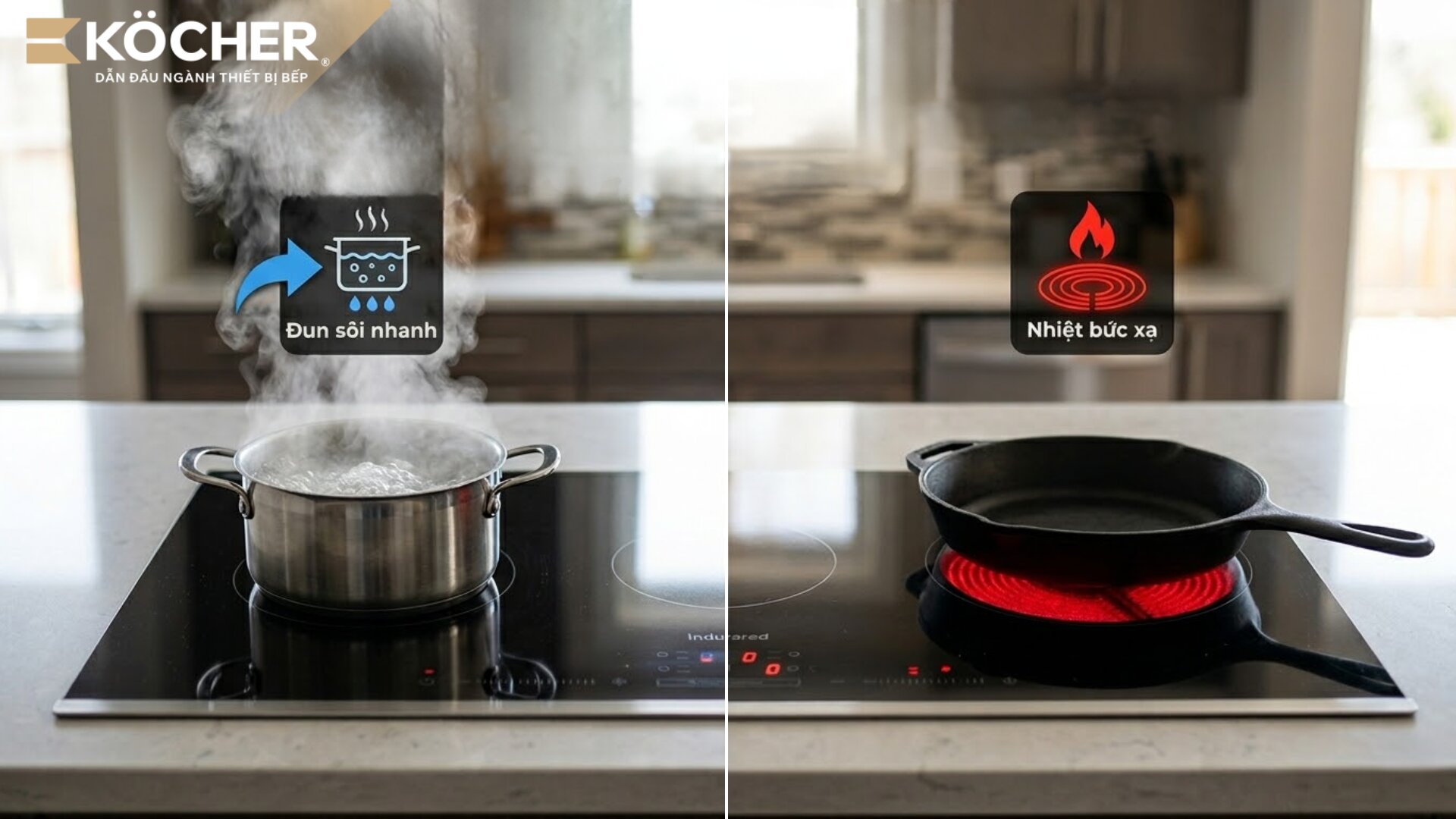
- Electric stoves (known in Vietnam as infrared stoves) operate by using heating wires or halogen bulbs to heat the heating plate. The heat from the plate will transfer through the glass surface and then to the bottom of the pot through the usual conduction mechanism.
- Induction stoves operate on the principle of electromagnetic induction: the copper coil inside generates a magnetic field, directly affecting the ferromagnetic bottom of the pot to generate heat. The heat is generated right at the bottom of the pot, not from the stove surface, and the stove surface gets hot due to the heat from the pot bottom transferring back to the stove.
| In the strict sense, electric stoves are products that run on electricity; however, in the context of comparison with induction stoves, electric stoves can be understood as cooking appliances that emit light when cooking (infrared stoves, electric radiant stoves). |
3 Similarities Between Electric Stoves and Induction Stoves
Despite their differences in principle, electric stoves and induction stoves still share many common points that make both popular in modern kitchens:
- Both use clean electric energy: Both belong to the category of kitchen appliances that do not use gas, completely eliminating the risk of gas leaks and harmful emissions such as CO and CO2 in the kitchen environment.
- Luxurious design, optimizing space: Both electric and induction stoves use flat, heat-resistant glass surfaces, providing high aesthetics and are extremely easy to clean after cooking.
- Integrated smart safety systems: Modern stove models are equipped with protective features such as child locks, automatic shut-off timers, and power cut-off when overheating or water spills are detected.
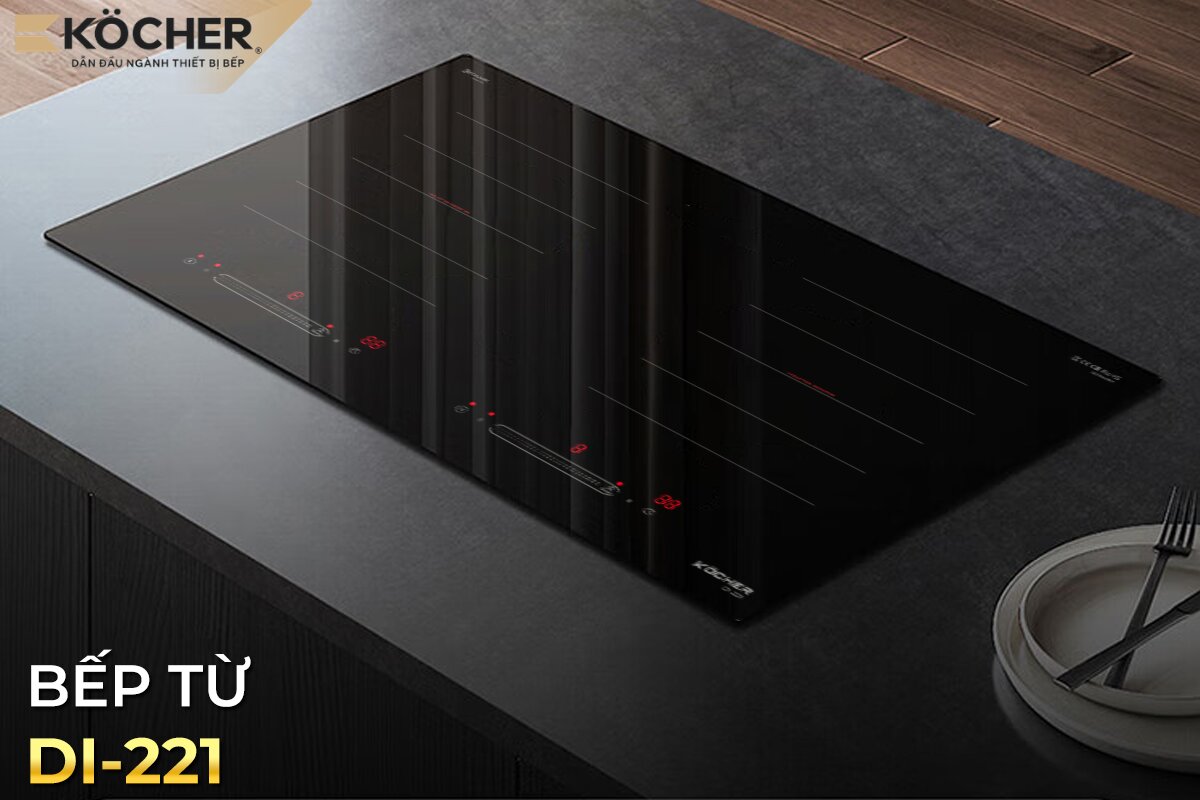
6 Differences Between Induction Stoves and Electric Stoves
Although they look quite similar on the outside, electric stoves and induction stoves have distinct differences in many technical criteria and actual user experience. Specifically:
| Criteria | Induction Stove | Electric Stove (Infrared) |
| Type of pots used | Only use pots with ferromagnetic bottoms | Can use all types of pots |
| Operating principle | Magnetic field heats the bottom of the pot | Heat from the heating plate heats the glass surface which then transfers to the bottom of the pot |
| Efficiency | About 90 – 95% | About 60 – 70% |
| Electricity consumption in 1 month | More economical, about 107,000 – 140,000 VND for a 2000W stove | Consumes more, about 300,000 – 380,000 VND for a 2000W stove |
| Safety | Automatically shuts off when there is no pot, low risk of burning surrounding items | Continues to emit heat when there is no pot, then shuts off according to a certain time or temperature threshold |
| Investment cost | Higher, about 1,000,000 – 20,000,000 VND | Lower, about 500,000 – 10,000,000 VND |
The difference in initial investment costs is very clear across segments. If families with means often choose high-end built-in double stoves, then the segment of construction workers or students renting rooms tends to prioritize Affordable induction stoves for students with compact single stove designs to optimize operating costs as well as limited living space.
Should You Buy an Electric Stove or an Induction Stove for a Modern Kitchen?
To choose the right type of stove, you need to consider your family’s actual needs, cooking habits, and the number of family members.
- Choose electric stove (infrared) if: You frequently use clay pots, glass pots, or ceramic pans that are not ferromagnetic and do not want to invest in a new pot set. Electric stoves are also suitable if you need to grill directly on the stove surface or have a limited initial budget.
- Choose induction stove if: Your family cooks daily and wants to save electricity in the long run. Especially, induction stoves are the preferred choice for families with young children or elderly people thanks to the integrated safety features. Additionally, induction stoves also help keep the kitchen cooler as they emit less heat into the surrounding environment.
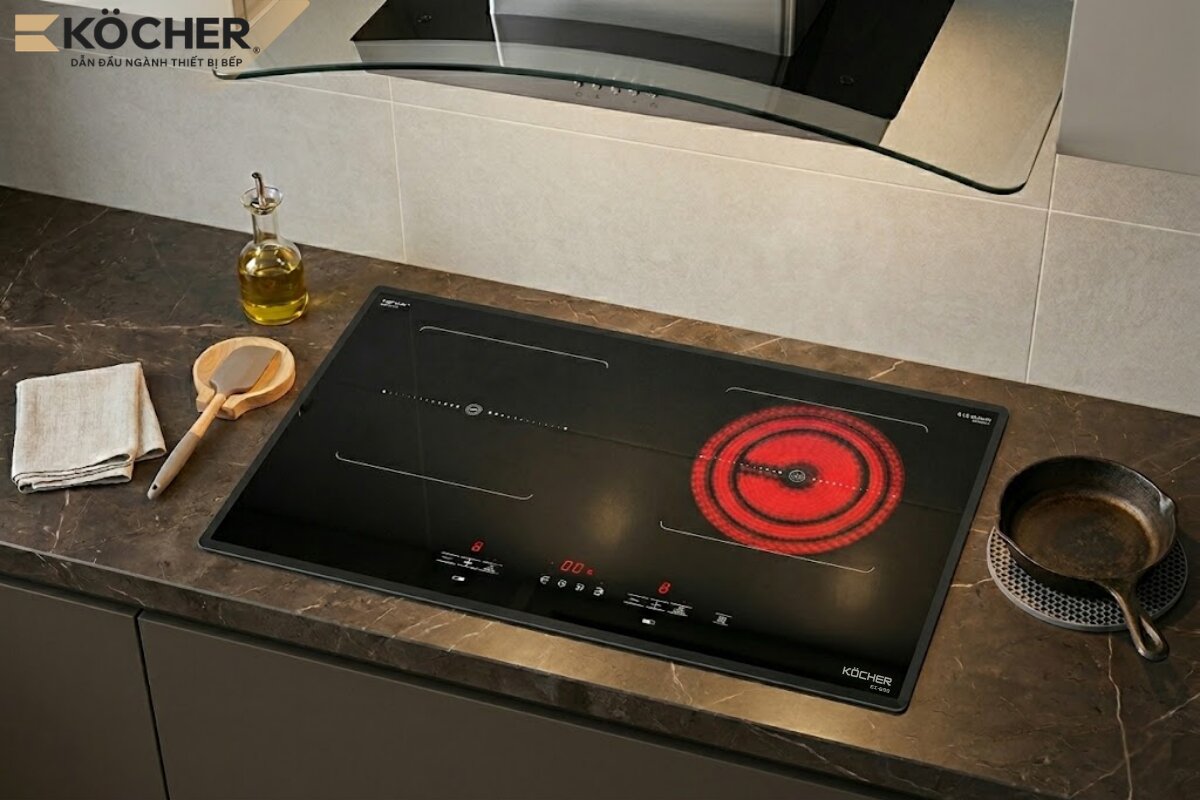
- Choose electric-induction (hybrid) stove: If you want to take advantage of the benefits of both types of stoves, considering Whether to buy a combined induction and infrared stove as the main cooking device is a worthwhile option as it can cook quickly, save electricity with the induction zone, and flexibly use various types of pots with the infrared zone.
Answering Questions About Electric Stoves and Induction Stoves
Below are common questions users often ask when learning about induction and electric stoves to help you have a more comprehensive view before deciding to buy.
Do induction stoves or electric stoves consume more electricity?
Electric stoves consume more electricity than induction stoves. The reason is that the efficiency of converting electricity into heat for electric stoves is only about 60 – 70%, while induction stoves achieve up to 90 – 95%. In practice, to boil 1 liter of water, induction stoves usually take less time and use significantly less electricity compared to electric stoves of the same power. Many users who are new to this type of electric cooking stove also often wonder if induction stoves are picky about pots, and the answer depends on which cooking zone you use: the induction zone will definitely be picky about pots and must use ferromagnetic bottoms, while the infrared zone does not.
Does using induction stoves affect health?
Induction stoves do not affect health if users use them correctly and choose genuine products. Induction stoves generate a high-frequency magnetic field when operating; however, the intensity of this magnetic field decreases rapidly with distance. When standing to cook at a normal distance (from 30cm or more), the level of exposure to the magnetic field is within the safe limits according to international standards of WHO and ICNIRP.
Are induction stoves safe to use?
Induction stoves are very safe and are among the safest types of stoves available today. They operate without flames, do not produce toxic gases (CO, CO2), and minimize the risk of fire and gas leaks. Features such as automatic shut-off when overheating, child locks, and insulated glass surfaces also help ensure the safety of induction stoves for families.
Should a separate circuit breaker be installed for induction and electric stoves?
A separate circuit breaker should be installed for induction or electric stoves to protect the devices and the household electrical system, as these are high-power devices, usually from 2000W to 3500W. If sharing the electrical circuit with other appliances in the kitchen such as hoods, microwaves, and dishwashers, the risk of overload and tripping the circuit breaker is very high.
I hope this article has helped you understand the differences between electric stoves and induction stoves to make a decision that suits your family’s actual needs. Regardless of which type of stove you choose, the most important thing is to prioritize products with reliable component quality, clear warranty policies, and compatibility with daily cooking habits.
If you are looking for high-quality induction or infrared induction stoves, please check out Köcher’s products here – With a super quiet fan cooling system and E.G.O components made in Germany, Köcher is proud to be a leading brand in the kitchen appliance industry, providing safe and high-class cooking solutions for your family.
Köcher induction stoves pioneer German technology – For detailed product information, please contact:
|