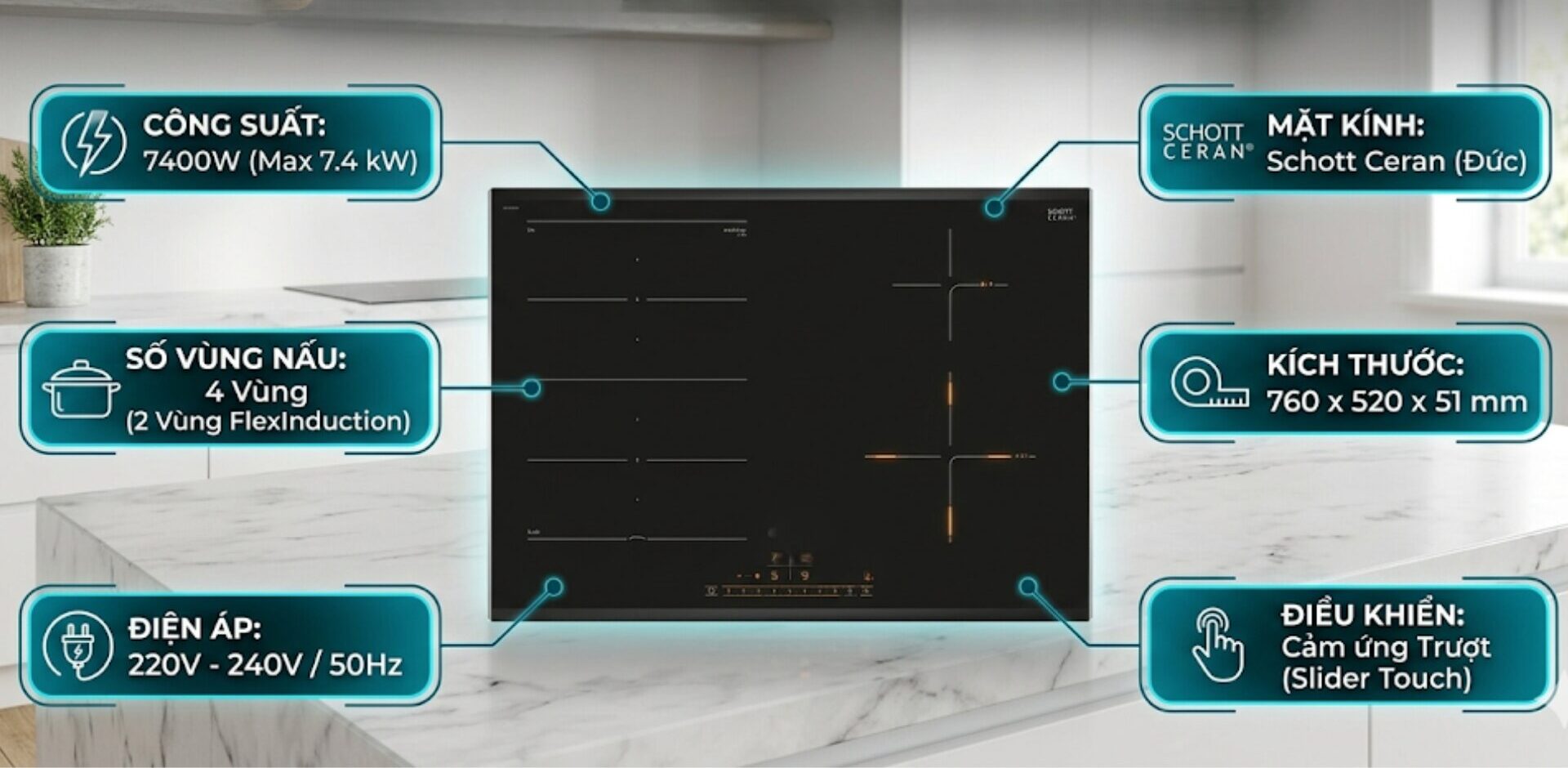
What is the operating principle of the infrared cooker? What is the structure of the infrared cooker like? Understanding the operating principle as well as the structure of the infrared cooker will help make its use, cleaning, and repair easier and smoother.
The infrared cooker is one of the popular electric cookers recently due to its high heat output, good operating efficiency, and high safety. However, being an electronic device, it is entirely possible for some issues to arise during use; understanding its structure and operating principle will help limit malfunctions and better handle them.
Structure of the infrared cooker
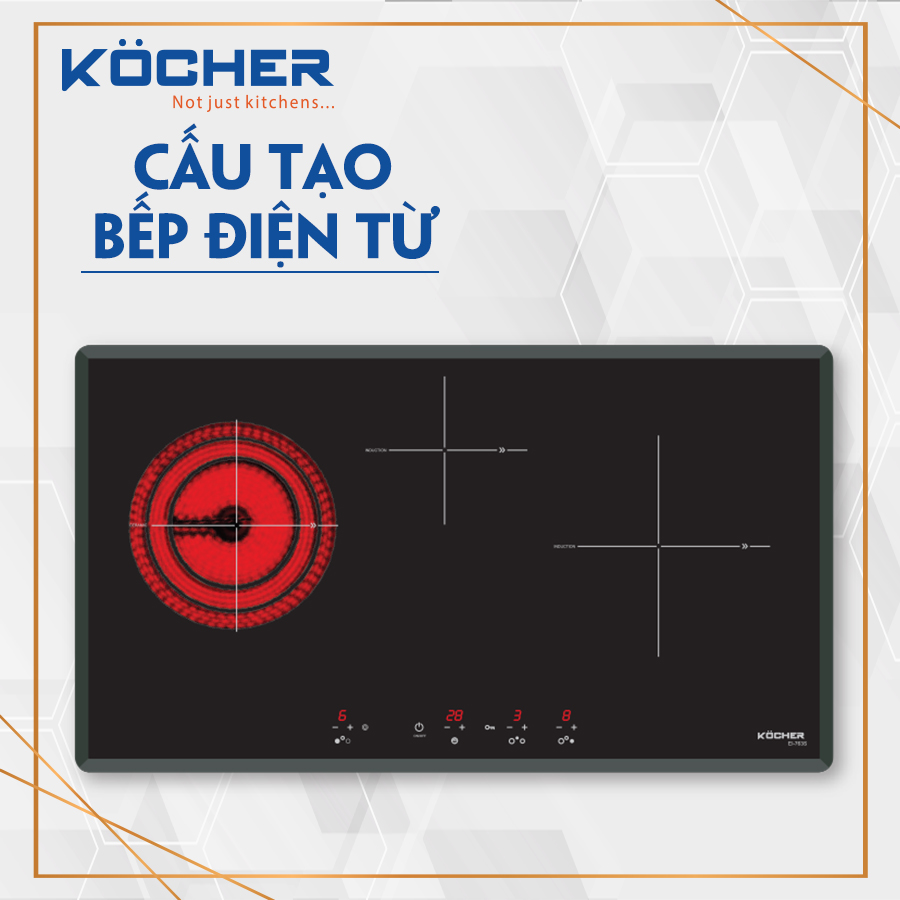
1. Circuit diagram of the infrared cooker
Before going into the detailed structure of the infrared cooker, we would like to share with you a simple circuit diagram of the single infrared cooker as shown below:
Accordingly, the main circuit of the infrared cooker includes 5 main components: heating plate, cooling fan, power circuit, temperature sensor, and control circuit, including:
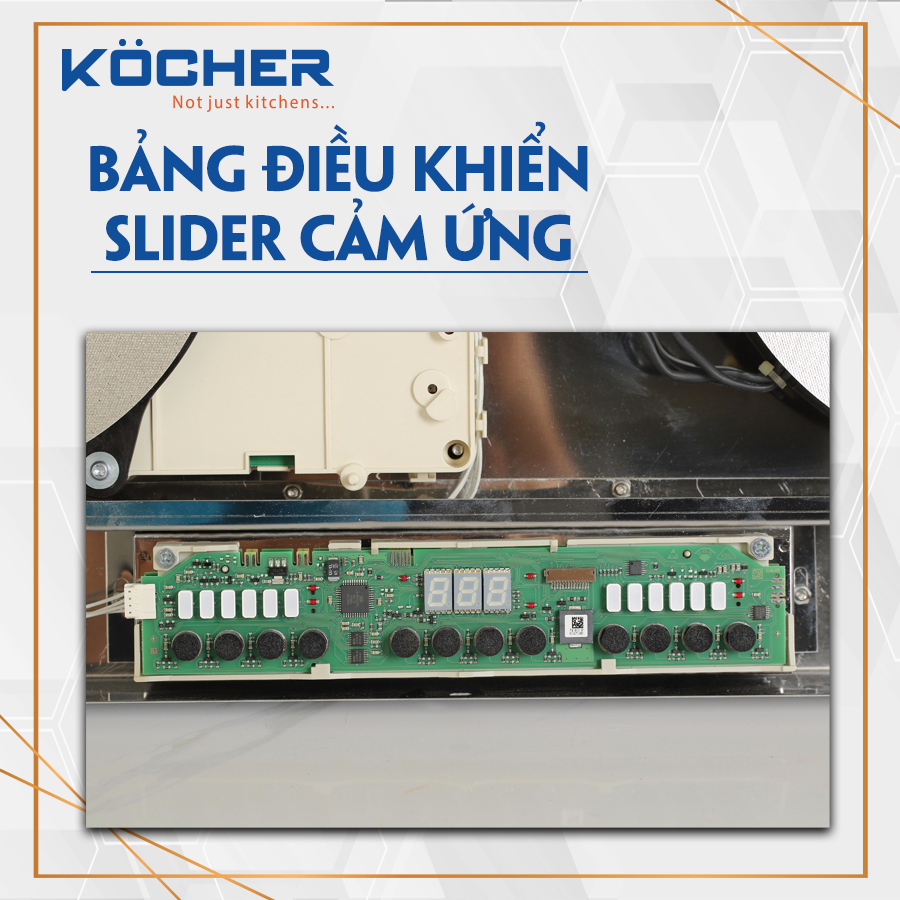
- Control circuit: is the most important component that receives all control commands and settings from the user to execute according to their requests. Typically, the control circuit is placed next to or under the glass surface of the infrared cooker, depending on the type.
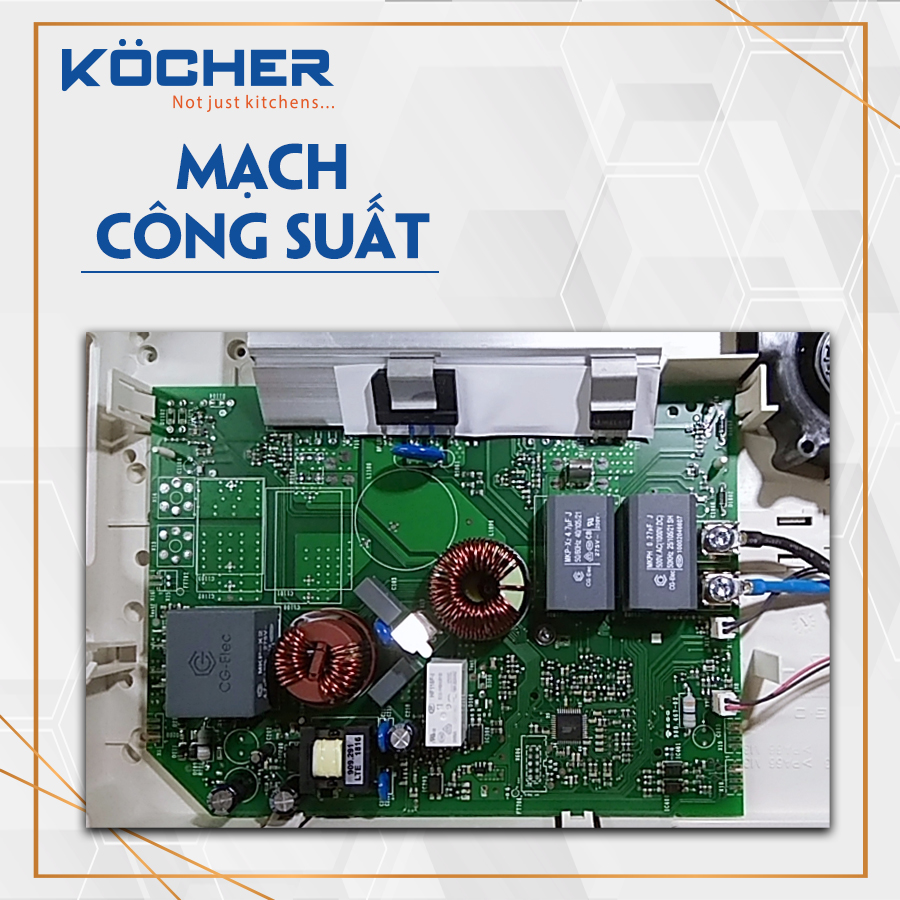
- Power circuit: The power circuit, also known as the power supply circuit, is the main component that provides power to the control circuit while executing the settings commanded by the control circuit according to the user’s actions. Additionally, the control circuit also performs tasks of comparing signals and adjusting power accordingly.
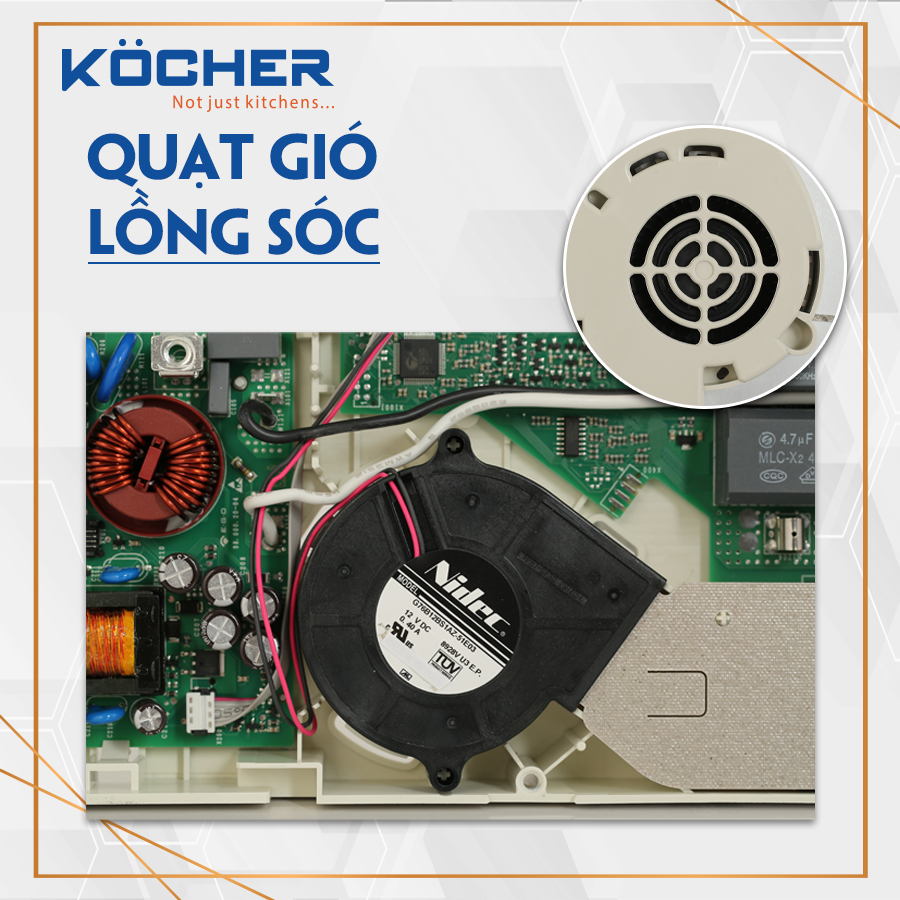
- Cooling fan: is an essential component in both infrared and induction cookers. The cooling fan plays a role in cooling the components of the infrared cooker during operation, helping the cooker operate more stably and avoiding issues caused by overheating.
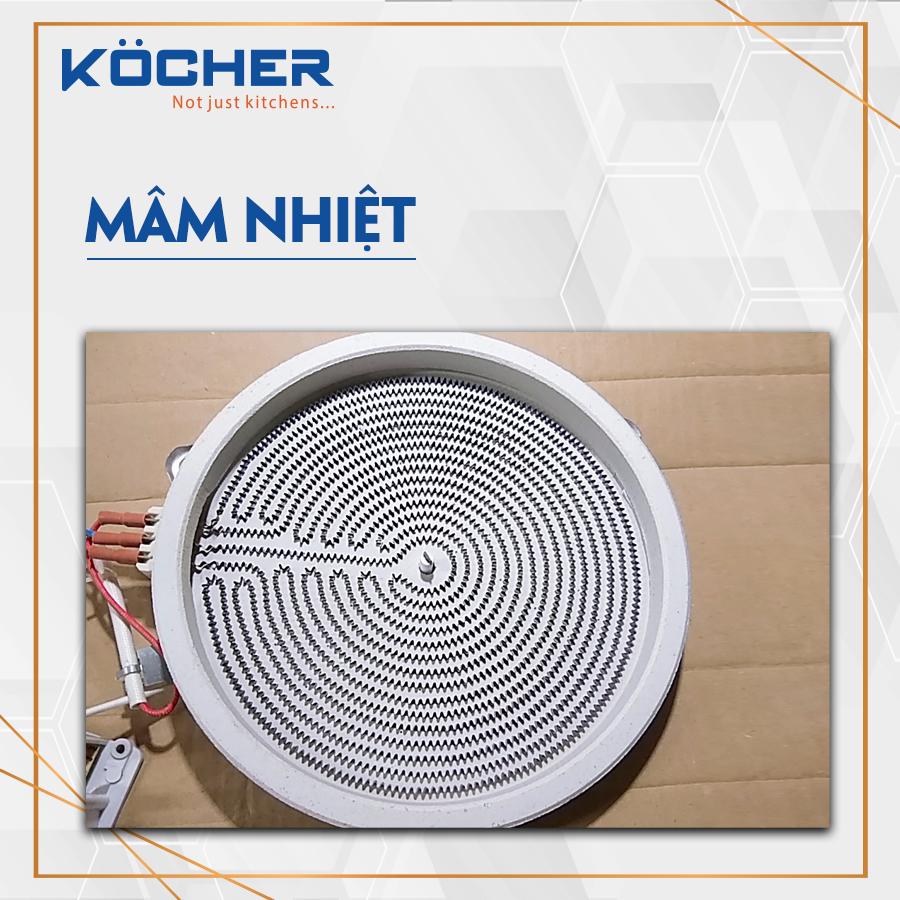
- Heating plate: The heating plate of the infrared cooker has 2 types, one is a heating plate using a heating wire, and the other is one that uses a halogen bulb. These components are arranged under the glass surface of the cooker to generate heat to warm the area under the pot for cooking food.
- Temperature sensor: The temperature sensor resembles a wire, which detects temperature signals and compares the temperature of the cooker, reporting back to the control circuit of the cooker. A faulty temperature sensor can cause errors in the entire control circuit system.
2. Glass surface of the infrared cooker

3. Body and base of the cooker
Operating principle of the infrared cooker
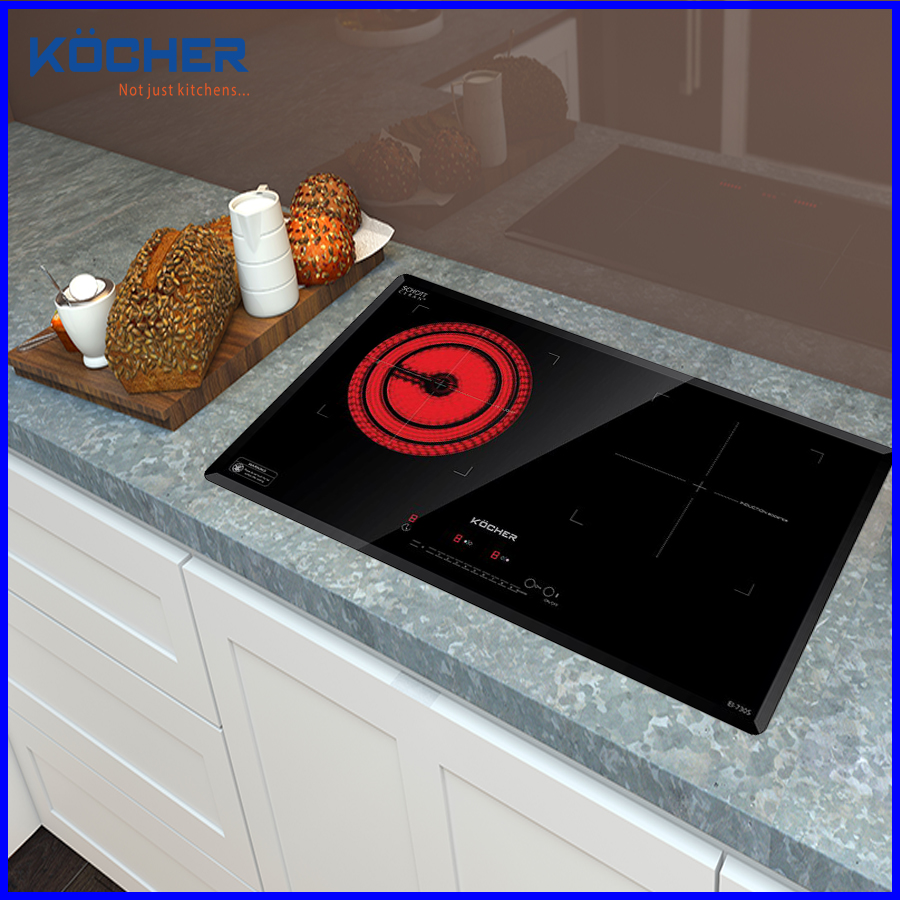
The infrared cooker operates on the principle of using infrared radiation to generate heat. Specifically, when the electric current passes through the heating wire or halogen bulb in the heating plate, it lights them up, and the wires or halogen bulbs emit heat. The glass surface is produced like a converging lens that attracts these heat radiations and concentrates them to heat the glass surface under the pot for cooking food.
Typically, the temperature emitted on the cooking zone of the infrared cooker is quite high, ranging from 250 to 600 degrees Celsius, which can heat anything on the cooking surface; therefore, it can be used for all types of pots, unlike induction cookers that only accept pots with magnetic metal bottoms. To optimize this extremely large energy output, understanding which pots are best for infrared cookers will help homemakers choose flat pots that heat quickly and save energy for the family.
Common errors and how to repair the infrared cooker
Infrared cooker reports errors E1, E2, H1, H2
The infrared cooker reporting errors E1, E2, H1, H2 is usually due to 2 common faults: a dead temperature sensor or a faulty cooling fan. When the sensor detects that the heat exceeds the safe threshold due to a faulty fan, the infrared cooker automatically cuts off the power supply immediately to protect the power board from short-circuiting. For this error, first, when the cooker reports an error, we need to turn it off immediately. If we still hear the cooling fan running normally, it is likely that the temperature sensor is dead; otherwise, the cause is the fan.
To fix this error, we need to take the cooker to repair and warranty centers to replace the cooker components.
Infrared cooker reports errors E3, E4, E5, E6
The infrared cooker reporting errors E3, E4, E5, E6 along with flashing lights indicates that the main cause of this situation is due to unstable power supply connections.
There are many causes leading to these errors, such as: faulty power IC, faulty power transistor, loose solder joints, faulty power capacitor,… or simply that the power supply to your family’s induction cooker is unstable.
The way to handle the situation when the infrared cooker reports errors E3, E4, E5, E6 is as follows:
- Step 1: Check the power supply status, see if the power supply is stable; if your family’s power supply is frequently unstable and has issues, we may need a voltage stabilizer.
- Step 2: If the power supply is normal, check the control circuit and power circuit with the components listed above; if any component is faulty, you need to replace or repair the solder joints.
Infrared cooker does not power on
This is one of the common issues in infrared cookers specifically or all types of electric cookers in general. The manifestation of this error is that the cooker, when connected to the power supply, cannot turn on or use any functions from the control panel. There are also many cases where the cooker operates for a short time and then turns off by itself.
The cause of this situation is basically due to some faults in the control circuit, such as burned, faulty control IC, faulty resistors, capacitors, or faulty solder joints.
For this error, we need to check, replace, and repair the solder joints as well as the faulty components.
Infrared cooker turns on but does not heat
The infrared cooker turns on, still receives power, and all control commands are executed normally, but the heating plate does not heat. The main causes of this situation are: the heating plate is broken, the power switch is faulty and does not respond to control commands, or the thermal fuse is faulty.
For this error, first, we need to remove the glass surface of the infrared cooker from the components below and then check components such as the heating plate, switch, or wires connected to the switch. If it is due to a faulty heating plate or thermal fuse, replace the heating plate and thermal fuse; if it is due to a broken switch wire, it should be repaired and reconnected.
Above are all the details about the structure and operating principle of the infrared cooker. We hope the information shared by Kocher.vn is useful. Köcher is proud to be a pioneer in Vietnam bringing German technology into induction cooker products. Wishing you an effective working day!