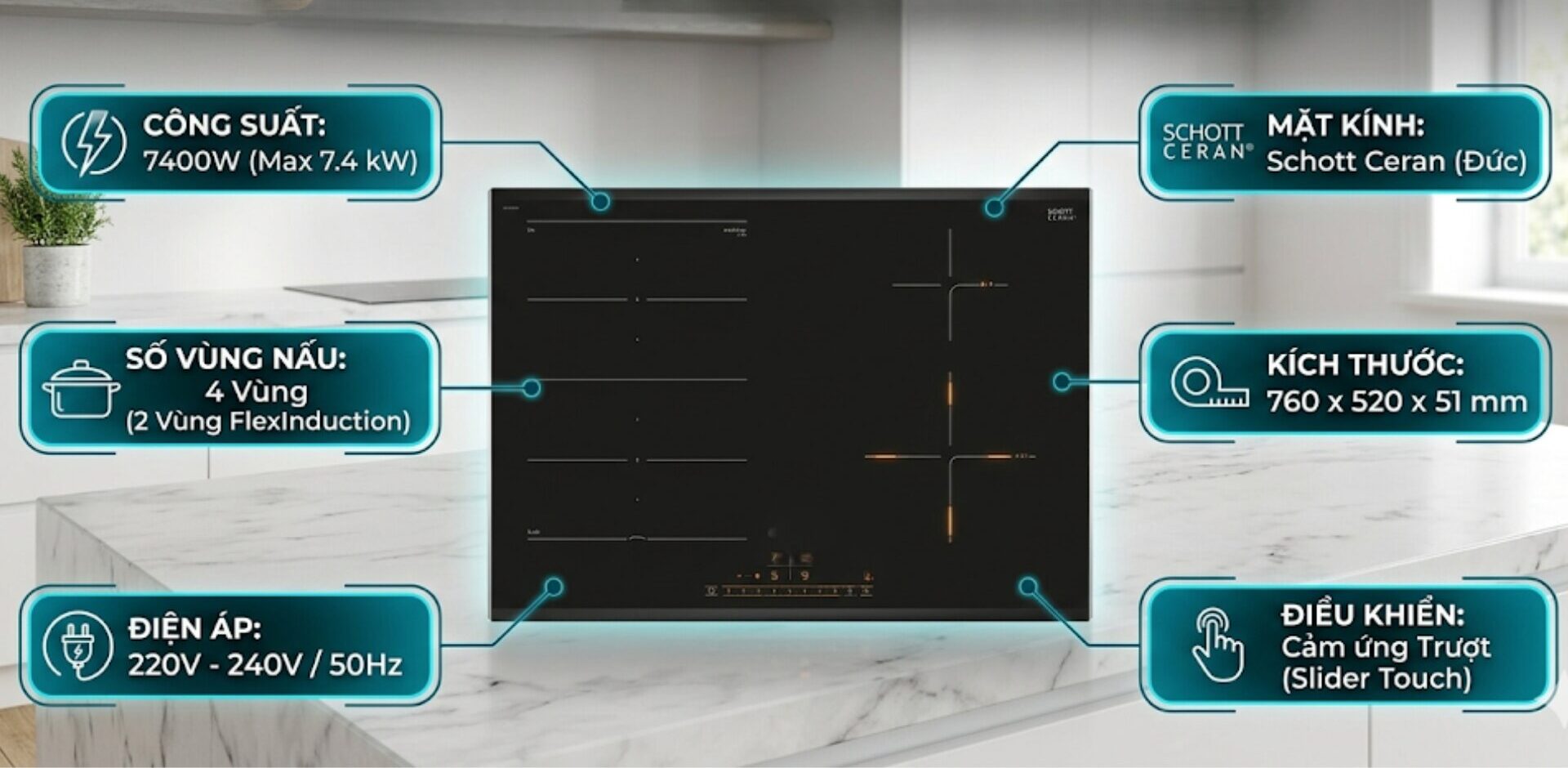
Induction cookers may not recognize the pan due to the pan not being made of suitable material, but it could also be because the sensor that detects the cooking pot of the cooker has malfunctioned. Have you ever encountered a situation where the cooker does not recognize the pan?
Below, Kocher summarizes all the causes of the induction cooker not recognizing the pan – Simple fixes at home so you can handle it yourself before needing to take them to repair and maintenance centers.
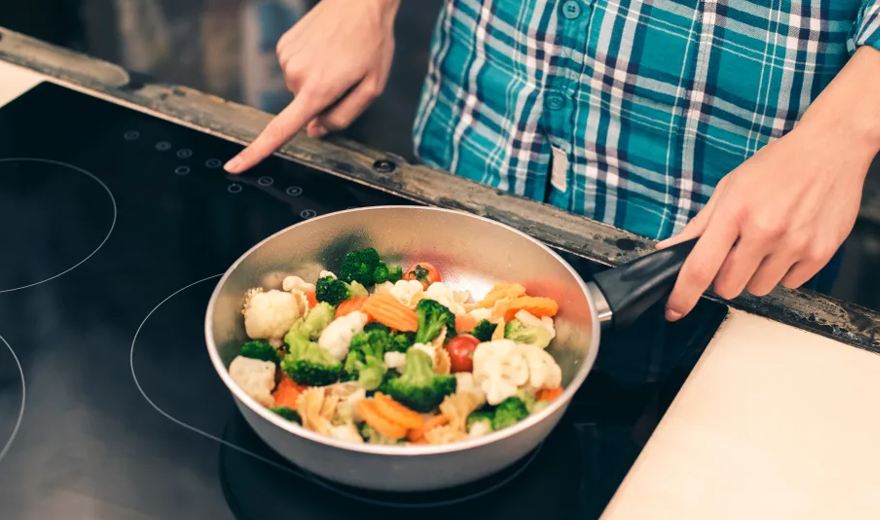
Causes of induction cooker not recognizing the pan and how to fix it at home
Kocher always advises users to use suitable, specialized cookware for induction cooking. They not only help customers cook deliciously, efficiently, and save energy but also bring high aesthetic value. However, many users reuse old cookware that was used on gas or electric stoves. Or use aesthetically pleasing cookware such as glass, cast iron, or ceramic pots and pans. Most of these materials are not compatible with induction cookers.
There are many reasons why the induction cooker does not recognize the pan, pot, or cooking vessel. Check which situation you are facing below to know the correct and quickest way to handle it!
Induction cooker does not recognize the pan due to incorrect material
The first reason may be that you are using an incompatible pan. Pans made of aluminum, glass, and copper cannot be used on induction cookers. These types of pans only work if they are made with a layer of magnetic material on the bottom.
Magnetic materials that work well on induction cookers include cast iron, steel, and stainless steel pans. These materials have good magnetic properties and can be used on all types of imported induction cookers.
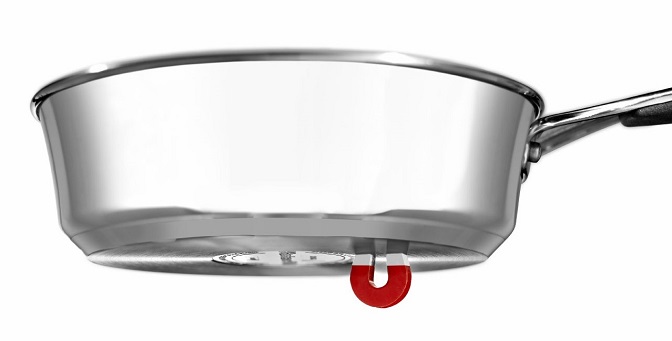
Therefore, to fix your induction cooker not recognizing the pan, try switching to a different stainless steel pan. Stainless steel is the best material for induction cooking, especially 304 stainless steel cookware. You can test with a magnet under the bottom of the pan; if they attract well, it means the reason the induction cooker does not recognize the pan is not due to the wrong material you are using but another reason. Understanding which pans are suitable for induction cookers through the “Induction” symbols or the magnet test will help you proactively eliminate errors right from the shopping stage.
- See more: Experience buying induction frying pans
Pan size issue
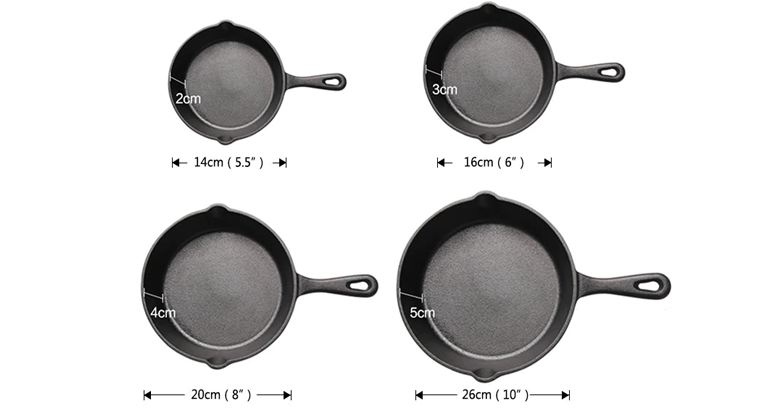
Typically, the diameter of the cooking zone of the induction cooker accepts pan sizes from 12 cm to 32 cm. If you use a pan that is too small, only 10 cm, or too large, up to 36 cm, the induction cooker will definitely not recognize the pan, even though the pan is a genuine magnetic one. The solution in this case is very simple. You just need to replace it with a magnetic pan that has a standard diameter for the cooking zone of the cooker, and you can cook normally again.
Incorrect pan placement
It may happen that while cooking, the induction cooker no longer recognizes the pan even though you were cooking normally before. In this case, you can check if you are placing the pan incorrectly on the cooking zone. Even if you have turned on the cooker, and it is hot, transferring heat to the pan, it can still report an error and prevent you from continuing to cook.
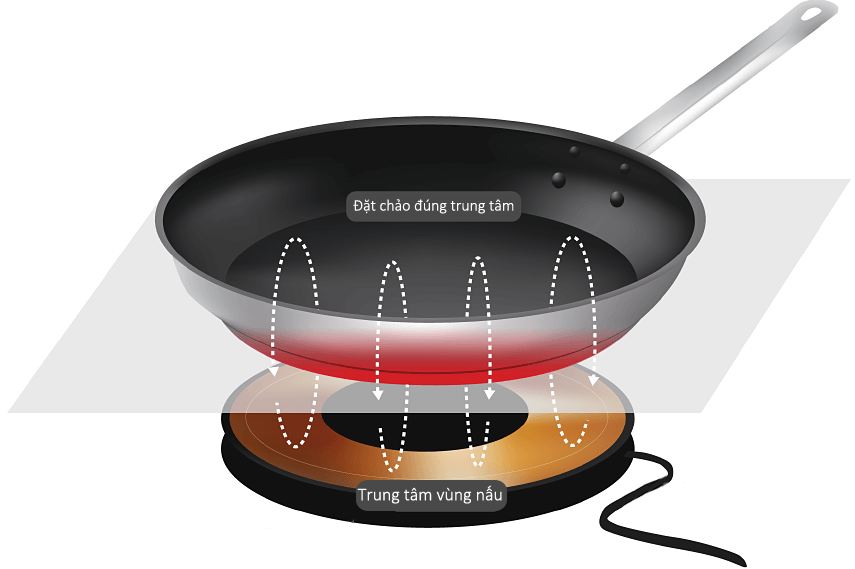
Induction cookers cook on the flat, smooth surface of glass, making cooking utensils like pans easily shift or move out of the cooking zone. When the pan shifts, the induction cooker will immediately report an error and pause the cooking process. This is a common case because the sensor of the induction cooker is responsible for detecting incorrectly placed pans; when that happens, it will automatically stop the program.
To fix this, you just need to place your pan correctly in the center of the cooking zone marked by circles or the center line marked on the cooktop. Start the cooker and continue cooking. For Kocher smart induction cookers, you only need to place the pan back in the correct position, and the cooking zone will automatically run the program and operate normally without needing to restart the cooker and adjust the temperature again.
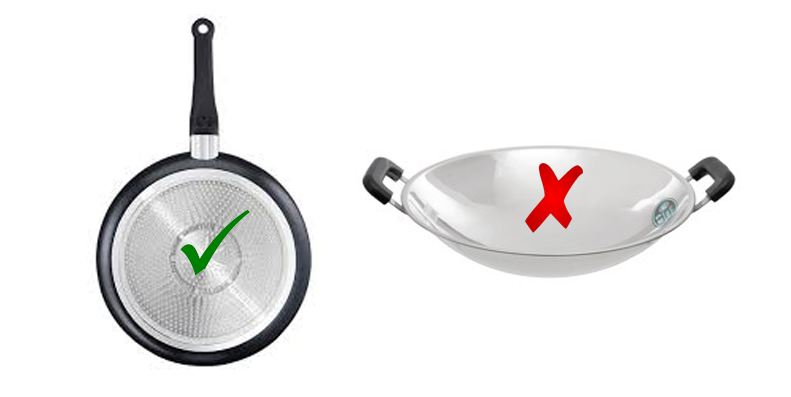
Bottom of the pan is warped, uneven, not flat
Sensor error detecting the cooking pot of the induction cooker
One reason the induction cooker does not recognize the pan is due to a sensor error. Induction cookers are usually equipped with an automatic detection device, also known as a cooking pot detection sensor. This component is located under the cooktop glass; if it does not function, it leads to the induction cooker not recognizing the pan. This issue usually only occurs in low-quality cooking devices that operate unstably.
To fix it, you can turn off the cooker and then restart it to see if there is any improvement. If there is no result, you need to take the induction cooker for maintenance. Do not attempt to disassemble it yourself, as this may cause further damage.
- Moving the pan off the cooktop, shaking the pan, flipping food as seen on TV. You should not lift the pan continuously; instead of shaking the pan to move or flip food, you should use chopsticks or a spoon to stir food while the pan is still on the cooker.
- Check if the bottom of your pan is stuck with food or any objects underneath. Because if there is an obstruction under the bottom of the pan, you will also not be able to cook with the pan on the induction cooker.
Have you encountered any situation causing the induction cooker not to recognize the pan with the reasons we have mentioned above? Try applying the simple solutions we just suggested to fix it as quickly as possible. If you have any questions about Kocher induction cookers, feel free to contact us; Kocher is ready to provide free consultation and answers!
A high-quality imported German induction cooker will help you cook deliciously, safely, and save energy. But do you know which German induction cookers are good, and whether the cooker you bought is an imported German induction cooker? Köcher is proud to be a pioneer in Vietnam bringing German technology into induction cooker products. Check out the experience of buying imported induction cookers from Germany below to know more tips and be wiser in choosing high-quality German induction cookers!