Is your frying pan, pot, and other cooking utensils turning black after being used on the gas stove?
Are you looking for the reason why cooking on a gas stove causes pots to turn black and how to handle it? In this article, Kocher will guide you on simple solutions when cooking on a gas stove causes pots to turn black. Check out the following formulas.
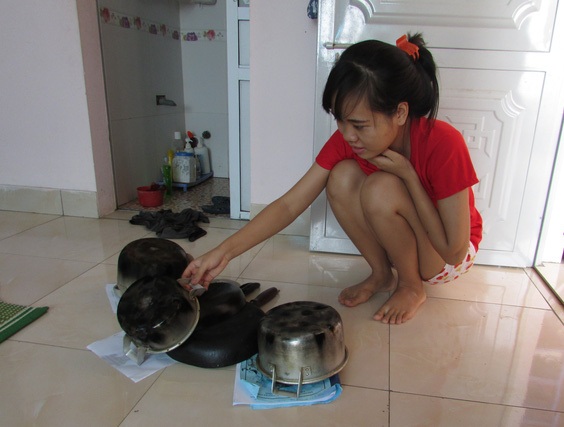
Why do pots turn black when cooking on a gas stove?
Reasons why pots turn black when cooking on a gas stove and how to handle it
1 – Reasons for pots turning black when cooking on a gas stove
Poor quality gas cylinder, running low on gas
The common case of pots turning black when cooking on a gas stove is usually during the final period of cooking when the gas cylinder is running low. The main manifestation is the flame changing from blue to red or orange. This is a sign that you need to replace the gas cylinder. And this is the reason why pots turn black when cooking on a gas stove.
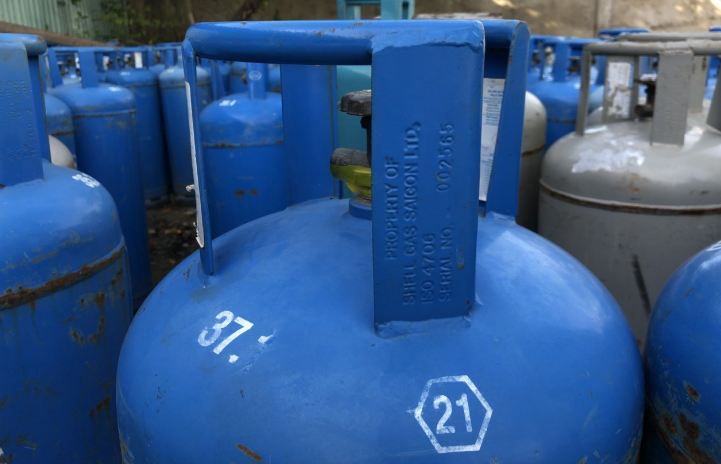
Poor quality gas cylinder
Almost any gas cylinder that is running low will cause soot to stick to the pot, making the bottom of the pot very difficult to clean with regular scrubbing pads.
To handle this issue, you should turn off the gas valve, shake the gas cylinder if it feels light, and if the flame is red or orange, it means you need to replace it with a new gas cylinder.
Incorrect air supply to the burner
Another reason why pots turn black when cooking on a gas stove is due to the incorrect adjustment of the air supply to the burner. This may be because the gas shield has been locked or closed. When there is a lack of air, the flame turns orange and causes the cooking to blacken the pot. The black residue left on your pots and pans is actually soot from incomplete combustion due to a lack of oxygen.
To adjust the air supply at the burner, you need to find the air adjustment ring located at the burner. Readjust the gas shield.
First, you just need to remove the gas stove’s support, lift the burner out, then turn the screw at the burner head, rotate the gas shield, loosen it, and create an air gap on both sides. After that, place the burner back in its original position.
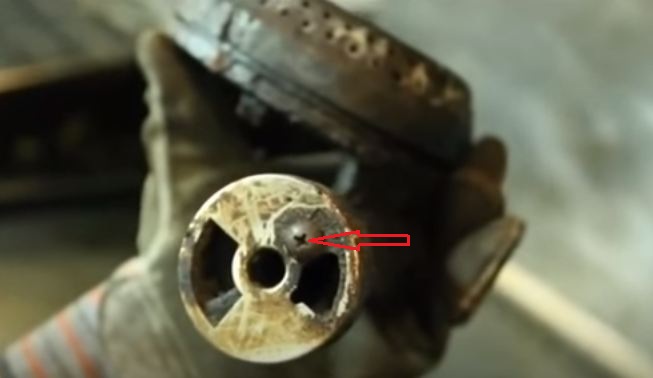
Turn the screw at the burner head
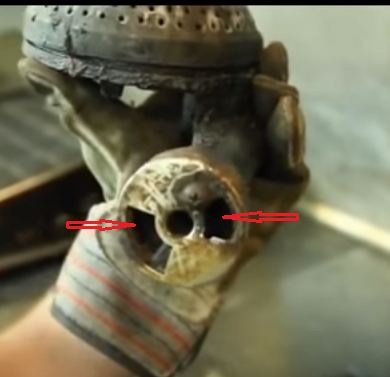
Loosen and create an air gap on both sides
Solutions to fix
- Keep the heat as low as possible to complete your cooking perfectly. If you can, cook food longer on low heat to avoid black spots sticking to pots and pans.
- Another way, if the gas cylinder is running low and you want to make the most of the remaining gas, keep the flame low so that the flame does not touch the bottom of the pot or pan. This helps prevent pots and pans from getting dirty even when the gas is running low.
- Another suggestion you can implement is that when the gas is running low, you can switch to using pots that are already painted black instead of stainless steel or light-colored pots and pans. These pots and pans are already black, so if they get dirty, it will be harder to notice and look less aesthetically displeasing.
- You should also clean pots and pans, not just inside but also outside before cooking. Because when pots and pans are dirty, cooking on a gas stove can easily lead to them turning black and dirty, making them harder to clean.
- Regularly clean your gas stove and burner. Because if the burner is dirty, the components of the burner can easily produce smoke when the stove is turned on and leave residue on pots and pans. To prevent this, clean your gas stove regularly, especially after boiling or food spills.