Broken induction cooktop glass is an incident that not only affects aesthetics but also poses safety risks to family members. The following article will analyze the causes and optimal solutions, helping you accurately assess the condition and make the best decision to repair or replace the cooktop glass.
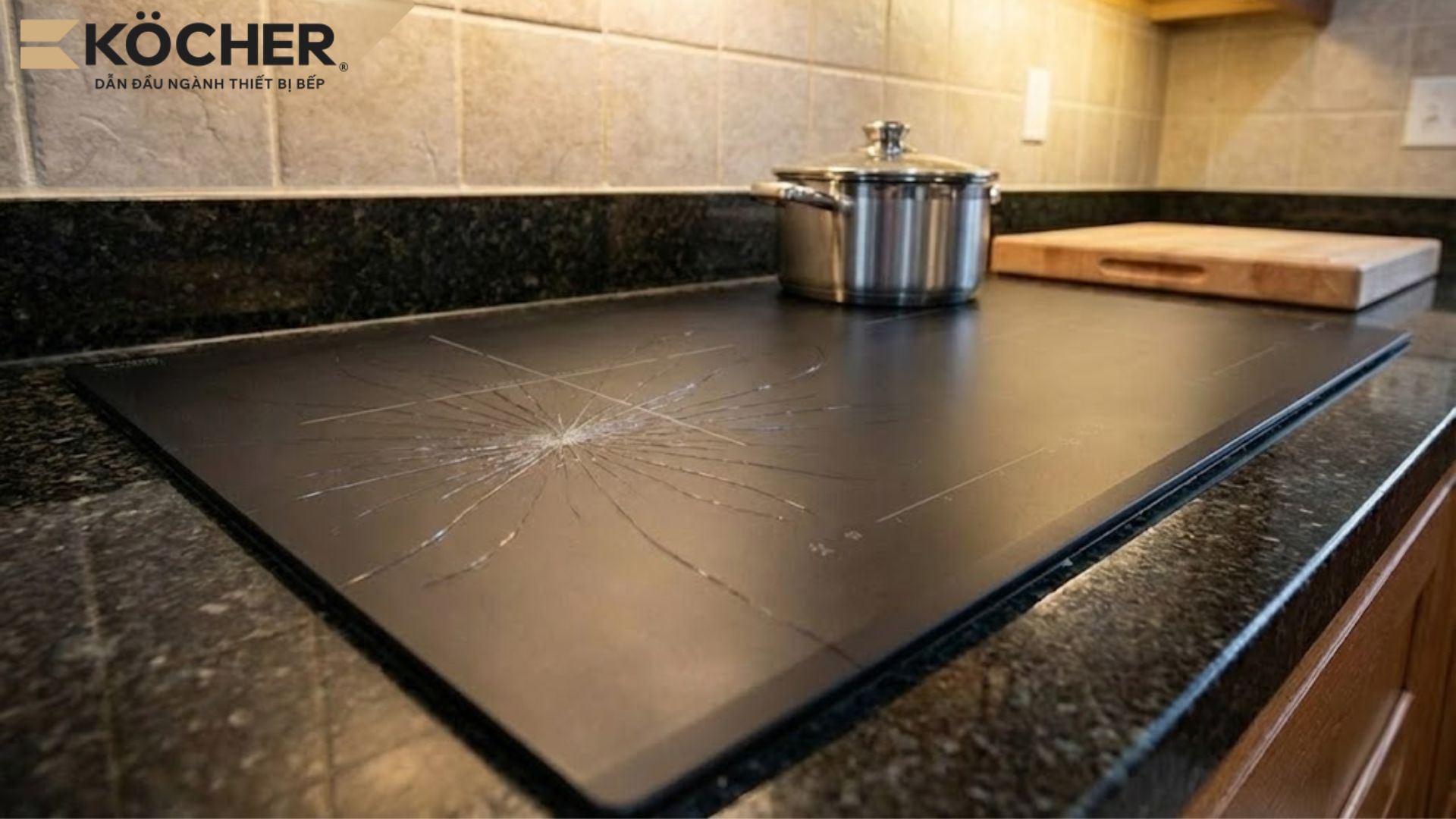
Is a broken induction cooktop glass a problem? Can it still be used?
When the induction cooktop glass is broken, you need to stop using it immediately to avoid the risk of electric shock, short circuit, and further damage. Only very small cracks that do not affect the cooking area and do not disable the buttons can be temporarily used, but should not be used long-term. Specifically:
Cases where it can still be used if the induction cooktop only has small cracks
If the crack is small (under 5cm), located far from the cooking area and does not affect the touch control panel, you can use it temporarily, but not long-term. The signs to recognize a relatively safe case:
- The crack does not disable the buttons, and functions such as pot detection still work accurately.
- The glass structure is not shattered or uneven, and there are no gaps for water to seep into the circuit board.
- The tempered glass still maintains its flatness, with no signs of deformation under heat.
Cases where you should stop using it to avoid danger
In most situations where the induction cooktop glass is severely broken, attempting to use it will lead to the risk of fire or electric shock. You must stop immediately if:
- The crack runs vertically or horizontally through the cooking area (where direct heat contact occurs).
- The glass is shattered, creating large gaps exposing the internal components.
- Water from the cooking pot leaks into the crack, causing ignition or damaging the underlying copper coil system.
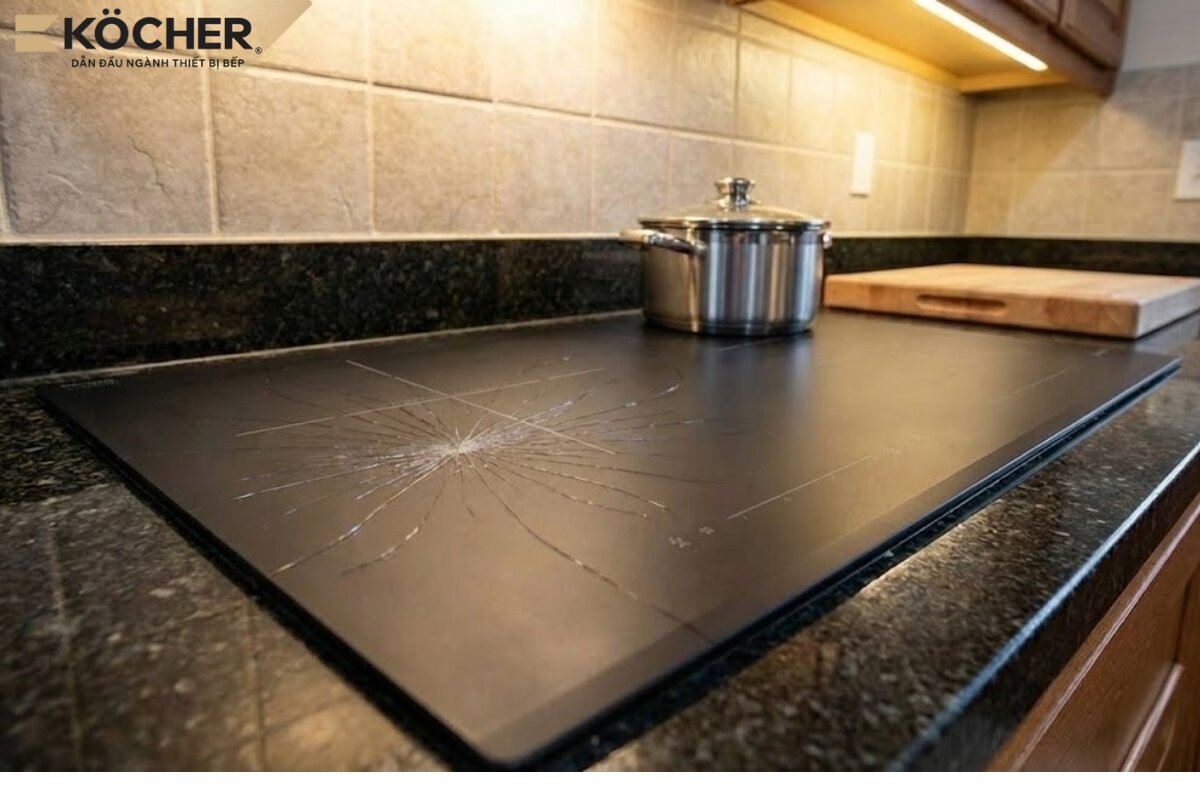
6 causes of induction cooktop glass cracking and how to prevent it
Users need to understand the causes of cracking and breaking of induction cooktop glass to proactively prevent and extend the lifespan of the device:
Improper installation causing stone contact
This is a common mistake when stone cutters do not follow technical specifications.
- Cause: Due to the distance between the cooktop and the edge of the stone being too tight. When in operation, thermal energy causes the metal frame to expand, creating extreme pressure directly on the edge of the glass, causing natural cracking.
- How to prevent: Ensure a gap of 1 – 2mm between the cooktop frame and the stone countertop on each side to create space for expansion.
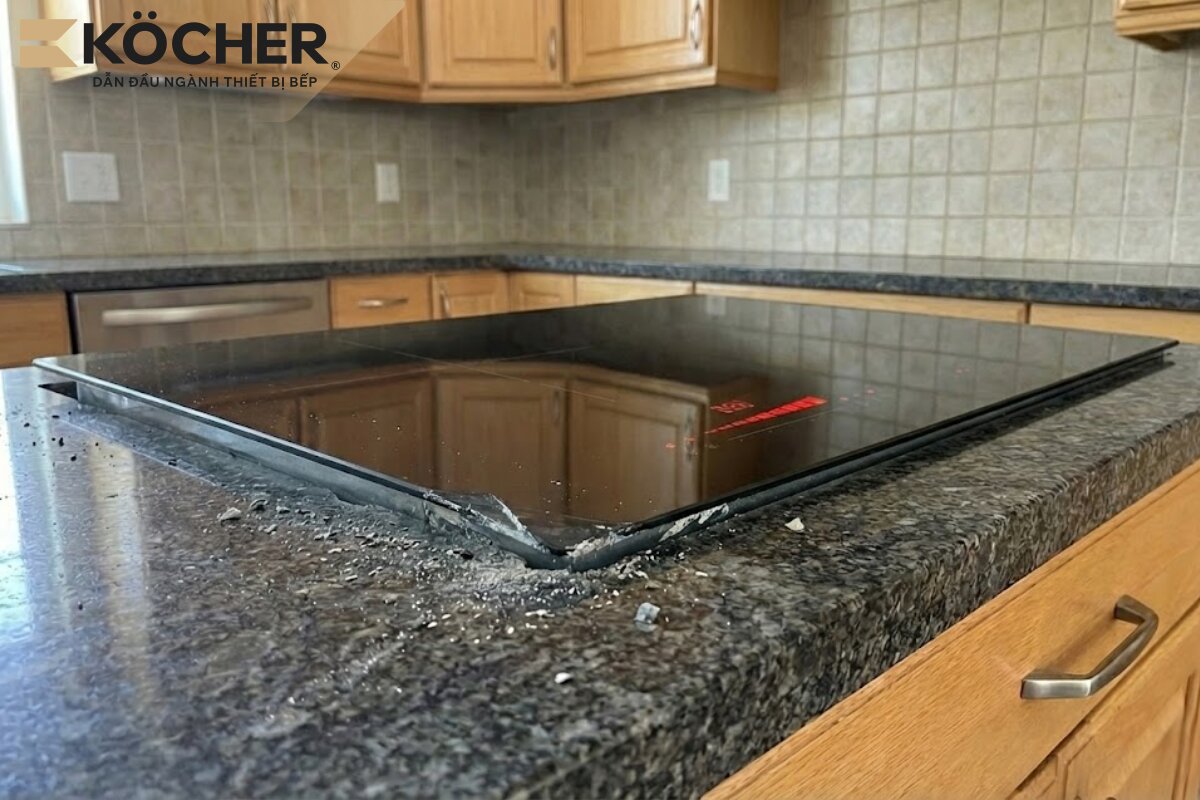
Low thermal resistance glass
The quality of the glass material determines 80% of the cooktop’s durability against thermal shocks.
- Cause: Regular ceramic glass types can only withstand temperatures of about 600°C and have high expansion rates, making them prone to cracking when cooking at high power for long periods.
- How to prevent: Prioritize choosing high-end cooktops like the X-Nano series from Köcher. Unlike regular cooktops, Köcher’s products have a super durable 5-layer X-Nano crystal structure, withstand temperatures up to 750 degrees Celsius and thermal shocks up to 250 degrees Celsius, keeping the surface stable even during continuous cooking.
Using pots that are too heavy compared to the allowed load
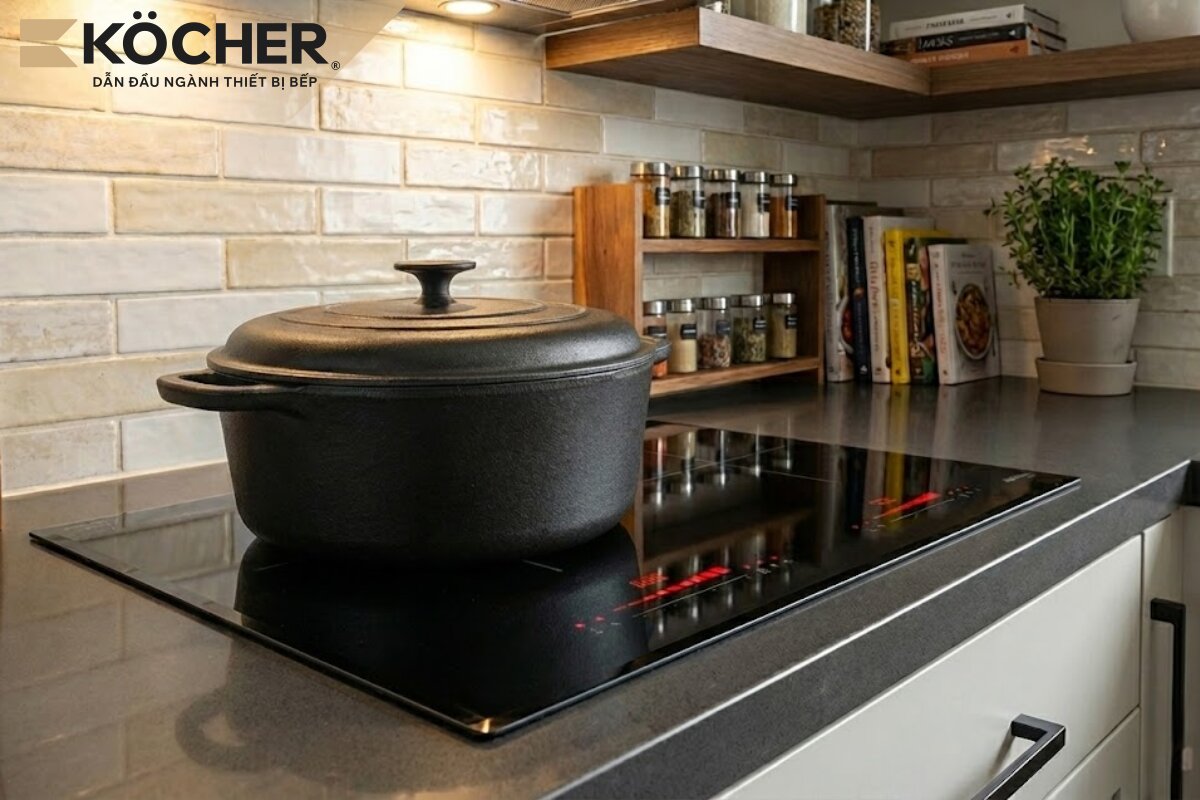
The weight of cooking utensils during use affects the lifespan of the glass surface. Many consumers often wonder how thick the induction cooktop glass is and how much weight it can bear to choose suitable cooking pots. In fact, the standard thickness of high-end ceramic glass types today is 4mm, allowing for very good local load-bearing.
- Cause: Placing heavy cast iron pots or large stock pots weighing over 15 – 20kg on one cooking zone creates local pressure that overloads the glass.
- How to prevent: Use appropriately sized pots and place them gently, avoiding dragging pots across the cooktop surface. You can also prioritize using the X-Nano induction cooktop series with thick glass, superior shatter resistance, and scratch resistance from Köcher.
Induction cooktop glass broken due to strong impact
Even high-quality tempered glass can crack or break when subjected to strong forces.
- Cause: Accidentally dropping heavy objects such as cast iron pots, thick-bottomed pans, glass bottles, or metal tools from a height directly onto the cooktop surface.
- How to prevent: To minimize risks, do not install heavy shelves or racks directly above the cooktop to avoid the risk of falling during use.
Cleaning the cooktop while the glass is still hot causing thermal shock
Low-end induction cooktop glass can withstand heat but is very sensitive to thermal shock, which occurs when the temperature changes too quickly in a short time.
- Cause: Using wet cloths or cold water that come into direct contact with the hot surface causes the glass to expand and contract suddenly. Over time, this can cause spider cracks, reduce the glass’s durability, and even lead to the cooktop breaking. Incorrect cleaning methods using metal scrubbing pads can also scratch the surface; at this point, tips for fixing scratches on the induction cooktop with baking soda will need to be applied to restore the shine of the cooktop.
- How to prevent: Typically, when the residual heat indicator (marked H) on the control panel has completely turned off, the glass surface has reached a safe temperature. At this point, use a soft, slightly damp cloth or a specialized cleaning solution to gently wipe, avoiding pouring cold water directly onto the cooktop surface.
Internal short circuit incidents (only occur in low-quality cooktops)
This phenomenon often occurs with low-quality components.
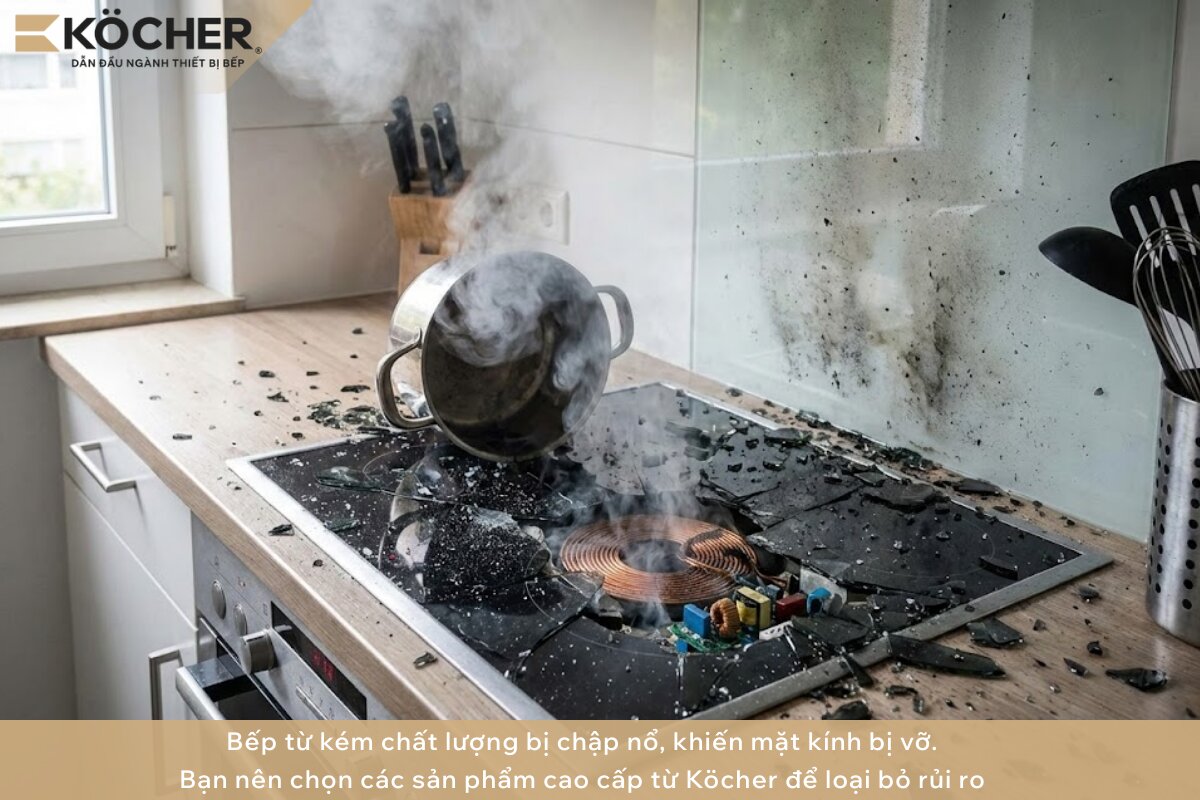
- Cause: Aluminum alloy induction coils or cheap circuit boards overheating, causing capacitors to explode, creating upward force that breaks the glass. If this incident occurs frequently, the glass may turn black, leading to burnt induction cooktop conditions that render the cooktop inoperable.
- How to prevent: Choose cooktops that use 100% pure copper coils, quality IGBT, and thermal fuses that automatically cut off at high temperatures to maintain stability and protect components.
6 ways to fix a cracked or broken induction cooktop glass
Depending on the extent of the damage, you can apply temporary or permanent solutions.
Using heat-resistant silicone adhesive
This method is effectively applied to tiny cracks located at the edge of the glass, completely outside the main cooking area.
How to perform: First, you need to clean the dust and grease at the cracked area, then apply a thin layer of heat-resistant silicone adhesive (the type used for machinery or ovens) along the crack. This adhesive helps seal the gap, preventing water and moisture from seeping into the circuit board below, but is only a temporary fix.
Using high-quality heat-resistant epoxy
Specialized epoxy has high heat resistance and adhesion, suitable for reinforcing medium-depth cracks.
How to perform: You should slowly drip the epoxy into the crack so that it seeps deep into the glass structure, bonding the cracked pieces of glass together. After the epoxy has completely dried, clean off any excess epoxy. This method helps stabilize the glass surface, limiting the spread of the crack when the cooktop generates heat.
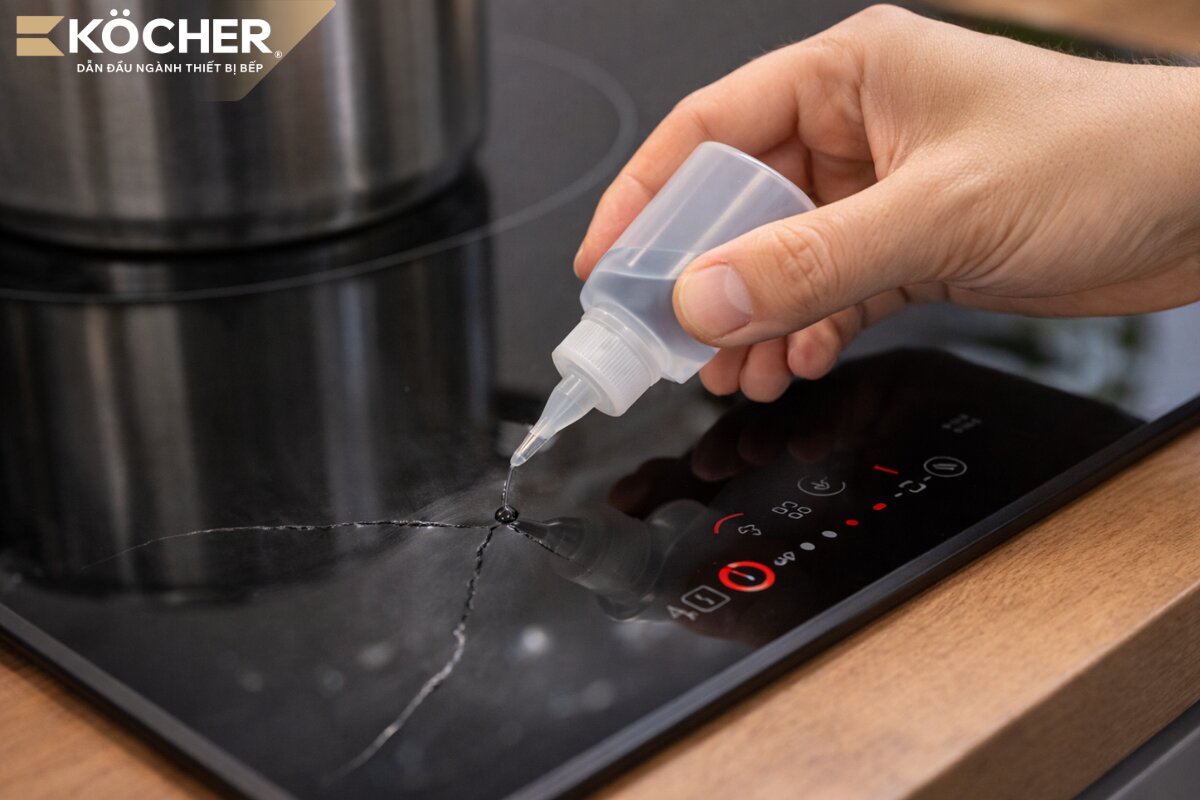 Using epoxy in the crack of the cooktop to temporarily fix the broken glass condition.[/caption>
Using heat-resistant tape (Aluminum/Silver tape)
This is the quickest solution for long cracks, but the glass surface remains flat, not uneven or shattered.
How to perform: Apply the specialized aluminum tape over the crack and press firmly to completely eliminate air bubbles, ensuring the surface is as flat as possible. Note, you must not place pots directly on this tape when cooking to avoid burning or melting the adhesive layer.
Switching cooking zones (For double or multi-zone cooktops)
If your induction cooktop is a double cooktop but only one cooking zone is broken, you can temporarily stop using that cooking zone. This helps you avoid interruptions while waiting for replacement parts.
How to perform: Use aluminum tape to seal the entire broken area to prevent water and moisture from spilling. Then, label it with a “Do Not Use” warning and focus on cooking on the intact side. This careful handling helps avoid electrical short circuits or e0 error on the induction cooktop due to the control panel being damp or misidentifying pots in the faulty cooking zone.
Replacing with a new glass
When the crack is directly at the center of the cooking zone or the broken area is too large, surface intervention methods no longer ensure technical safety. At this point, the only professional solution is to contact the warranty center to replace the glass with a new genuine one. Knowing how to replace the induction cooktop glass through skilled technicians will help fully restore the appearance and original safety standards of the cooktop, completely preventing the risk of electric leakage or circuit board fire due to water spillage.
Replacing with a new induction cooktop
In cases where the cooktop is old, has low-quality components (like aluminum coils), or the cost of replacing the glass exceeds 50% of the cooktop’s value, investing in a new device is a smart choice.
Upgrade to high-end induction cooktops that use scratch-resistant X-Nano glass developed exclusively for Köcher by EuroKera France. The product features a scratch-resistant matte glass with a 5-layer X-Nano crystal technology, withstands temperatures up to 750 degrees, and thermal shocks up to 250 degrees. Instead of worrying about the risk of glass breaking in the future, X-Nano technology provides absolute peace of mind thanks to its durable, aesthetic, and impact-resistant surface during use.
The incident of broken induction cooktop glass can be completely prevented if you choose devices with pioneering material technology like X-Nano and install them according to standards. Regular maintenance and scientific cooking habits are also important factors to keep the product looking new after 10 years.
If you are looking for high-quality induction cooktops, please refer to Köcher’s products. With elegant product design, premium quality, and dedicated support services, Köcher is committed to providing an exceptional cooking experience and elevating the status of your kitchen.
|
Köcher induction cooktops pioneer German technology – For detailed product information, please contact:
|