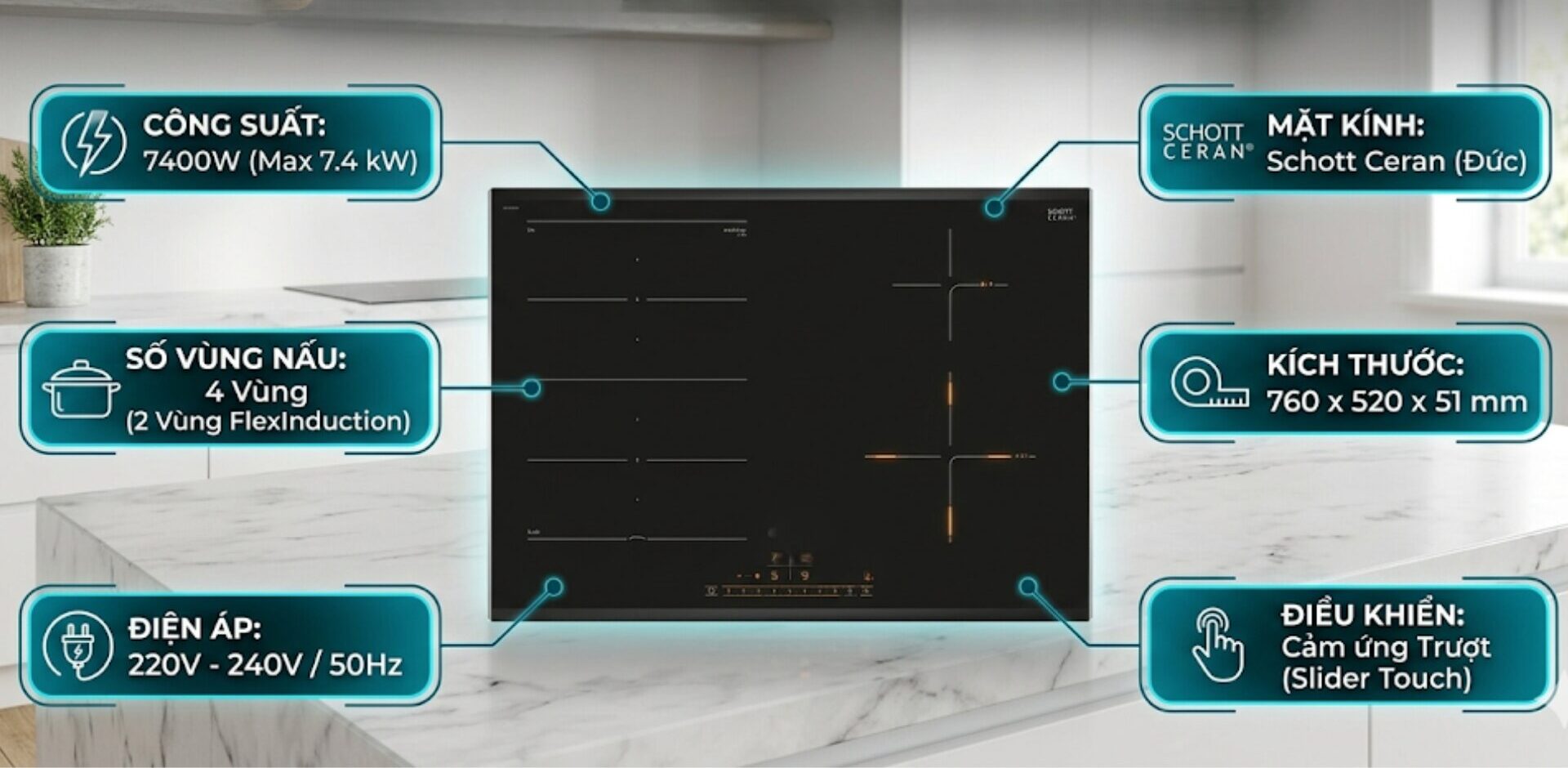
Induction hob not pulsing is a malfunction that causes the cooking process to be interrupted even though the device still displays normally. This situation not only causes inconvenience but also makes many people worry about whether the hob is damaged or not. In the article below, Köcher will help you identify common causes and appropriate solutions to quickly resolve the issue.
What is an induction hob not pulsing?
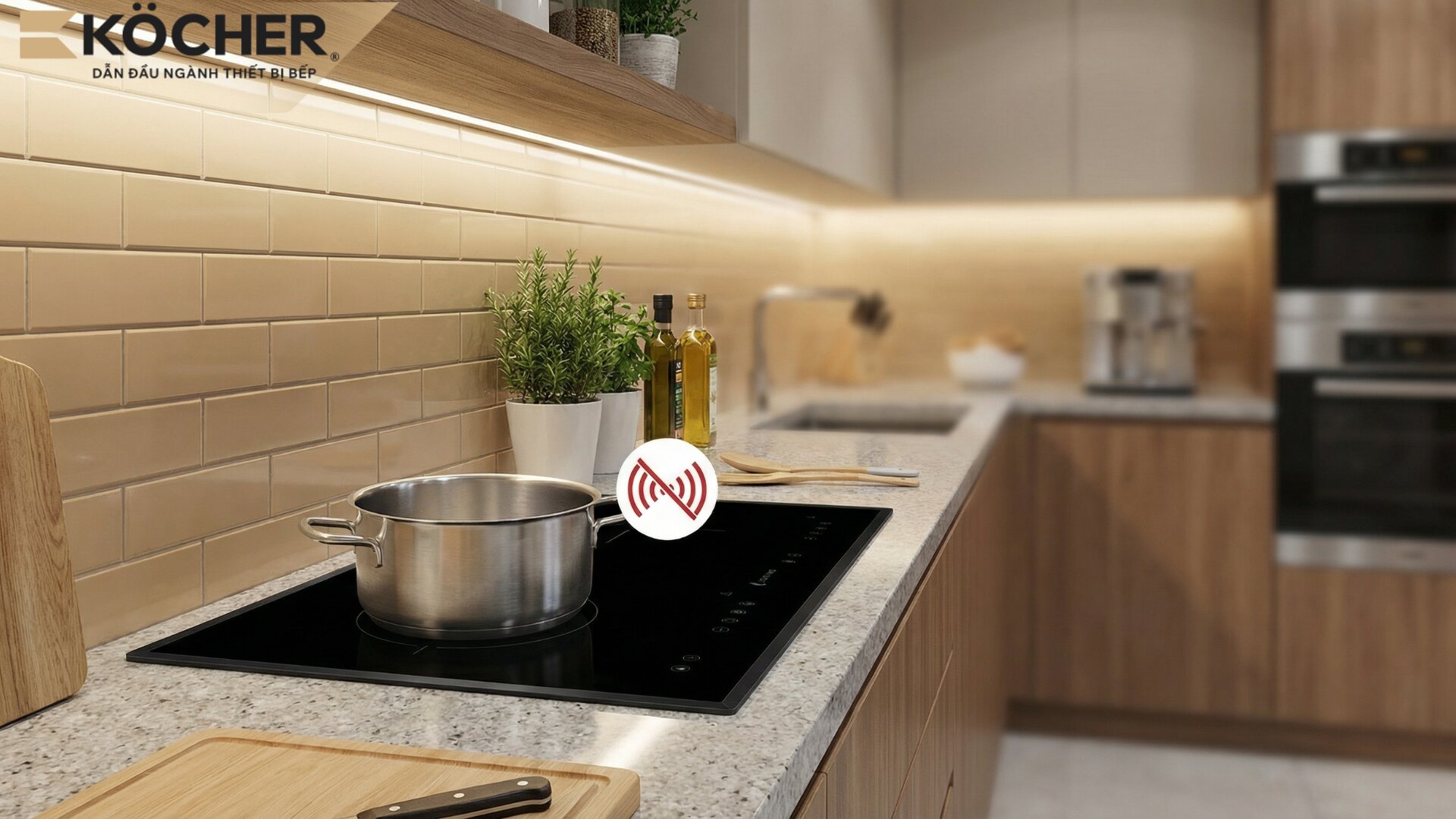
An induction hob not pulsing is a condition where the hob turns on normally (power light is on, display screen is active, power level can be selected) but does not heat the pot. Instead of generating a fluctuating magnetic field to produce heat, the power circuit of the hob stops working or operates erratically (pulsing intermittently). This is a fairly complex error that may arise from the hob not detecting the cooking pot or from damaged internal components on the circuit board.
Some signs to identify when the induction hob is not pulsing:
- The hob does not heat up even when a high power level is selected.
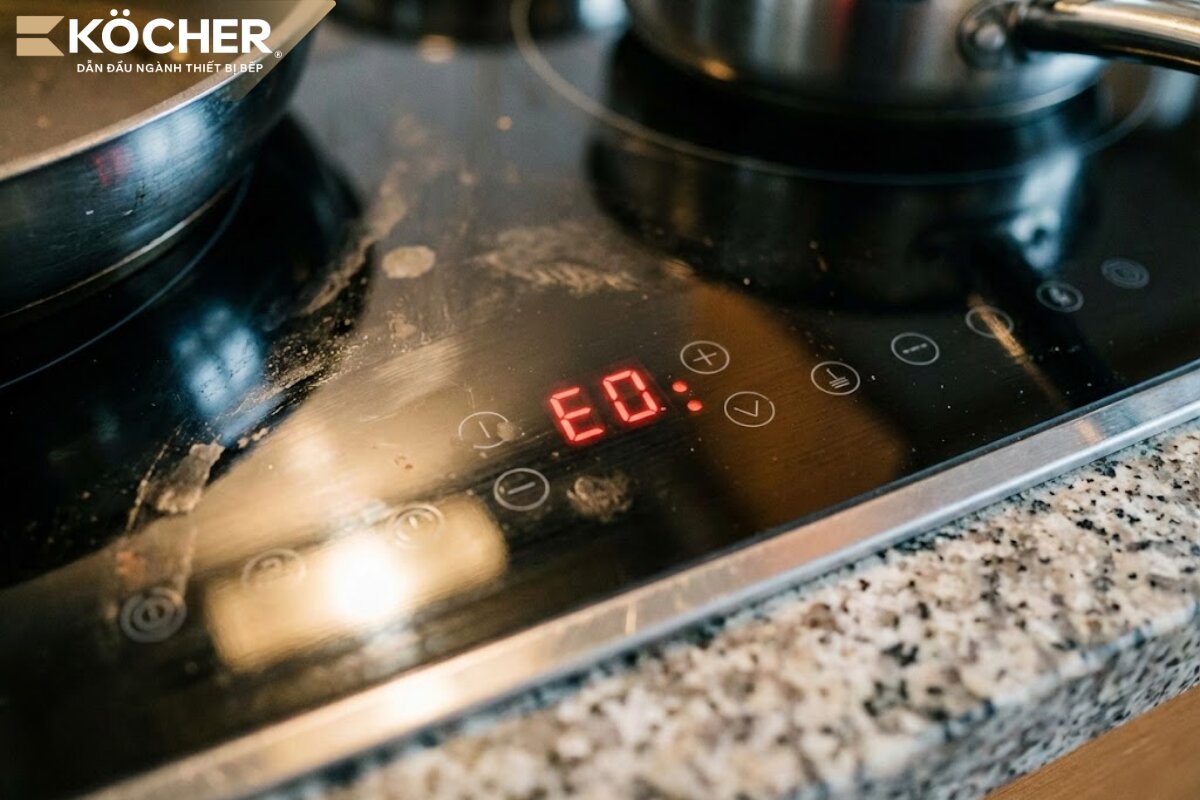
- The display may show error codes (such as E0, E1) or may not show any errors at all, but the food remains cold.
- Hearing a “clicking” sound intermittently (pulsing) but the pot does not heat up.
7 main causes of the hob not pulsing and quick solutions
The induction hob not pulsing is essentially an automatic shutdown mechanism to protect the device when a technical fault is detected. Below are 7 common causes and solutions when the induction hob has a pulsing error.
The hob is in “standby” mode (due to not detecting the pot)
This is the most common situation but is often mistaken by users as a technical fault.
- Signs: The hob flashes the display light or shows an error code (usually E0, E1 depending on the brand) and the cooking zone does not heat up.
- Cause: The hob is turned on but no pot is placed on the cooking zone, or you have removed the pot from the hob for too long (usually 30 – 60 seconds), causing the hob to automatically stop pulsing to save electricity.
- Solution: Place a pot with a magnetic base correctly centered on the cooking zone so that the sensor can detect it and activate the cooking mode.
Incompatible pot or incorrectly positioned
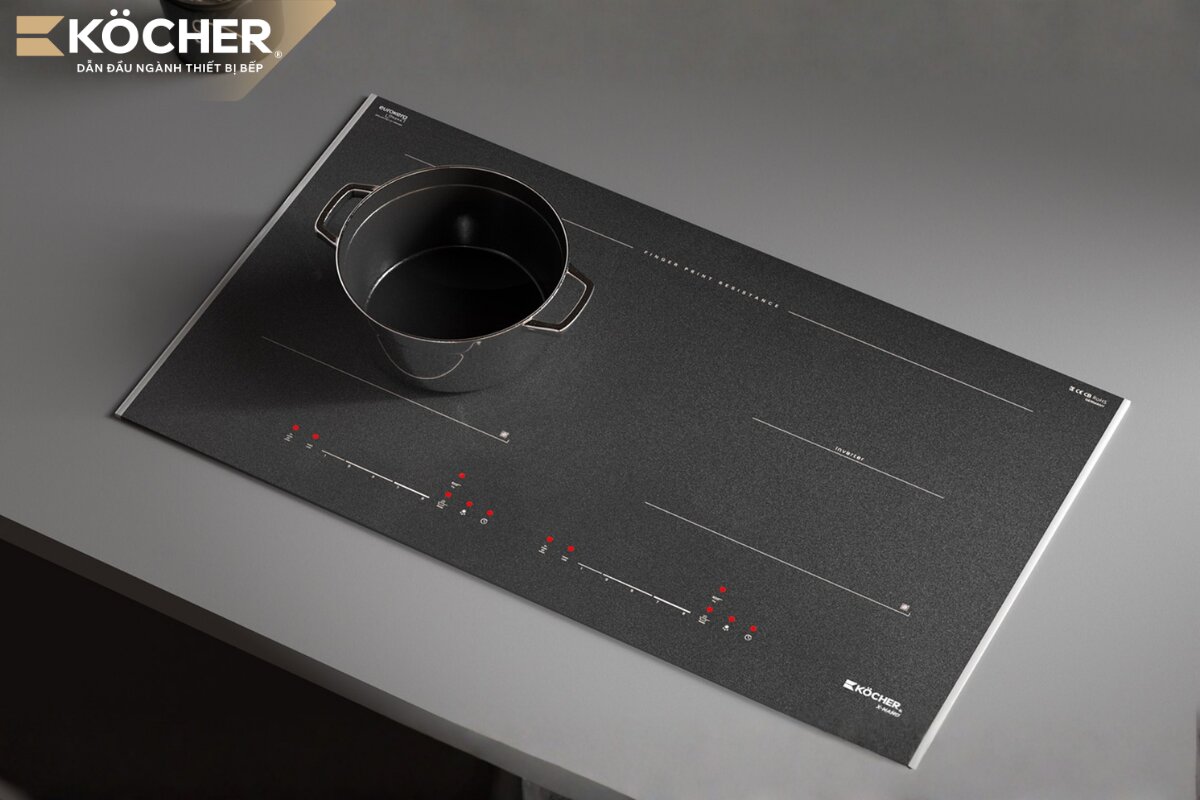
Induction hobs operate based on magnetic induction, so the cooking utensils must have magnetic properties to generate heat.
- Signs: The hob shows an error indicating it does not detect the pot, or the hob operates erratically, sometimes detecting and sometimes not, with no increase in temperature.
- Cause: Using glass pots, clay pots, aluminum pots without a magnetic base, pots with warped or uneven bottoms causing insufficient contact area; or placing the pot too far off-center from the induction coil.
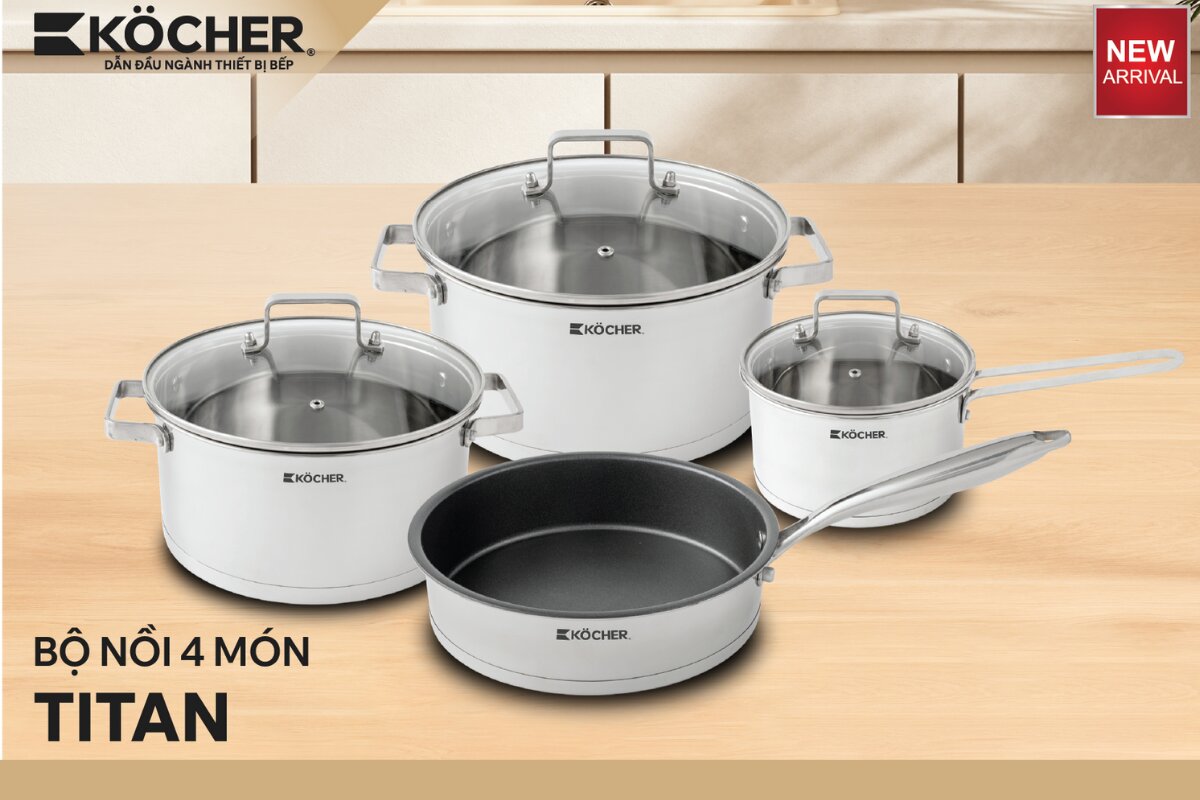
- Solution: Use a magnet to check the bottom of the pot (if it sticks tightly, it is usable). Prefer pots that are well compatible with induction hobs, with flat bottoms to optimize heat transfer efficiency and ensure accurate sensor operation. To find out which pots are most suitable for induction hobs, you can refer to the article What pans to use with induction hobs? Symbols, identification methods & 5 suitable pan models.
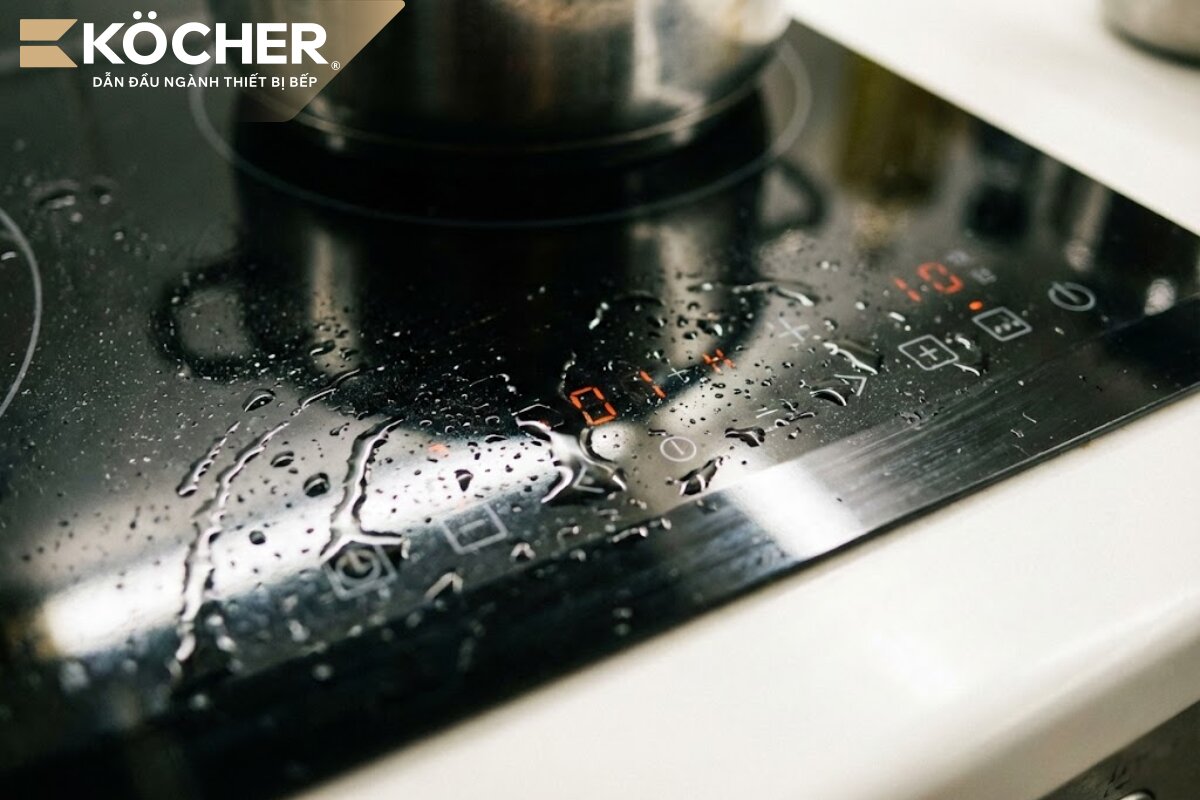
The glass surface or bottom of the pot is wet/dirty
A layer of obstruction between the glass surface and the bottom of the pot can disrupt the magnetic field transmission process.
- Signs: The hob has poor magnetic detection, heating time is longer than normal or the temperature is unstable.
- Cause: The bottom of the pot is wet, covered with thick burnt grease, or the hob’s glass surface has a lot of dirt, food spills creating an insulating layer that prevents the magnetic field from contacting the bottom of the pot.
- Solution: Turn off the hob and wait for the glass surface to cool down, use a soft cloth and specialized cleaning solution to clean all grease and residues on the glass surface. At the same time, scrub and dry the bottom of the pot before placing it on the hob to ensure the best contact.
Fluctuating power supply, unstable voltage
Induction hobs are high-power electronic devices that are very sensitive to changes in the input current.
- Signs: The hob automatically turns off and then restarts while cooking, the display light flickers or dims when a high power level is selected. Additionally, in some models with digital control, when the input voltage drops too low below the safe level, the system will protect the circuit by displaying a warning code. When you see Induction hob showing low voltage on the screen, the device will automatically stop the heating cycle, resulting in a pulsing error.
- Cause: Household voltage is too low (below 190V) or too high (above 250V) and the electrical wires have a small cross-section that cannot handle the load, causing voltage drops when the hob operates. When the voltage is unstable, you will frequently encounter the phenomenon of induction hob running intermittently due to the hob’s protection system activating to prevent component damage.
- Solution: Use a voltmeter to check the voltage during peak hours (5 PM – 8 PM). If the voltage is unstable, you need to install a voltage stabilizer. Additionally, use electrical wiring with a larger cross-section (at least 2.5mm – 4.0mm) connected directly to a separate circuit breaker to ensure stable power supply.
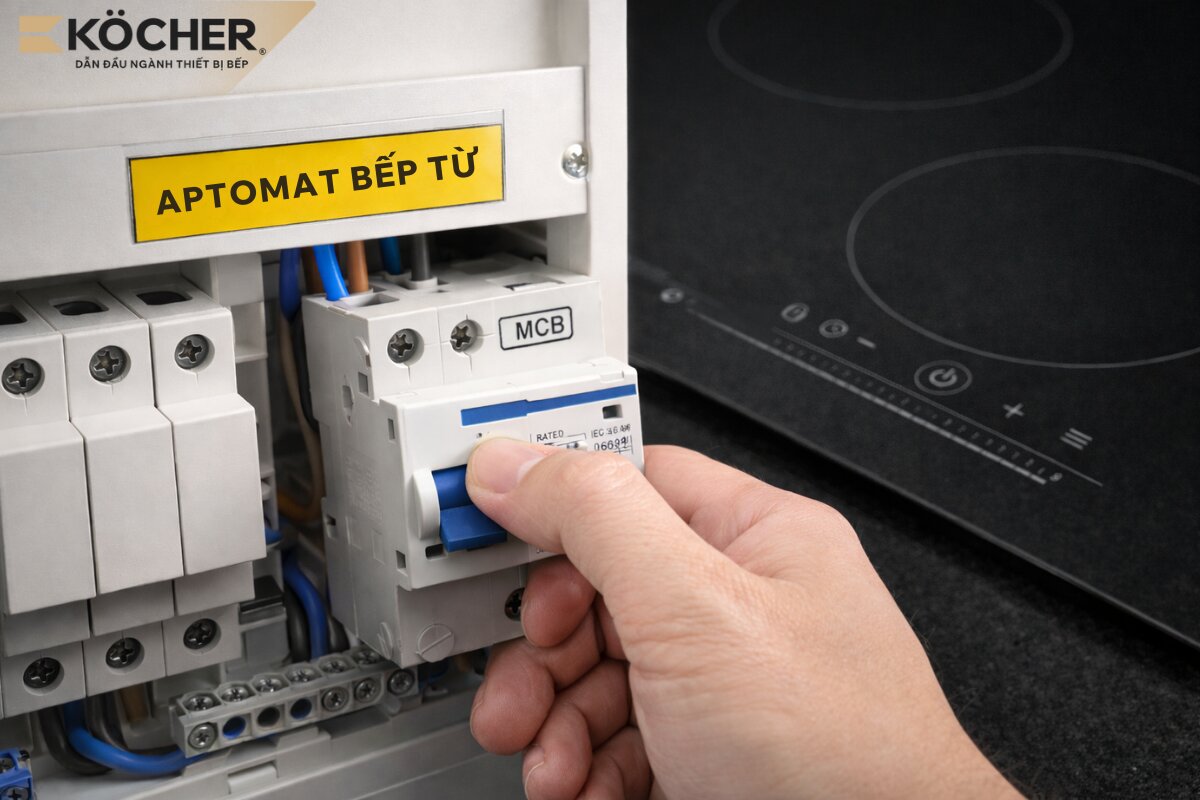 Install a separate circuit breaker for stable operation of the induction hob.
Control circuit/sensor malfunction
The control circuit acts as the “brain” of the hob; if it malfunctions, it will not be able to send the pulsing command to the induction coil.
- Signs: The control panel is unresponsive, does not detect touch, or pressing the temperature level does not elicit a response, and there is no sound from the magnetic field operating.
- Cause: Due to components aging after prolonged use, a too humid cooking environment causing oxidation of the circuit, or insects invading causing a short circuit in the control circuit.
- Solution: Disconnect the power supply to the hob, wait about 15 – 20 minutes, then turn it back on to reset the system. If the hob still does not operate, contact a technician to check and replace the display circuit board or sensor. Additionally, you can use a protective mesh for the induction hob to prevent insects from entering the hob.
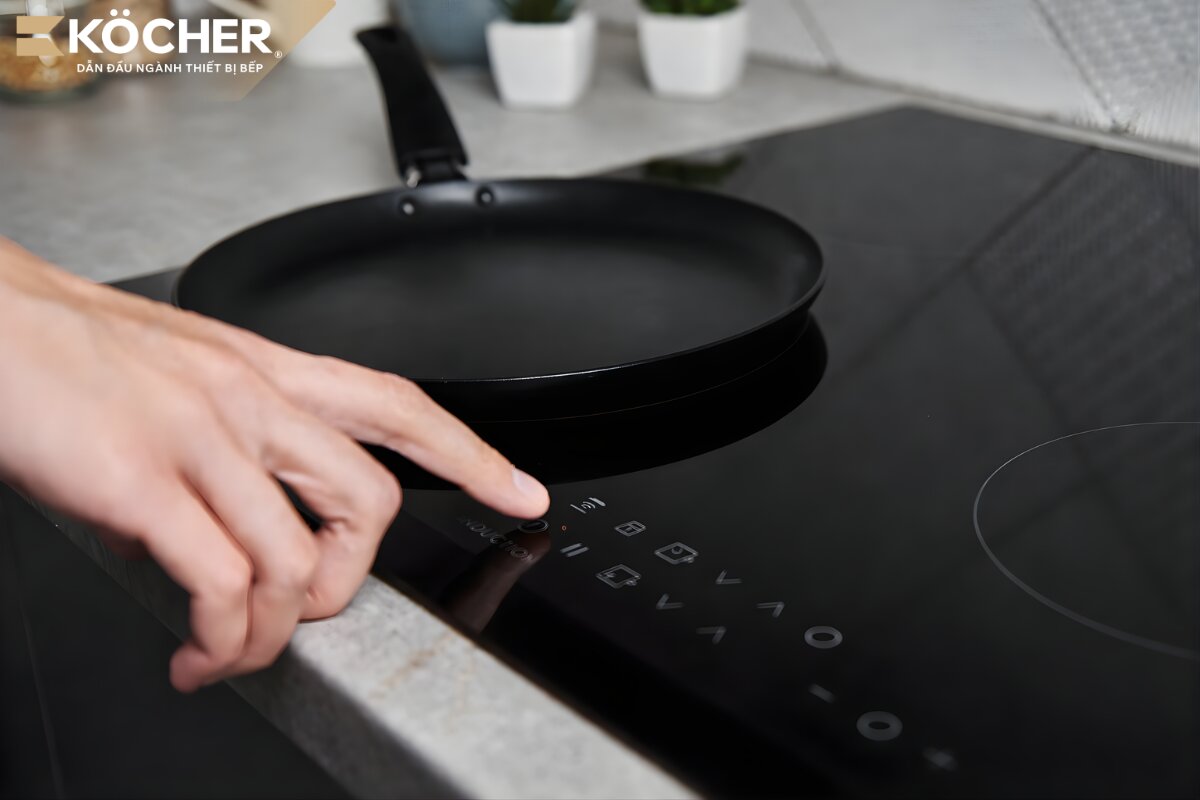 The hob not turning on may be due to a faulty control panel
Power components (IGBT, pulse transformer) are damaged
This is the most common technical cause of the induction hob having a pulsing error even though it is still connected to the power source.
- Signs: The hob does not heat up at all, which may be accompanied by the circuit breaker tripping or the fuse blowing as soon as the hob is turned on. The sudden surge in current due to a short circuit in the IGBT will cause the induction hob to blow the fuse immediately to prevent the short circuit from spreading to other circuit blocks.
- Cause: The power transistor (IGBT) is shorted/blown, capacitors are swollen or dried out, the pulse control IC is damaged due to overheating or the lifespan of the components has expired. This is a typical sign of induction hob power failure that requires timely intervention.
- Solution: This is a serious hardware fault related to the high voltage circuit. You must not attempt to disassemble it; call the warranty center or a professional repair technician to replace the IGBT and capacitors with the correct specifications.
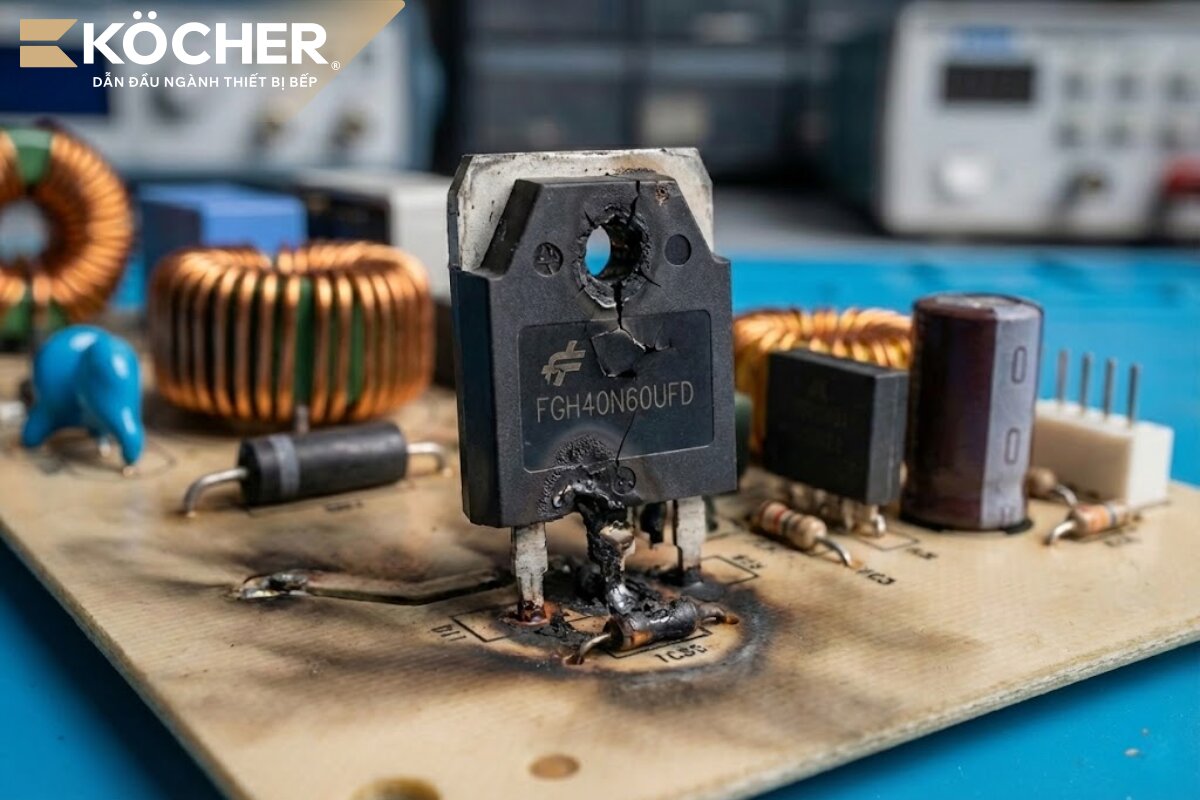 A damaged IGBT component is the most common reason for the induction hob to have a pulsing error. (Illustrative image)
Cooling fan or cooling system malfunction
The pulsing due to overheating is an intelligent self-protection mechanism of the circuit board. When the fan or ventilation slots encounter issues, the temperature at the power transistor (IGBT) skyrockets. The temperature sensor immediately reports to the microcontroller to proactively stop the pulsing command to protect all components from the risk of short-circuiting.
- Signs: The hob suddenly stops heating while running, the area around the hob and the surface are hot. You may not hear the fan running or the fan makes unusual rattling noises. The display usually immediately shows error codes E1, E2, E6 or does not display error codes in some older models.
- Cause: This phenomenon is mainly due to a malfunctioning cooling fan, broken wires, or a jammed shaft due to accumulated dirt over time. Additionally, improper installation under the counter can cause the ventilation slots to be blocked, preventing airflow from circulating to cool the circuit board.
- Solution: Turn off the hob and clean the cooling system with a handheld vacuum cleaner, wait 30 minutes for the hob to cool down, then try again. If the fan is damaged, it needs to be replaced with a new genuine fan to ensure safety.
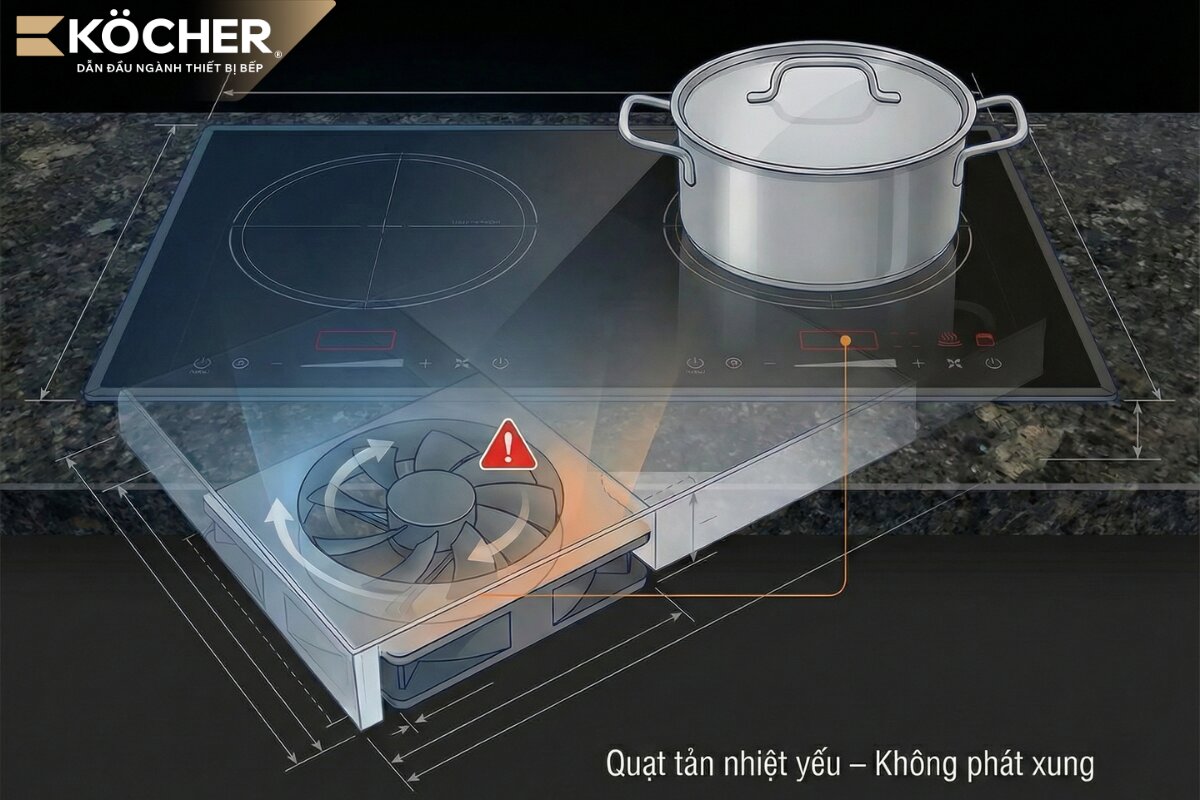 An ineffective cooling fan is the reason for the induction hob’s pulsing error. (Illustrative image)
5 tips for using induction hobs to avoid pulsing errors
To minimize the situation of the induction hob having a pulsing error and prolong the lifespan of the device, users need to pay attention to 5 things when using the induction hob:
- Only use compatible pots: Always use a good magnetic pot set with a flat and thick magnetic base, avoid using poorly made honeycomb bottom pots.
- Clean the bottom of the pot before placing it on the hob: Ensure there is no water or dirt on the bottom of the pot before placing it on the hob to optimize heat transfer efficiency.
- Regularly clean the glass surface: Wipe the glass surface with a soft cloth and specialized cleaning solution after each cooking session to avoid grease and leftover food sticking for a long time, which can hinder magnetism.
- Install a separate circuit breaker: Induction hobs have high power, installing a separate circuit breaker (usually 20A – 30A) helps stabilize the power supply, avoiding overload on the common wiring.
- Ensure ventilation: Do not block the bottom of the hob, leave a recommended ventilation gap (at least 5cm) for the fan to operate effectively.
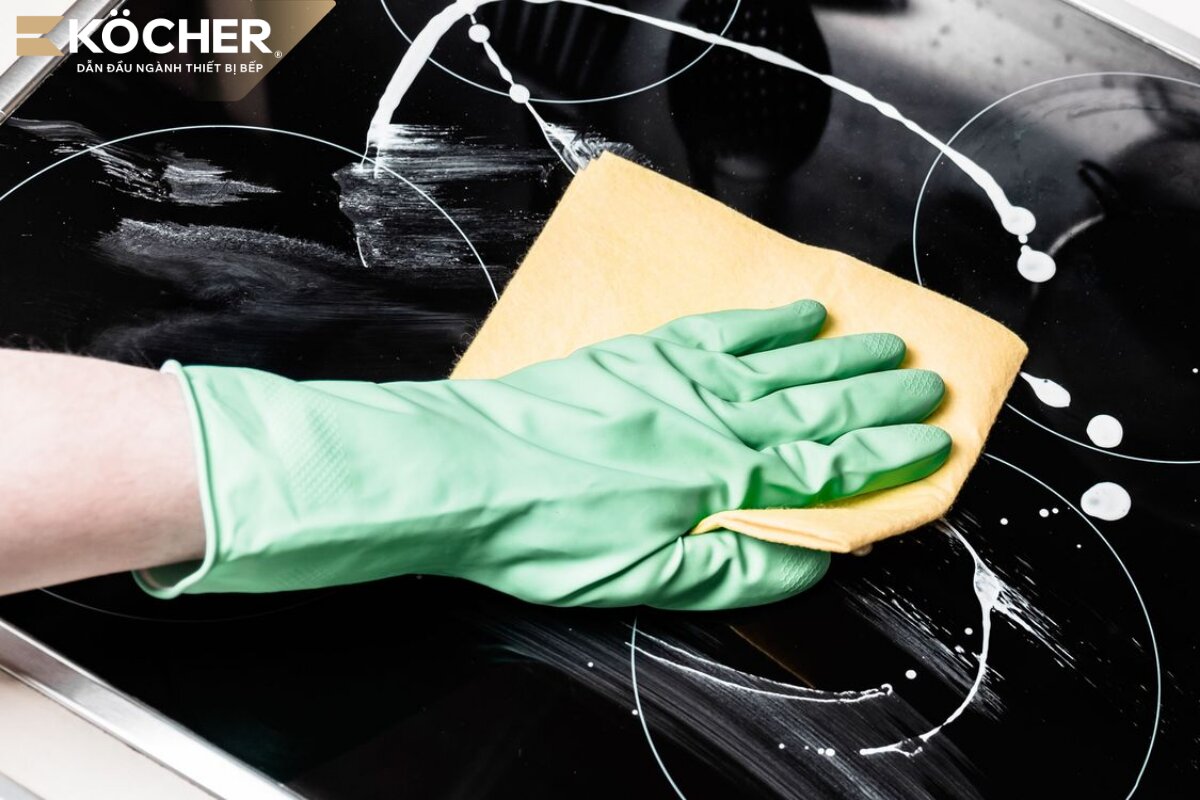 Regularly clean the glass surface to avoid dirt sticking to the glass.
3 frequently asked questions about induction hobs not pulsing
Below are 3 frequently asked questions when encountering an induction hob with a pulsing error, helping you clarify technical risks.
The induction hob does not pulse but still displays normally, what does that mean?
The phenomenon of the induction hob displaying normally but not heating (not pulsing) is often due to a fault in the power layer or detection system. At this time, the control part (screen, buttons) still operates well, so it does not report an error, but the “cook” command is not executed on the circuit board below.
Can the induction hob not pulsing but not showing an error be fixed by myself?
You should only attempt to fix it yourself if the cause comes from external factors such as: incompatible pot, incorrectly placed, weak voltage, or excessively dirty glass surface. If the cause relates to internal components (circuit, capacitor, sensor, induction coil), you must not attempt to disassemble the hob; improper intervention can lead to electrical safety issues, short circuits, and completely damage the hob’s circuit board.
Does using the induction hob in a low voltage area increase the risk of not pulsing?
Low voltage can increase the risk of pulsing errors. Low voltage causes the hob to operate outside its designed power, and components may operate under overload, quickly heating the circuit and severely reducing the lifespan of capacitors and IGBT. Over time, this will lead to aging components, circuit failure, and the hob losing its pulsing capability.
To address this issue, you should prioritize devices with good grid adaptability such as the Köcher DIB4-888 induction hob. With an advanced Inverter circuit board system designed optimally, the Köcher DIB4-888 induction hob can automatically adjust and operate reliably even under unstable power conditions. To learn more about this product, you can refer to the article Why the Köcher DIB4-888 induction hob can be used in areas with unstable voltage.
Although the induction hob not pulsing causes inconvenience for users, it can be completely resolved if you understand the causes. We hope the detailed sharing above has helped you gain more knowledge to handle this situation calmly and effectively.
If the input protection system is completely short-circuited, the device will fall into a total power loss state, causing the induction hob to not receive power even though the wiring system or sockets in the house are still functioning well. At that time, replacing the fuse combined with thoroughly checking the power circuit is mandatory to restore the hob to normal operating status.
If you are looking for high-quality induction hobs, please refer to Köcher’s products. Köcher – the leading brand in kitchen equipment, proudly offers durable and high-class cooking solutions for your family, with superior X-Nano glass technology that is scratch-resistant and E.G.O components that meet German standards.
Köcher induction hobs pioneer German technology – For detailed product information, please contact:
|