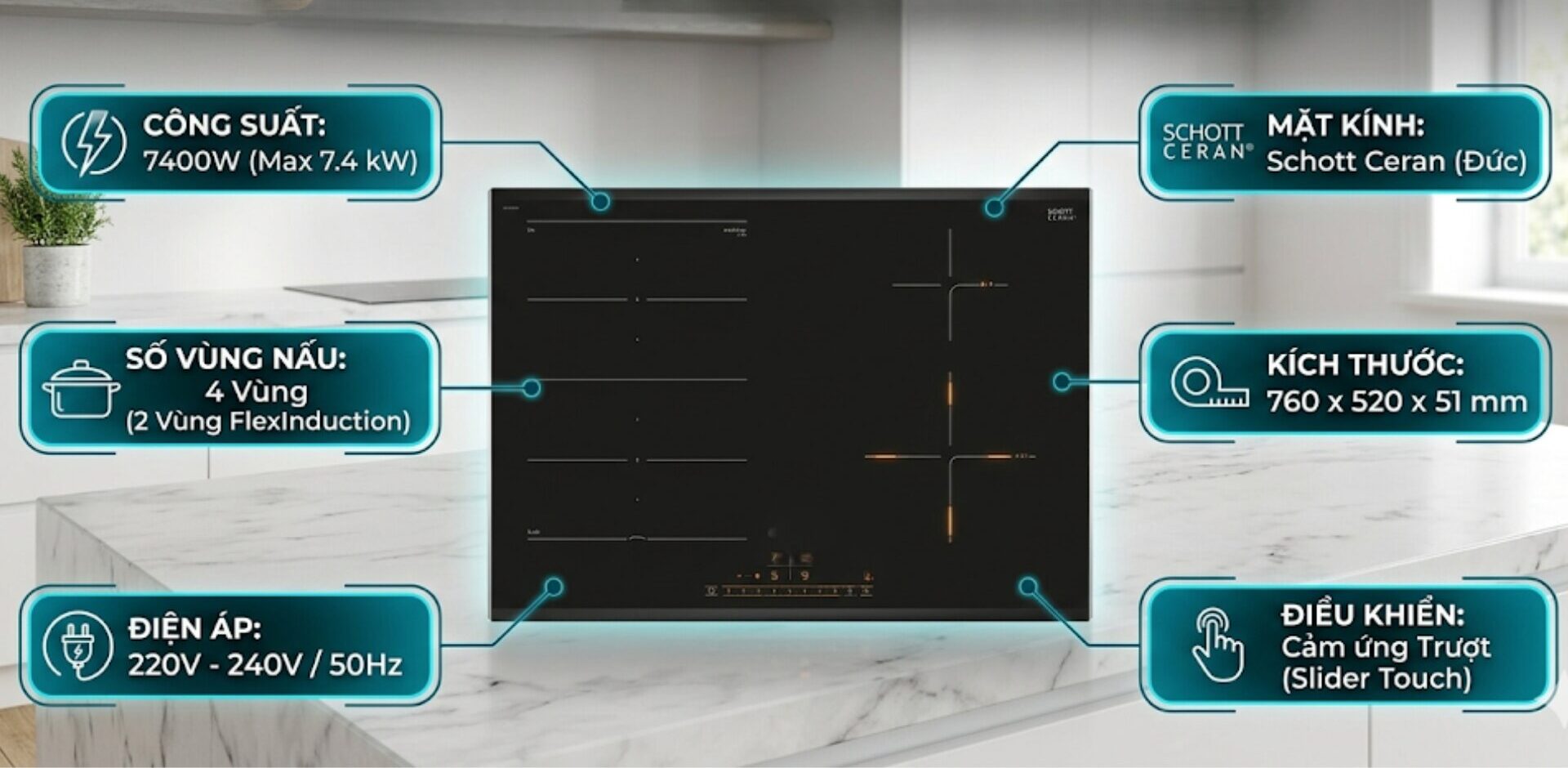
The situation of the induction hob not receiving power interrupts the preparation of family meals, causing considerable concern about electrical safety and repair costs. This issue may stem from a simple external connection error or internal faults in the control board system. The article below will provide you with the causes and timely solutions to this situation.
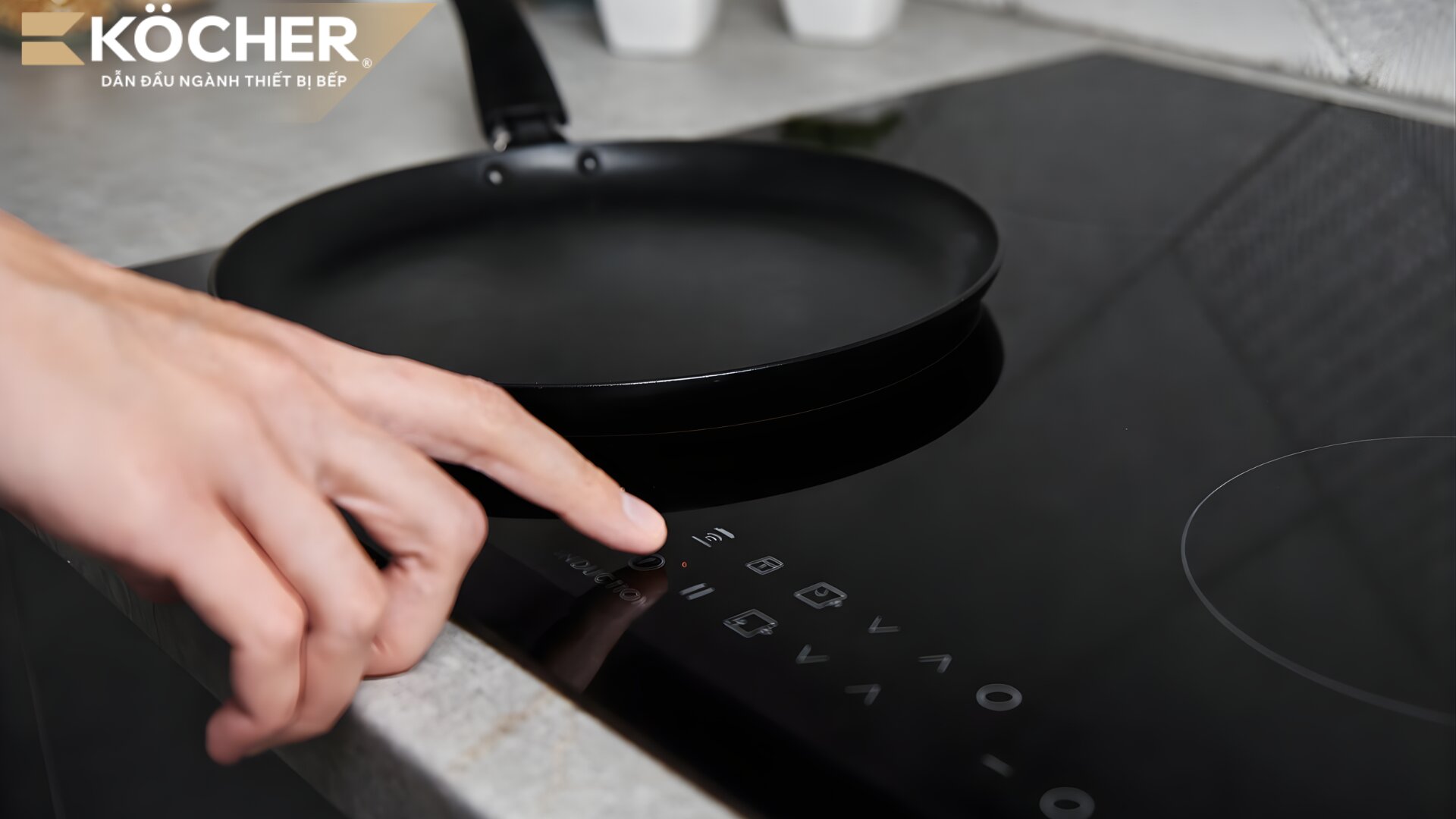
| The induction hob not receiving power is a condition where the hob is connected to the power supply but the LED light does not turn on, the control panel does not respond when touched, or there is no “beep” sound indicating startup. This is completely different from the error where the hob still powers on but does not recognize the pot (error E0). |
Unstable or too weak power supply
This is a common situation in areas with weak power supply or when using the hob during peak hours (5 PM – 8 PM), when the input voltage is insufficient to activate the hob’s induction system.
- Cause: The induction hob operates requiring standard voltage (usually from 190V – 240V). When the voltage drops too low (below 190V) or fluctuates, the protection system of the board will automatically cut off the power to protect internal components like IGBT and capacitors, preventing electrical “shock” that could cause damage. If the voltage is too low, the board does not have enough energy to oscillate, leading to the phenomenon of the induction hob not pulsing the magnetic field to the bottom of the pot.
- Solution: You need to check the voltage of your household using a voltmeter, especially during peak hours. If this situation persists, consider installing a separate voltage stabilizer for the hob to ensure the input current is always stable, helping the hob operate smoothly.
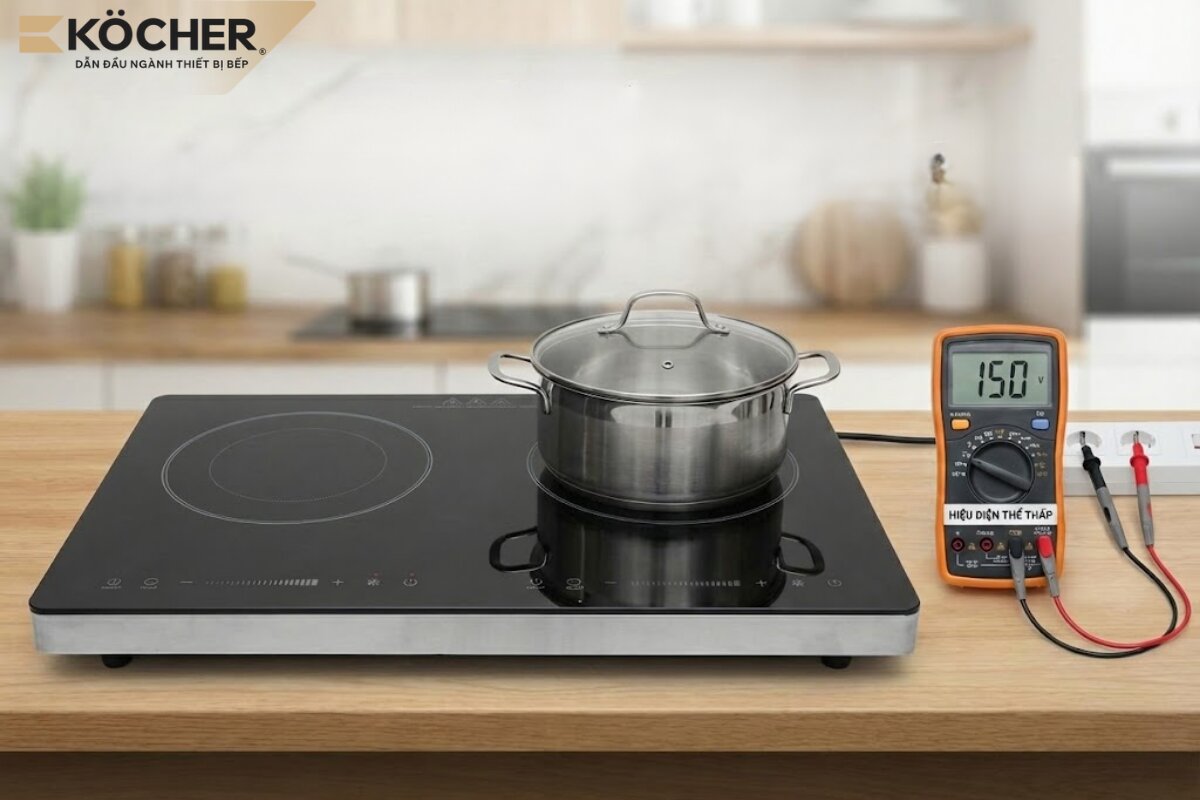
If your family is in an area with weak voltage, consider the DIB4-888 induction hob from Köcher, which applies E.G.O technology (Germany) specifically researched for the Asian market, capable of operating smoothly even when the voltage is unstable.
The circuit breaker is off/tripped or the socket has no power
This situation often occurs due to local overload or poor electrical contact causing the circuit to be completely interrupted.
- Cause: During peak hours, if the household electrical system is poor or many high-power devices are operating simultaneously (oven, water heater…), the circuit breaker is likely to trip to protect the hob from overload. Additionally, sockets that have been loose or oxidized over time can also cause the current to fluctuate, leading to the induction hob not receiving power.
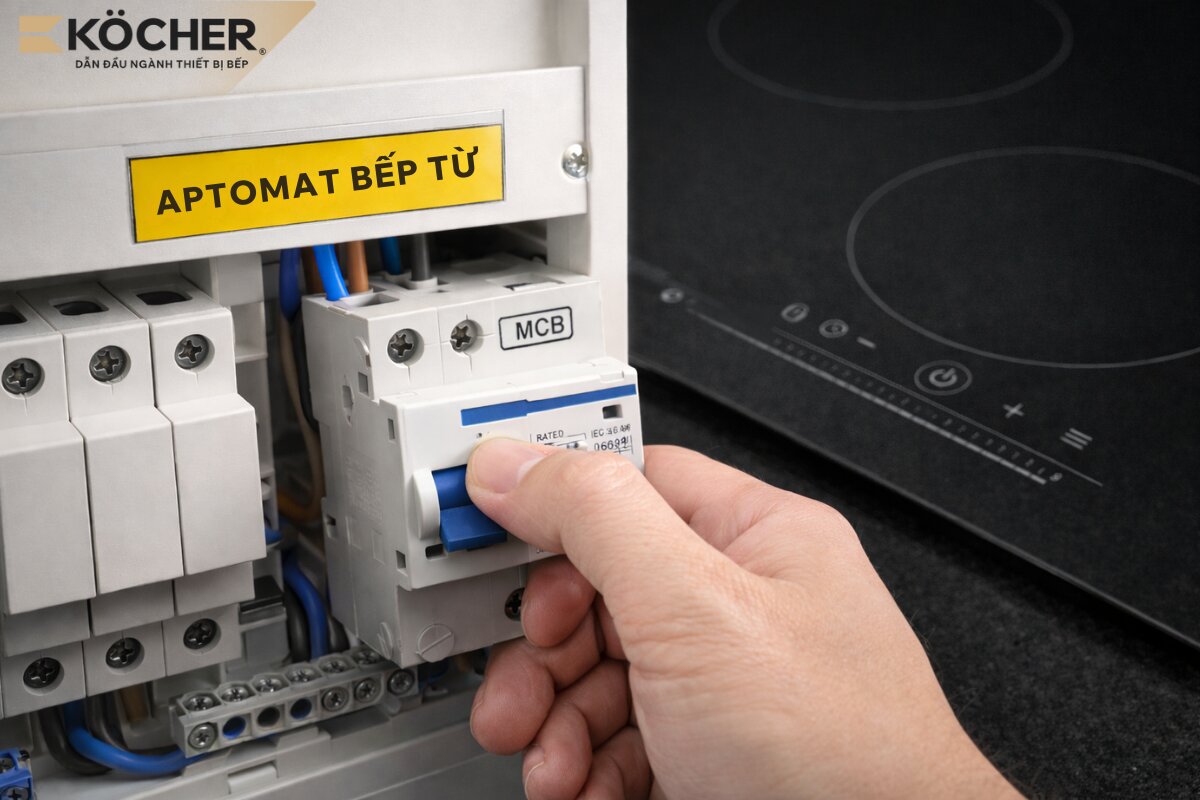
- Solution: Check if the hob’s circuit breaker is off. If the circuit breaker continuously trips when the hob is turned on, turn off other high-power devices before turning the hob back on and check the socket with a voltage tester to see if it has power. If the situation does not improve, you need to replace the circuit breaker with a higher Ampere rating (20A – 30A) and repair the socket if it is damaged.
The power cord or plug of the hob is damaged
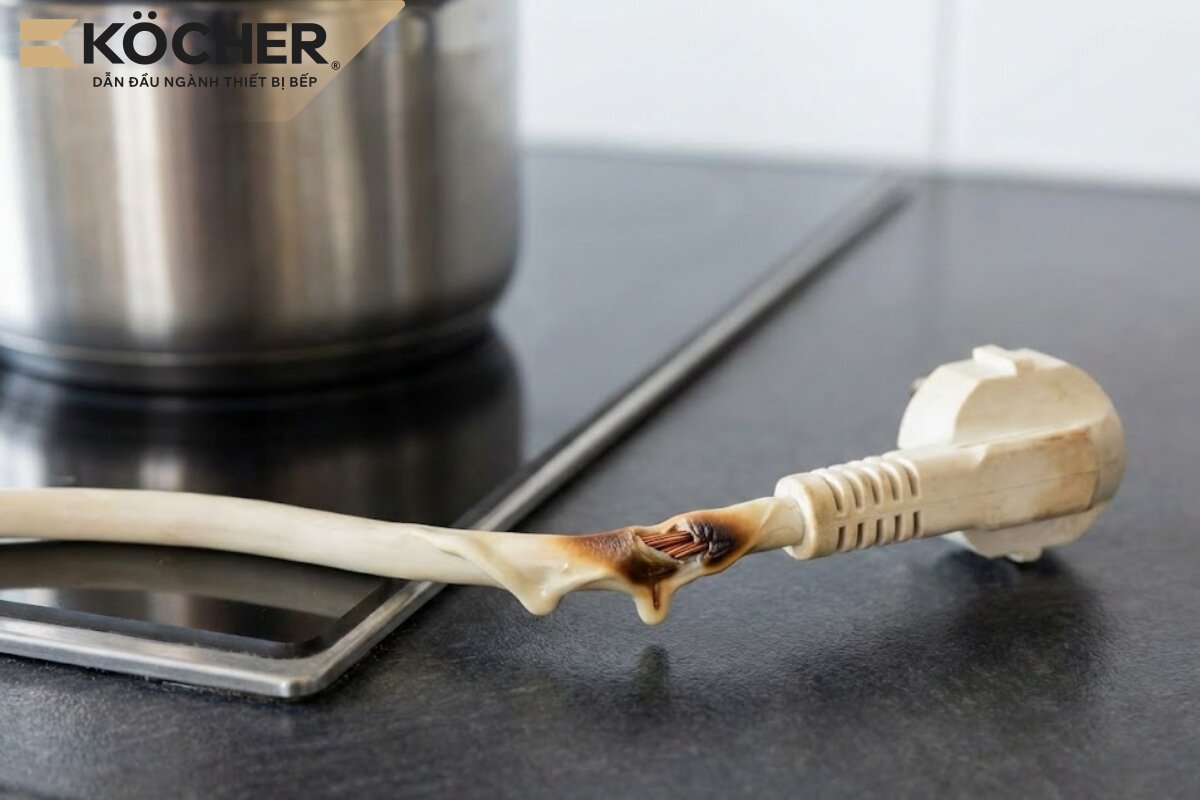
Interruption in the wiring is one of the direct causes of the induction hob not receiving power.
- Cause: The power cord acts as a transmission line for electrical energy from the system to the device. The hob will not operate if the power cord is damaged due to rodent bites, pinched, or loose connections inside the plug after prolonged use.
- Solution: Carefully observe the entire length of the power cord from the socket to the hob body for any cracks, exposed areas, melting, or breaks. If damage is found, replace it with a new cord of equivalent cross-section and load capacity to ensure fire safety.
The control panel is faulty or not receiving commands
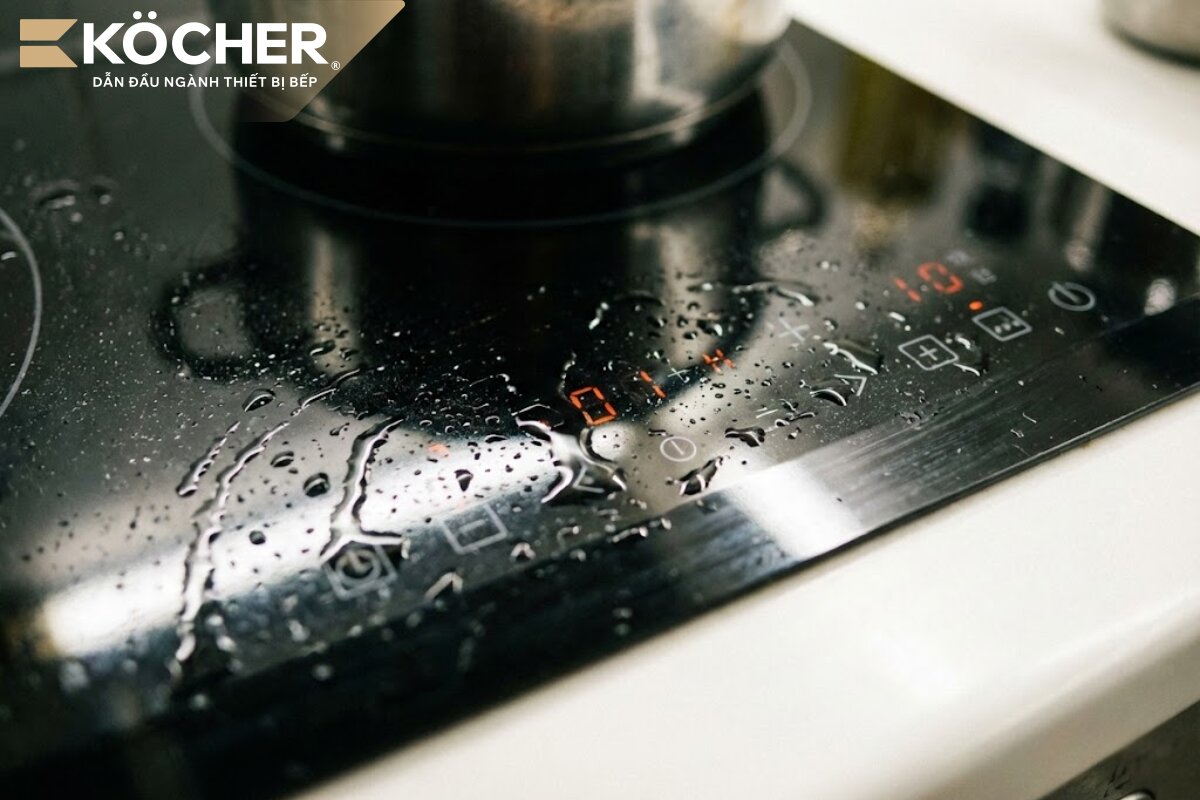
The hob may still be powered on, but the control panel is unresponsive, leading you to mistakenly believe the hob has lost power.
- Cause: The touch control panel operates based on capacitive principles. If the glass surface is wet, covered in thick grease, or the control board underneath is damp/invaded by insects, the sensors will not recognize hand movements, resulting in the inability to turn on the hob.
- Solution: Wipe the control area dry and clean with a soft cloth, then disconnect the power for about 5 – 10 minutes to reset the sensor system before turning it back on. If it still does not work, it is highly likely that the internal control board is faulty and needs a technician to check.
The LED light on the control panel is flickering or burnt out
This is a display error that leads users to mistakenly believe the hob is not receiving power, even though the hob may still be operational.
- Cause: When steam from cooking enters through gaps or sudden temperature changes cause condensation, the LED display system on the board may flicker or burn out due to electrical surges after a period of use.
- Solution: Try placing a pot of water on the cooking zone, turn on the hob, and listen for the sound of the cooling fan running or whether the water warms up. If the hob can still cook but the light does not turn on, you need to contact warranty service to replace the LED light unit or the display board.
The hob is shut off due to overheating or the automatic protection system is activated
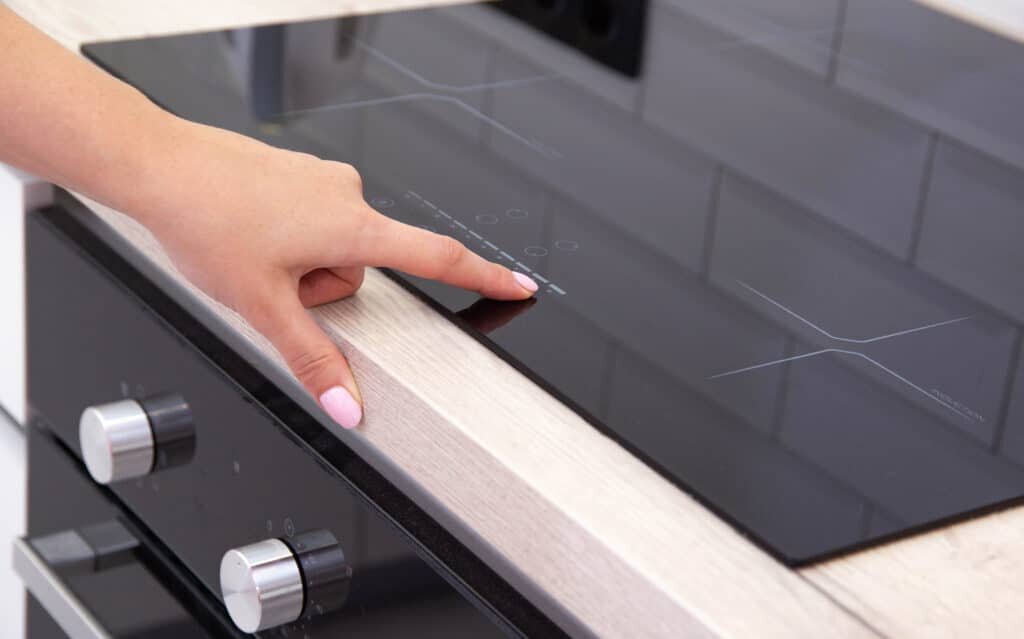
This is a proactive safety mechanism designed to protect components when the hob operates beyond its capacity or the temperature rises abnormally.
- Cause: When the temperature of the cooking zone or components exceeds the safety threshold (due to prolonged cooking in Booster mode or ineffective cooling fan operation), the automatic protection system will activate and cut off the power to protect the board and IGBT from burning out. If the cooling component is damaged or the induction hob fan is not running due to a stuck shaft or accumulated dirt, the buildup of hot air will immediately trigger the thermal relay to cut off the main power.
- Solution: Do not attempt to turn on the hob immediately; let the hob remain in standby mode for the cooling fan to continue cooling the components and check if the ventilation slots are obstructed. Wait about 15 – 20 minutes for the hob to cool down completely before restarting.
This situation, if it occurs frequently, can lead to the phenomenon of the induction hob cutting off continuously and significantly reduce the lifespan of the device if the cooling fault is not thoroughly resolved.
The power board is faulty
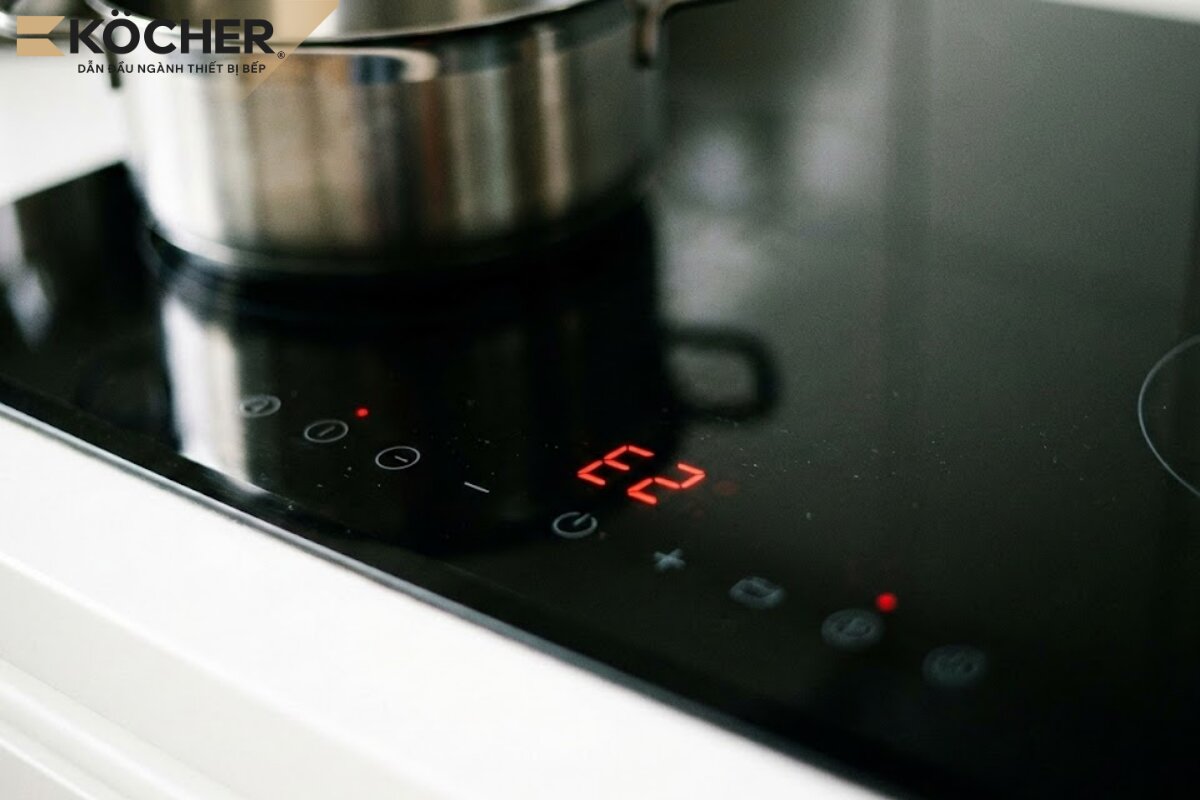
The power board plays a role in converting electrical energy into a magnetic field to heat the pot. When this component malfunctions, the hob will not be usable.
- Cause: The power board contains semiconductor components like IGBT that control the frequency and current flowing into the induction coil. When the IGBT fails, the surge in load will cause the input protection system of the induction hob to blow a fuse immediately to prevent widespread fire hazards. Additionally, if the switching power supply (which generates 5V/18V) is damaged, the hob will be completely “paralyzed” due to lack of energy to start the operating system. This is a direct consequence of the induction hob failing due to power overload over an extended period without adequate protection mechanisms.
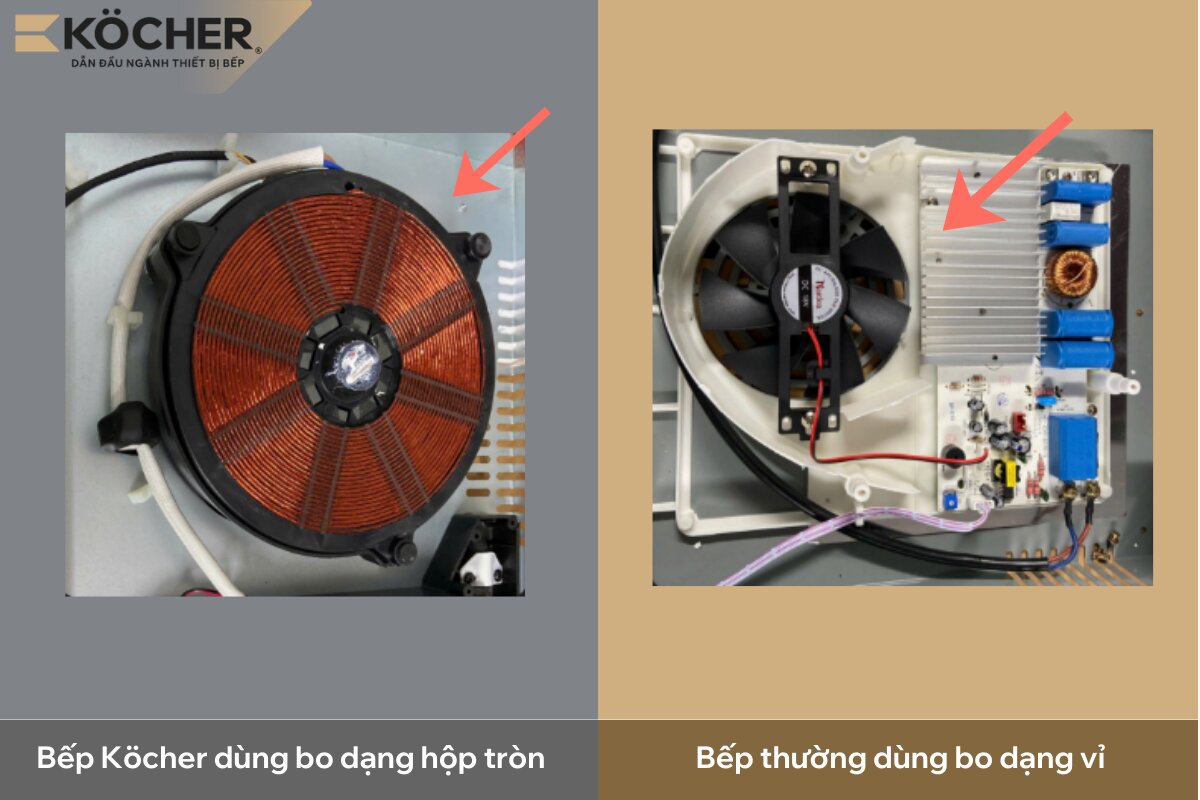
- Solution: This is a complex technical fault related to specialized electronic components, and you should not attempt to disassemble or repair it yourself. Please contact the warranty center immediately for a technician to replace the genuine board. It is advisable to prioritize using a round box-type board to limit dust, foreign objects, or insects from entering and causing short circuits or component damage.
6 safety notes when the induction hob is plugged in but not powered on at home
To ensure safety for users and avoid damaging sensitive electronic components, you need to pay attention to the following important principles:
- Do not continuously plug and unplug the power when the hob is not powered on, as this may cause electric shock, damaging the power circuit and internal protective components.
- Always turn off the circuit breaker or unplug the cord before checking, especially if the hob has previously shown signs of burning smell, sparks, or flickering.
- Do not disassemble the hob to check components, as capacitors in the induction hob may still hold a charge, posing a serious electric shock risk.
- Do not use extension cords or low-quality splitters for the induction hob, as they can easily cause overload, voltage drops, and prevent the hob from powering on.
- Do not attempt to turn on the hob when the cabinet compartment is too tight or the hob is too hot; let the hob cool completely and ensure the ventilation slots are unobstructed before trying again. When you just turn off the hob, seeing the induction hob fan running continuously is completely normal; this is a forced cooling feature to lower the temperature of the board, and do not turn off the circuit breaker at this time until the fan stops completely.
- Contact the warranty center or a professional technician to check the details of the power circuit and internal semiconductor components.
Accurately identifying the cause of the induction hob not receiving power helps users be more proactive in maintaining and operating the device safely. Understanding the causes helps users quickly troubleshoot and extend the lifespan of the hob components. We hope the analyses in this article have provided you with solutions to keep the hob operating smoothly and durably.
If you are looking for a high-quality induction hob, please refer to Köcher’s products. With superior X-Nano scratch-resistant glass technology and E.G.O components meeting German standards, Köcher proudly offers durable and high-class cooking solutions for your family.
|
Köcher induction hob pioneers German technology – For detailed product information, please contact:
|