What pots can be used on induction cooktops to achieve maximum heat transfer efficiency while ensuring safety for the internal circuit board? This is a question that many users ponder when choosing to buy or replace their cookware. In the following article, Köcher will clearly analyze suitable pot materials and guide how to accurately identify them based on the operating principle of induction cooktops.
Why is it necessary to choose the right pots for induction cooktops?
Induction cooktops operate based on the principle of electromagnetic induction (*), generating heat only when the pot’s base contains suitable ferromagnetic materials. If the wrong type of pot is used, the cooktop may not recognize the pot, heat poorly, or take longer to operate, leading to energy waste. Additionally, a pot with an uneven base or incompatible material can cause uneven heat distribution, affecting the quality of the dish.
In the long run, using the wrong type of pot can cause the cooktop to operate under excessive load, negatively impacting the internal components and circuit board. Therefore, choosing the right pot not only helps cook faster and save energy but also ensures the cooktop operates stably and durably over time.
(*) Electromagnetic induction is the process of using a magnetic field to generate electric current. When you change the magnetic field around a conductor, an electric current appears inside that conductor, known as eddy current (Foucault current).

What pots can be used on induction cooktops? 3 types of pots for induction cooking
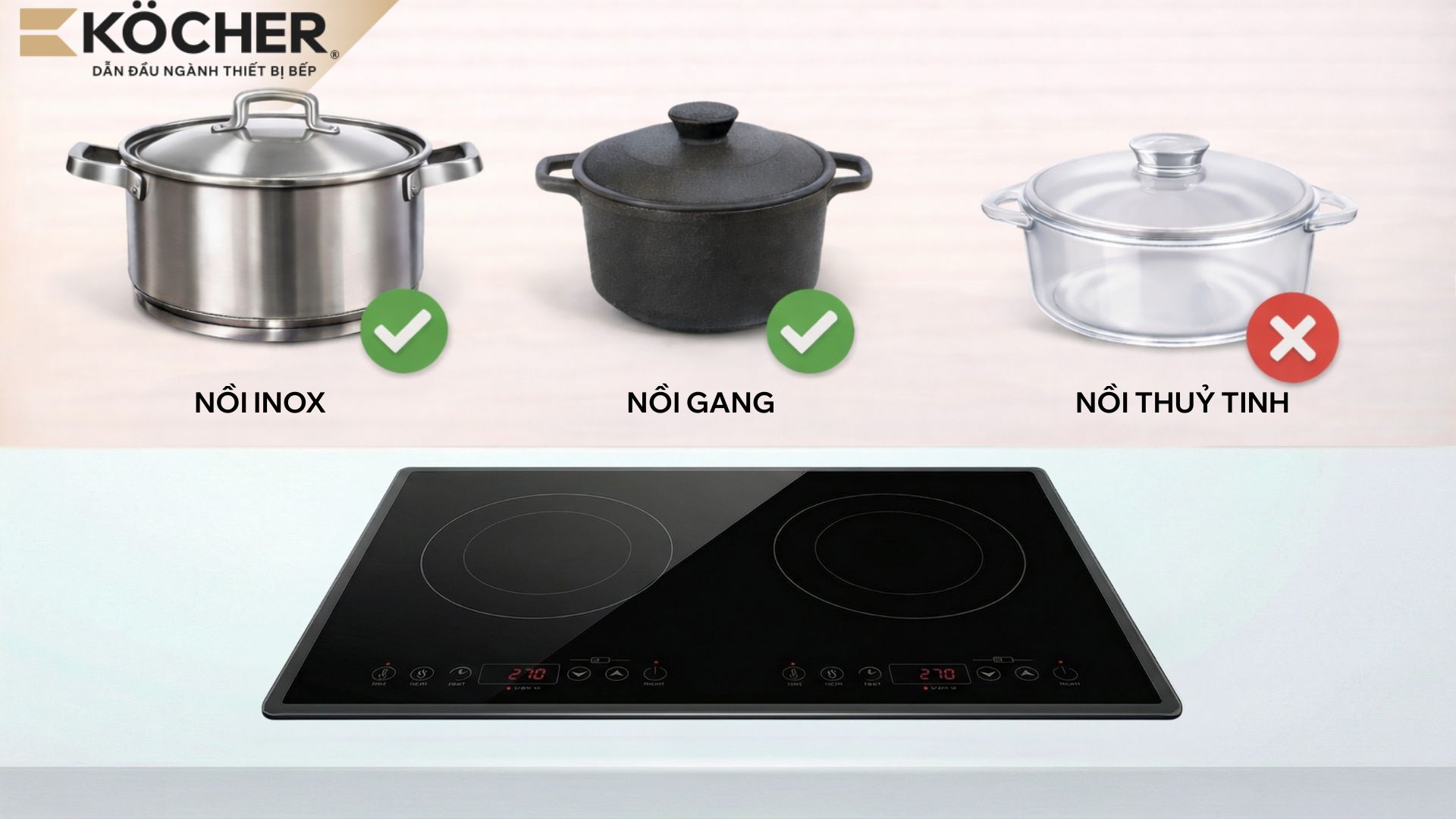
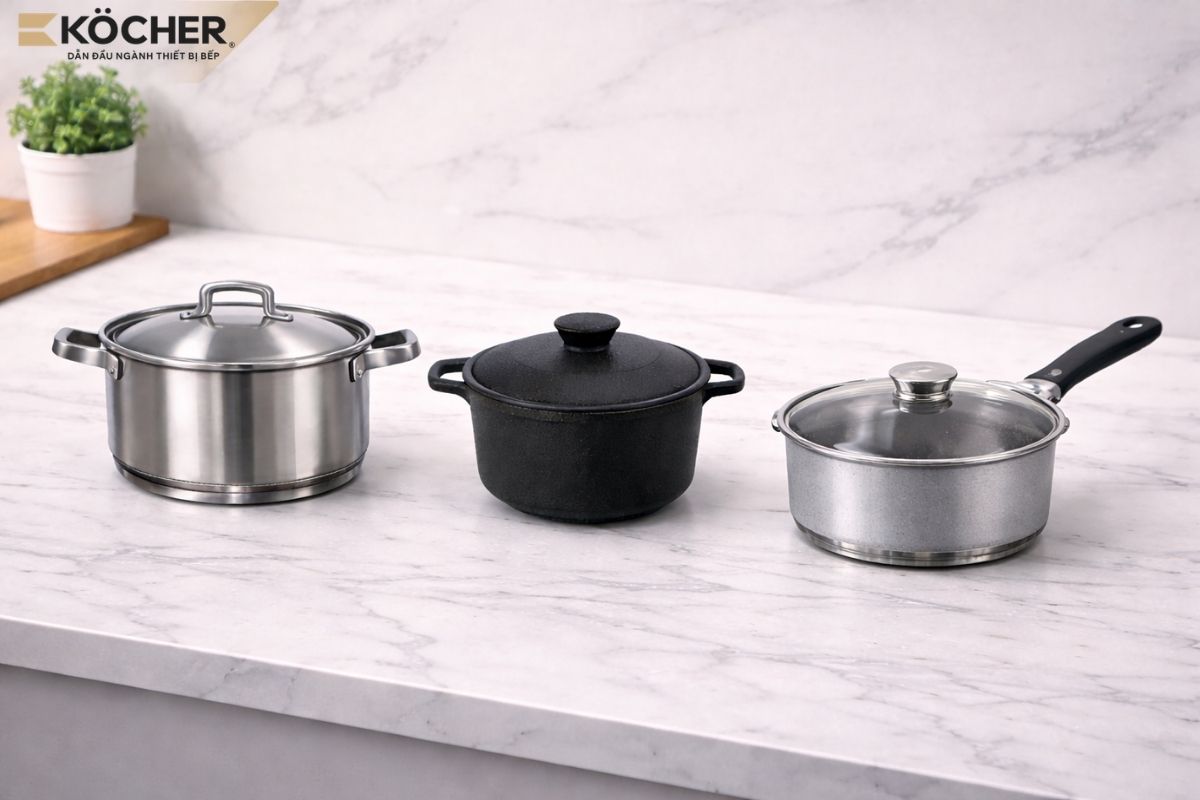
Based on the principle of electromagnetic induction, materials with high magnetic conductivity such as stainless steel and cast iron are considered the optimal choices. Specifically:
- Stainless steel pots: This is the most common material due to its low cost, high durability, and easy availability. Since stainless steel has the disadvantage of localized heat transfer that can cause burning, you should choose pots with 3-5 layers that have an aluminum or copper core to ensure even heat distribution, with the outermost layer in contact with the glass being stainless steel 430 (which is magnetic) to absorb heat.
- Cast iron pots: With a high iron content, cast iron has strong natural magnetism, allowing for quick heat generation and even heat distribution, creating a natural non-stick layer and being very durable over time. However, cast iron pots are very heavy, making them difficult to handle during cooking. The rough surface of cast iron can scratch the smooth glass surface of the cooktop if dragged, and they require careful maintenance (frequent oil seasoning) to prevent rust.
- Magnetic aluminum base pots: These are aluminum pots that have an additional stainless steel base plate stamped under the bottom of the pot. The stainless steel base will receive the magnetic field from the cooktop and transfer heat to the aluminum body. This type of pot is lightweight, heats up quickly, and often features a high-quality non-stick coating for easy cooking, with a variety of designs. If you are still wondering what induction cooktops use for frying pans is best for stir-frying, then magnetic aluminum base pots are the ideal answer.
Note: Materials such as aluminum, clay, heat-resistant glass, and pure copper are non-magnetic materials, so they cannot generate heat directly on induction cooktops. For example, if you want to use a clay pot on induction cooktops for traditional fish braising, users often have to use an additional heat transfer plate as an intermediary. However, this is only a temporary solution as it reduces cooking efficiency, causes the glass surface to heat up, and consumes more electricity compared to using the right pot.
4 ways to check if a pot can be used on induction cooktops
To accurately determine whether a pot is compatible with induction cooktops, you can apply the simple physical testing methods below.
Using a magnet – the quickest method
Place a magnet on the bottom of the pot; if the magnet is strongly attracted to the bottom, it indicates that the material has good magnetism and can be used on induction cooktops. Conversely, if the magnet has a weak attraction or does not stick, that pot will struggle to activate the Foucault current for effective heat generation.
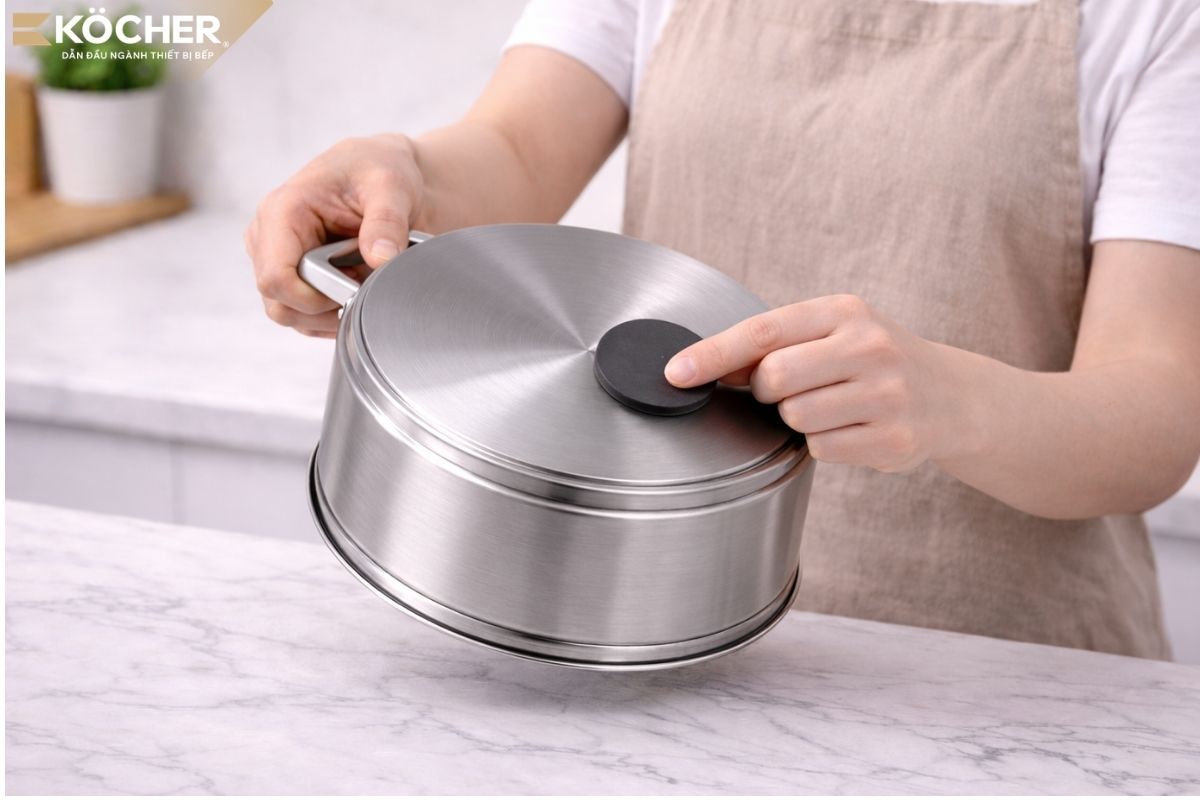 Using a magnet to check pots for induction cooking
Check the symbols on the bottom of the pot
Pots suitable for induction cooking often have some symbols printed on the bottom:
- Spring symbol: This is the most common symbol. An image of a horizontal coil spring (similar to the shape of the copper coil in induction cooktops) is embossed or laser-etched on the bottom of the pot.
- Induction text: Many manufacturers, especially European brands, will emboss or laser-print the word “INDUCTION” on the bottom of the pot or on the product packaging/labels.
- Spiral symbol: The spiral symbol (like the shape of the copper coil inside the cooktop) also indicates that the pot can be used on induction cooktops.
- Other symbols (commonly found on foreign brands): In addition to the above shapes, you may encounter combined symbols such as a spring shape inside a square.
Turn the pot upside down to observe; if it has these symbols, it means the pot can be used on induction cooktops; if not, it is highly likely that the pot cannot be used on induction cooktops.
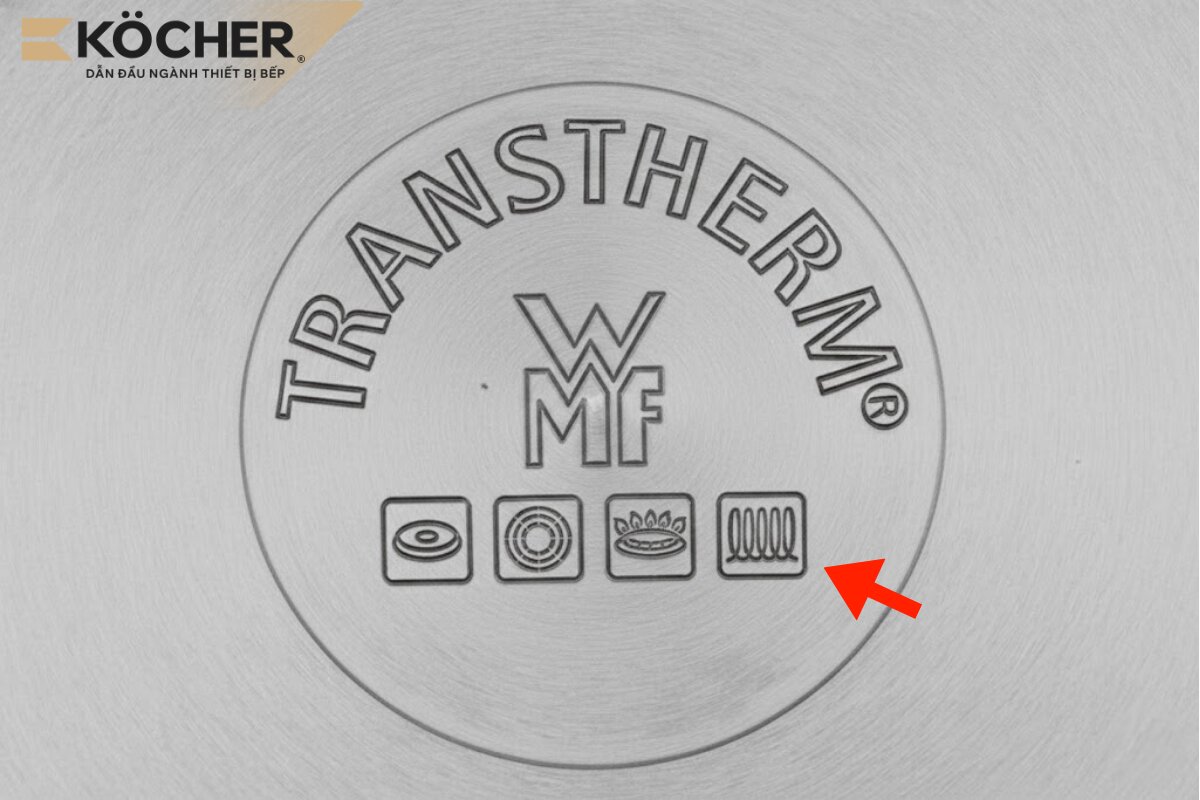 The spiral symbol is commonly used to distinguish pots that can be used on induction cooktops
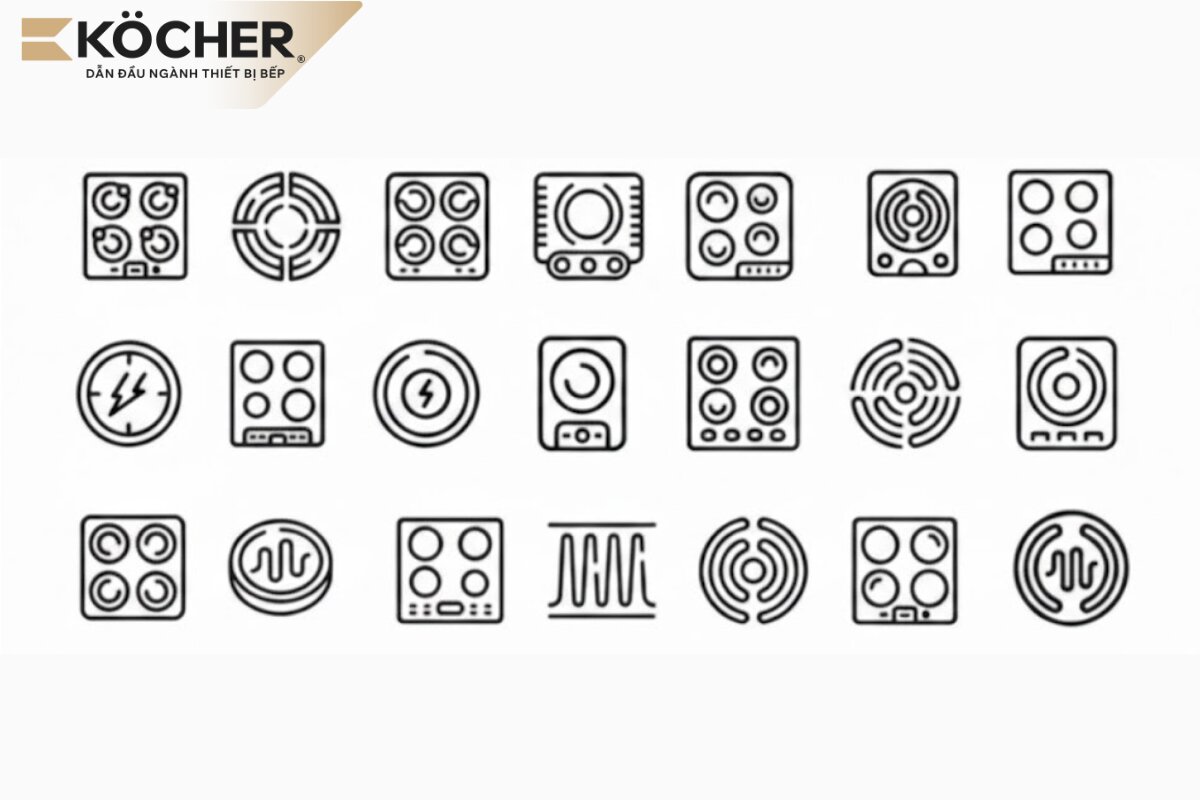 Summary of other common symbols and signs on the packaging of imported pots and pans.
Check the product labels
On the labels of pots that can be used on induction cooktops, there are often phrases like “Induction Ready,” “Induction Compatible,” European quality standard certifications, or the word “Magnetic” on the packaging of imported pot sets. You should check the labels (usually attached to the pot body, printed on the box, or included in the user manual) to confirm this information from the manufacturer.
Direct testing
You can place a pot with a little water on the cooking zone and turn on the cooktop. If the cooktop recognizes the pot, the display will show the power level and the water will gradually warm up. If the display flashes an error (usually error E0) and the cooktop shuts off after a few seconds, it means the pot does not meet the magnetic standard for the cooktop to operate.
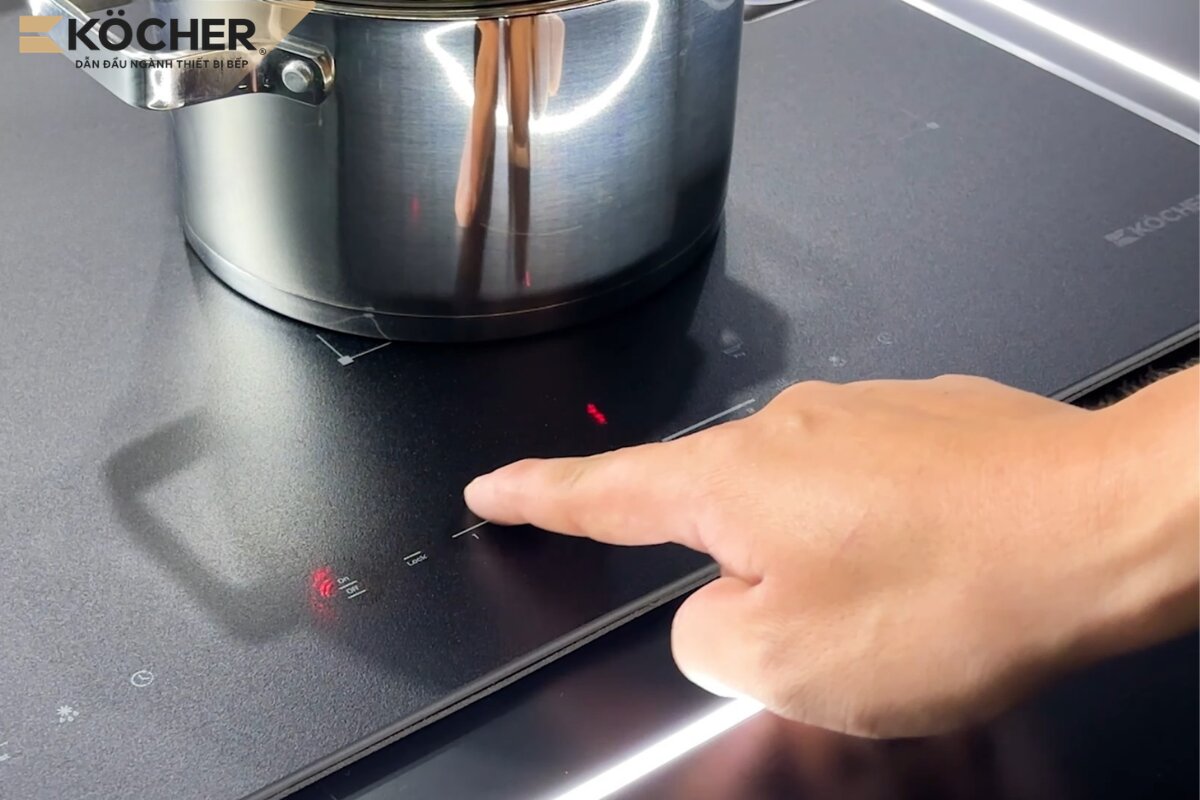 Boil water directly to test the pot
4 notes when buying pots for induction cooktops
In addition to the material factor, users need to pay special attention to the standards regarding physical structure to optimize cooking performance and ensure safety for the cooktop’s components. Specifically:
- Prioritize flat and thick pot bottoms: The pot’s bottom needs to be perfectly flat to maximize the contact area, allowing the sensor to easily recognize and transmit stable heat. In particular, it is advisable to choose pots with 3-5 layers at the bottom as they help distribute heat evenly and minimize warping or deformation under high heat when using the booster cooking mode.
- Select sizes compatible with the cooking zone: Users should choose cooking utensils with a bottom diameter of 12cm to 28cm to match the standard induction coil size, helping the cooktop focus the magnetic field accurately on the pot’s bottom to optimize cooking efficiency and avoid wasting energy.
- Balance weight and load pressure: You should choose pots weighing about 1kg (without food); the heavier weight helps the pot stay close to the glass surface, effectively absorbing the magnetic field and preventing slipping during stirring or flipping.
- Focus on brand and the craftsmanship of the pot’s bottom: Pots from reputable brands often have extremely smooth bottom surfaces. This feature helps protect the cooktop’s glass surface from scratches during movement or dragging the pot, while also maintaining the aesthetic value of the kitchen space and ensuring stability throughout the heat transfer process.
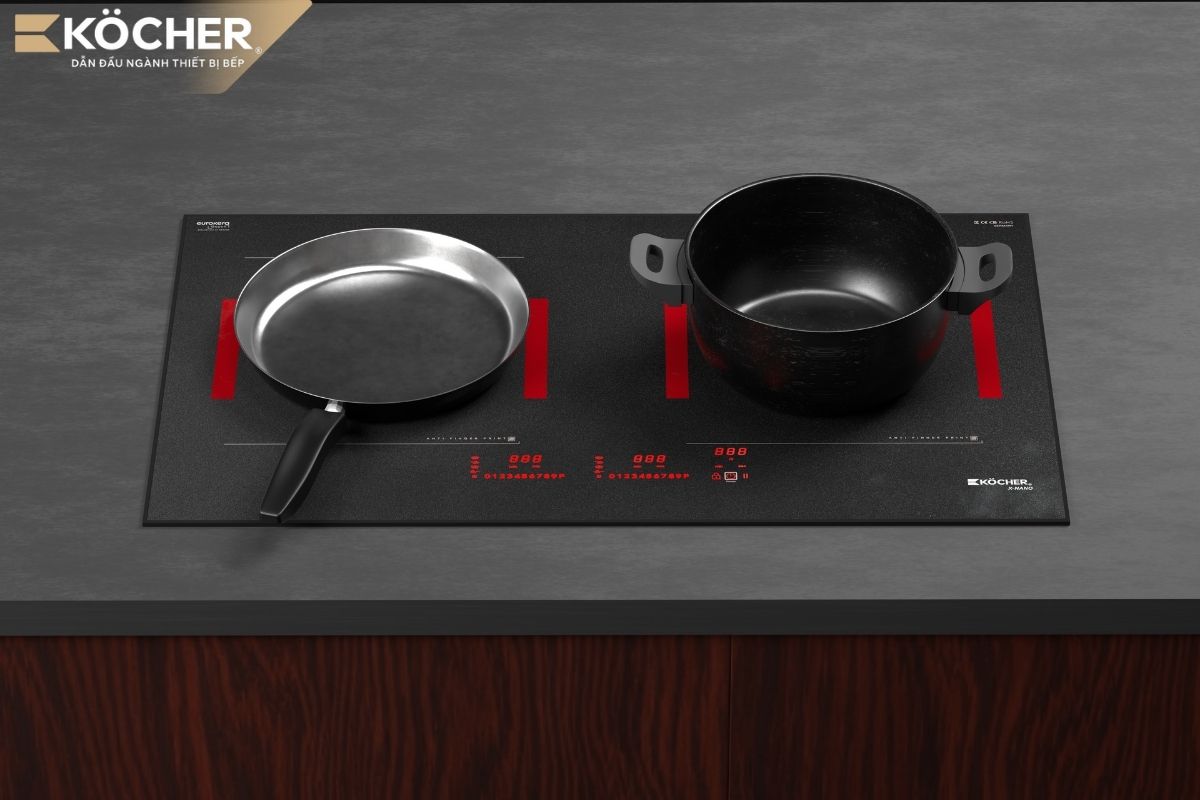 You should choose pots that are the right size for the cooking zone
3 frequently asked questions when choosing pots for induction cooktops
Below are answers to common questions from users when selecting and using pots for induction cooktops.
Why can’t 304 stainless steel pots be used on induction cooktops?
304 stainless steel pots are often not suitable for induction cooktops because 304 stainless steel is a type of non-magnetic stainless steel. Meanwhile, induction cooktops operate based on the principle of electromagnetic induction and only generate heat when the pot’s base contains magnetic materials to interact with the magnetic field. Due to its weak or nearly nonexistent magnetic attraction, solid 304 stainless steel will not be recognized by the cooktop and cannot be heated. Only when the bottom of the 304 stainless steel pot is combined with a layer of magnetic 430 stainless steel can it be used on induction cooktops.
Should I buy a honeycomb bottom pot for induction cooktops?
You should not buy a honeycomb bottom pot for induction cooktops if you want optimal cooking performance. Honeycomb bottom pots often have a contact surface that is not completely flat, causing the induction cooking zone to not make firm contact with the pot’s bottom, leading to difficulty in recognizing the pot, slow heating, and higher energy consumption.
Should I use a heat transfer plate for old pots?
A heat transfer plate (magnetic plate) is a magnetic metal sheet placed on the cooktop, then a regular pot is placed on top, allowing you to cook with a regular pot on induction cooktops. However, you should not use it long-term because the heat transfer plate reduces heat transfer efficiency, causes energy loss, and the large amount of heat generated can excessively heat the glass surface, creating burn marks and affecting the lifespan of the underlying circuit system if used continuously. This also applies similarly to using large steamer pots for induction cooktops; if the pot does not have a magnetic base and must use an intermediary magnetic plate, the significant heat loss will prolong the steaming time, wasting energy and harming the cooktop.
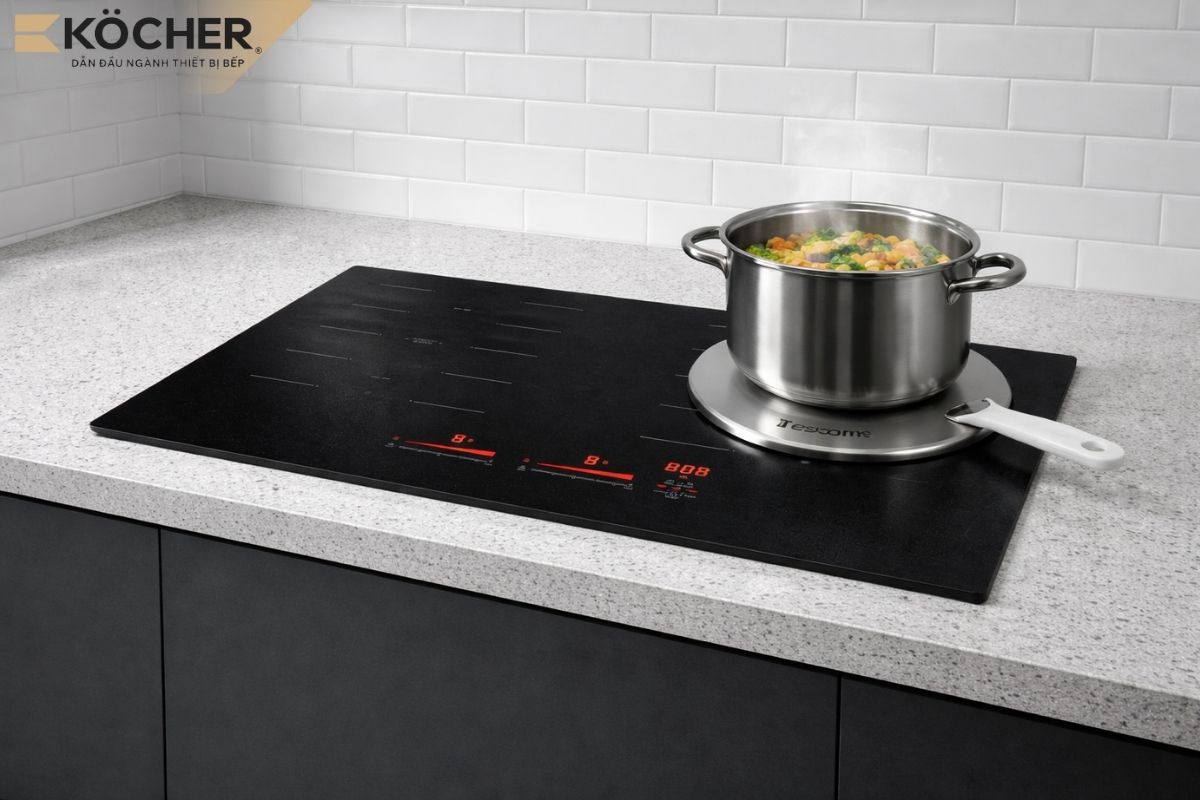 A heat transfer plate is a temporary solution if you want to continue using old pots with induction cooktops
Above are detailed answers to the question what pots can be used on induction cooktops and suggestions for 4 ways to identify the right cookware for induction cooking. We hope this article can help you choose suitable cooking utensils, thereby optimizing cooking efficiency, protecting the equipment for longevity, and providing safe, warm meals for your family.
If you are looking for high-quality induction cooktops, please check out Köcher’s products. With superior X-Nano scratch-resistant glass technology and E.G.O German standard components, Köcher proudly offers durable and high-class cooking solutions for your family.
Köcher induction cooktops pioneer German technology – For detailed product information, please contact:
|