
Ceramic glass is the standard material for modern induction cooktops due to its impressive strength and thermal shock resistance. However, this surface is very easily “damaged” by scratches or grease and food residues. This article from Kocher will share how to keep the Ceramic glass induction cooktop always shiny and durable for many years.
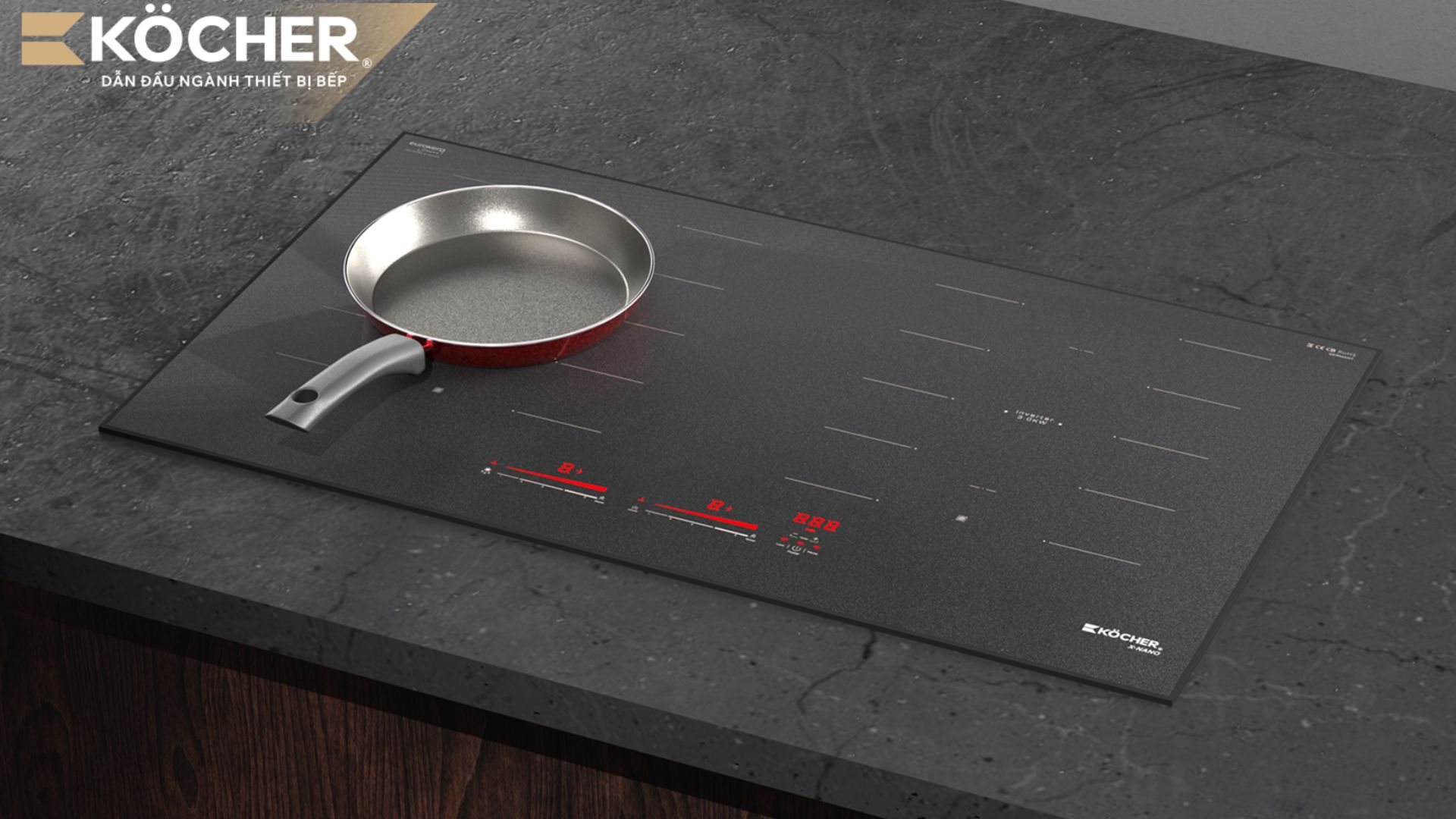
5 “golden” rules to keep the Ceramic glass induction cooktop always beautiful
To keep the Ceramic glass induction cooktop always beautiful, you can apply the following 5 rules:
Clean immediately after the residual heat warning turns off
When cooking, heat from the bottom of the pot will transfer to the glass surface. If food spills are not cleaned immediately, they will be “cooked” multiple times, forming stubborn carbon deposits and fogging the glass surface. To have a thorough solution, users should understand the nature of what Ceramic glass is to understand the chemical bonding properties of this glass ceramic material, thereby knowing how to maintain the surface in the best condition.
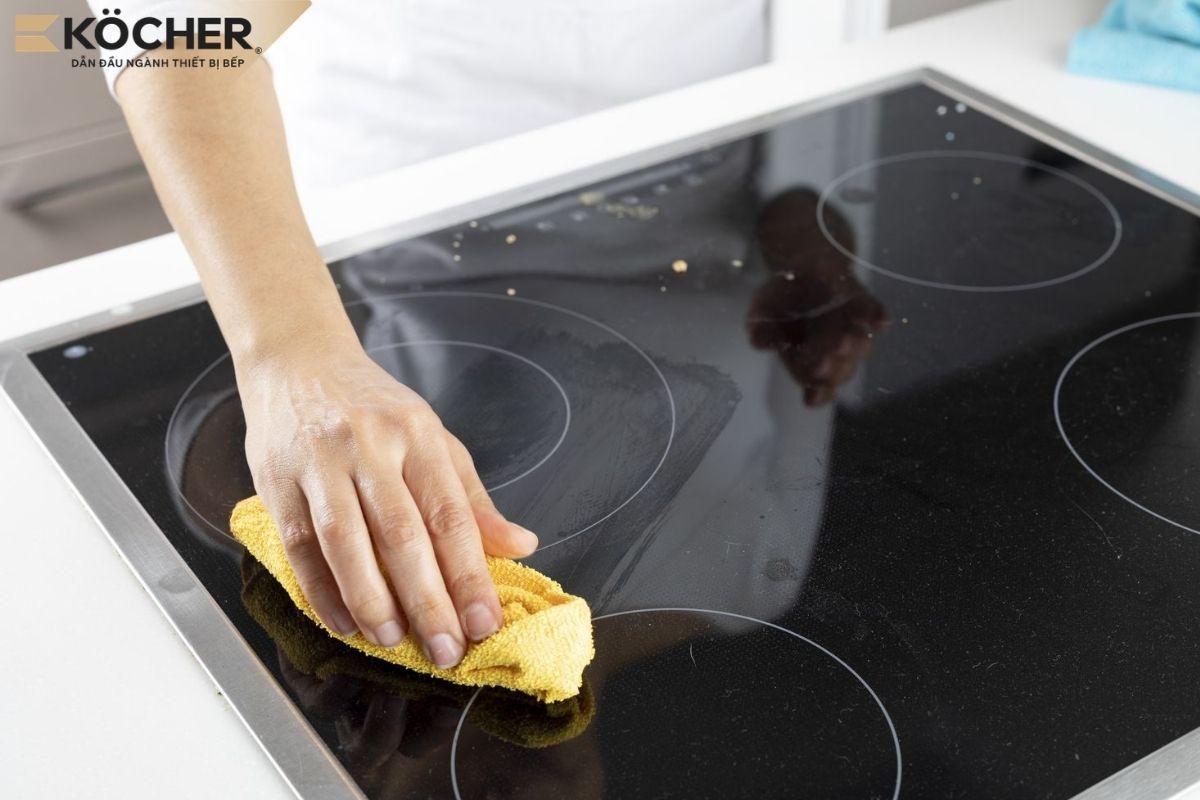
Wait until the residual heat warning light (H) is completely off. At this time, the cooktop is still slightly warm, and the grease connections have not hardened; you just need to use a damp cloth to gently wipe and you can completely remove the stain in 30 seconds.
Choose pots and pans with flat and clean bottoms
A rough or dirty pot bottom when in contact with the cooktop will create a lot of friction, causing scratches and reducing heat transfer efficiency. Choosing the right pots helps distribute heat evenly, save electricity, and protect the glass surface to always be smooth and shiny.
You should prioritize stainless steel or enameled cast iron pots with completely flat bottoms, not bulging. Especially for devices using Eurokera glass imported from France – which is famous for its ideal smooth flatness, keeping the pot bottom clean will further maximize the surface’s resistance to mechanical wear. Before cooking, use a dry cloth to wipe away dust or water residue from the bottom of the pot to avoid creating burnt stains that stick tightly to the cooktop.
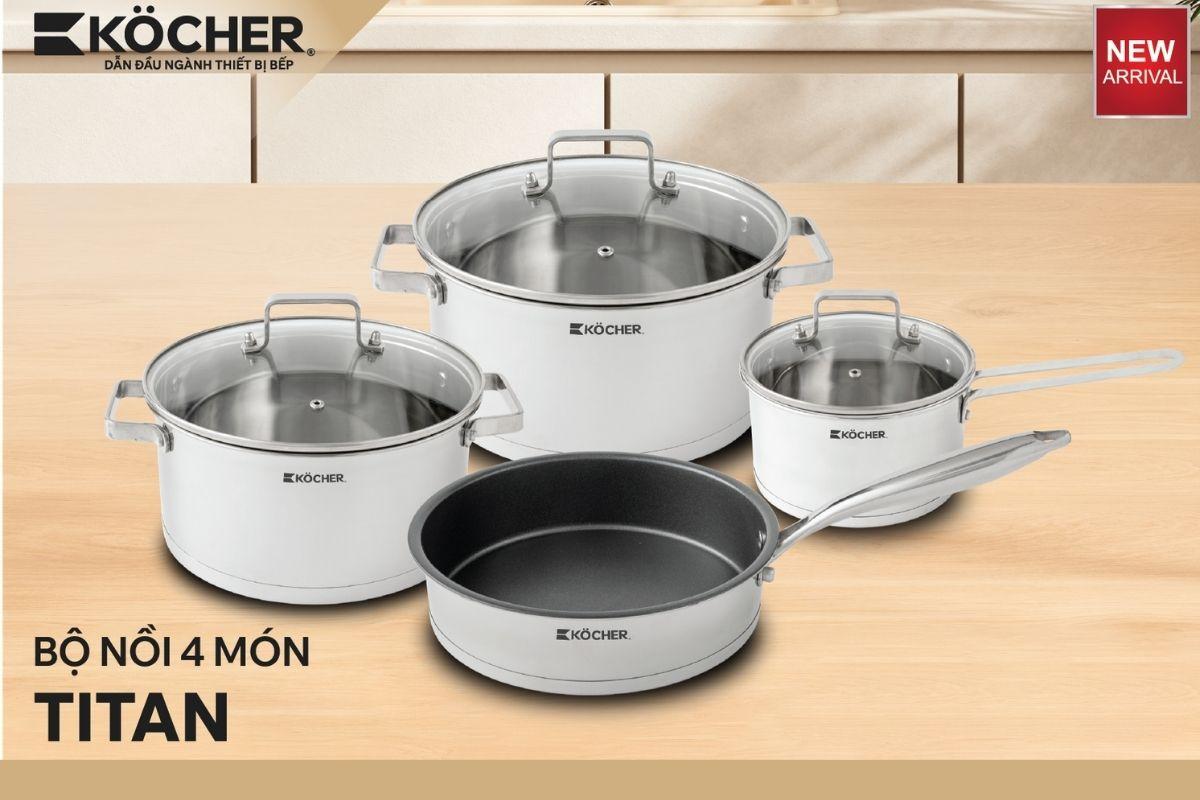 You should use a flat-bottomed pot set designed for induction cooking to avoid scratching the cooktop while cooking[/caption>
Use specialized cleaning solutions, avoid strong chemicals
Strong cleaners such as high-alkaline soap or bleach can corrode the surface, making the glass foggy and reducing durability. You should prioritize specialized kitchen cleaners or natural mixtures like vinegar and lemon. Just spray lightly on the cooktop, use a soft cloth to polish evenly and then wipe dry to make the surface shine like new. Maintaining the habit of using mild, non-corrosive cleaners is the core of the guide on how to maintain the scratch-resistant Ceramic glass induction cooktop at home, helping the device always maintain its shiny appearance over time. It is advisable to use specialized cleaning solutions when cleaning the induction cooktop.
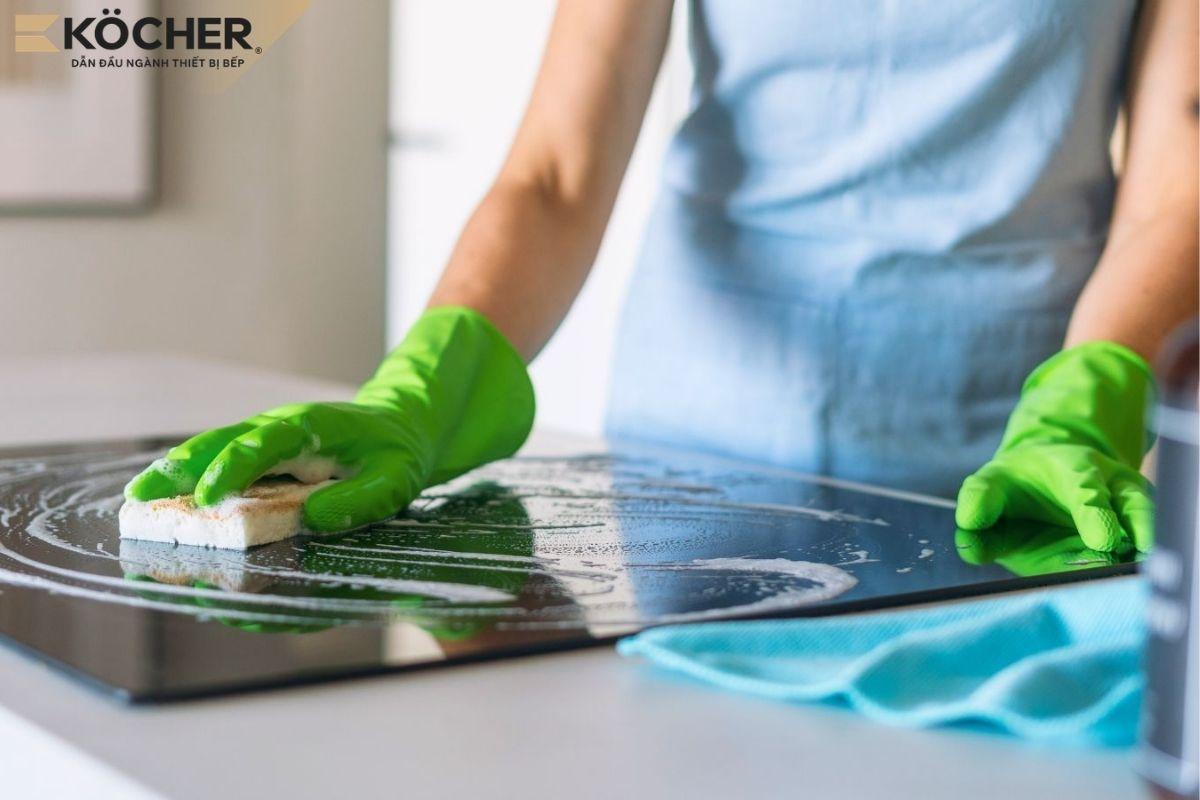 You should use specialized cleaning solutions when cleaning the induction cooktop
Minimize dragging items on the glass surface
When dragging pots and pans, hard dust particles or food debris stuck underneath will create extreme friction, directly wearing down and causing scratches that are difficult to handle. These scratches not only detract from aesthetics and are hard to clean but over time can also reduce the load-bearing capacity, making the glass surface more prone to cracking when exposed to high temperatures. Instead, you should lift the pots and pans completely when needing to move the cooking area or stir food.
 You should lift the pot to move the cooking area, avoiding dragging on the cooktop
Control cooking temperature and avoid local thermal shock
You should start cooking at a low temperature and gradually increase it, avoiding sudden temperature increases. If using the Booster mode, do not maintain it for more than 10 minutes. After cooking, do not use a cold cloth to wipe the cooktop immediately; instead, turn off the cooktop, wait for the residual heat warning light to turn off (if any), the cooling fan to stop completely, and the glass surface to cool down before wiping to ensure safety and maintain the glass surface’s durability.
 Do not cook in Booster mode continuously for more than 10 minutes
Tips for dealing with “stubborn” stains on the Ceramic glass induction cooktop
For stains that have accumulated over a long time, regular cleaning will not be effective. You need to apply the following specialized tips:
- Burnt or sticky residues: These residues often form hard scales and stick very tightly. You should use a specialized scraper for induction cooktops, holding it at a 45-degree angle to the glass surface and gently push to clean the stain. After that, wipe the cooktop with a damp cloth.
- Hard water stains or limescale: Usually appear as dull white streaks due to minerals in the water settling. You just need to apply a little white vinegar or lemon juice to the affected area, leave it for 5 – 10 minutes, and then wipe with a soft cloth.
- Stubborn grease stains: For stains that have been stuck for a long time or slightly burnt, sprinkle a little baking soda on the area to be cleaned, use a damp cloth or a soft sponge to gently rub in a circular motion.
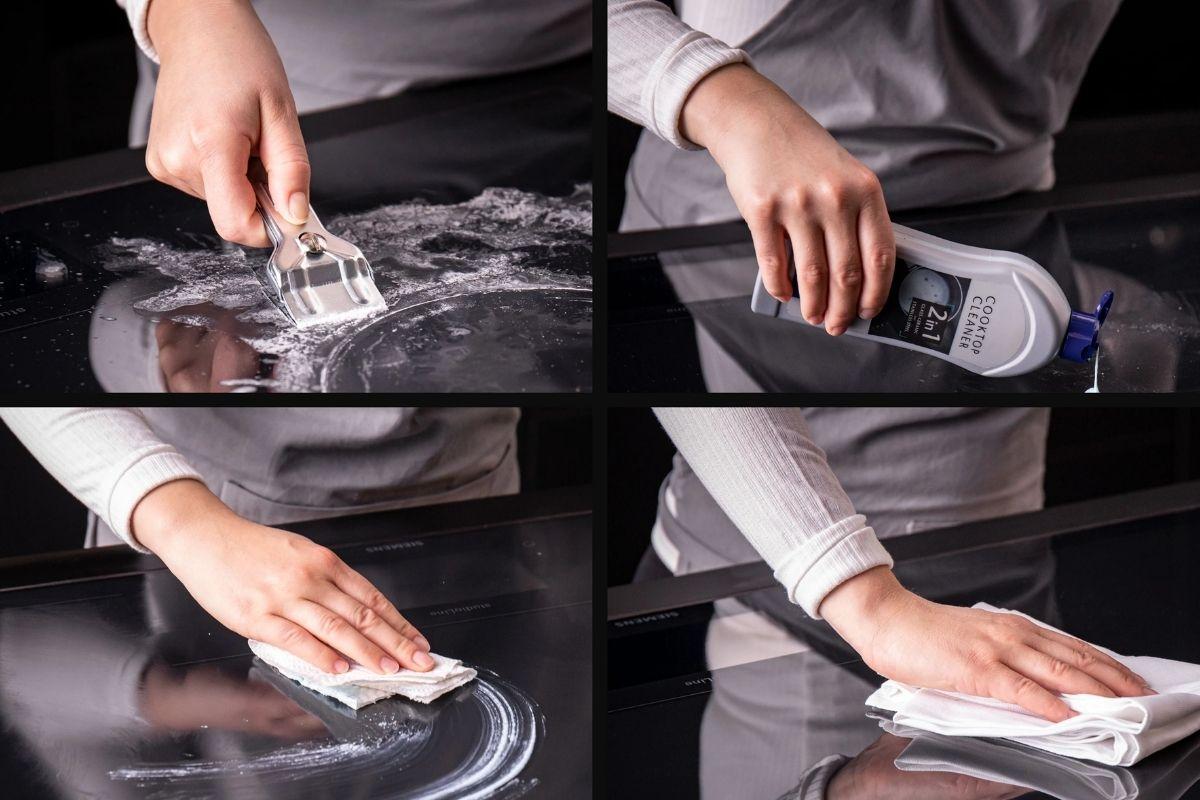 You should use a soft cloth and specialized tools to scrape off stubborn stains on the cooktop
5 common mistakes that cause Ceramic glass to deteriorate quickly
During use, some incorrect actions due to carelessness or lack of experience can cause scratches on the cooktop. Specifically:
- Using sharp objects to scrape stains: Using knives, scissors, or screwdrivers to scrape stubborn residues can cause deep scratches that cannot be restored on the cooktop.
- Cleaning the cooktop with steel wool or rough cloths: Metal scrubs or hard fabrics have high abrasiveness, easily making the glass surface foggy and causing numerous scratches after each cleaning.
- Placing heavy or sharp objects on the cooktop: Heavy or sharp-edged objects can create concentrated stress upon strong impact, leading to the risk of cracking the Ceramic glass surface.
- Allowing food containing a lot of sugar or salt to overflow: When cooking, if food containing sugar or salt overflows and is not cleaned immediately, it will chemically react with the glass at high temperatures, causing pitting and stains that cannot be cleaned.
- Turning off the power/circuit breaker immediately after cooking: This habit causes the cooling fan to stop suddenly, preventing heat from accumulating under the glass from escaping, easily creating temperature differences between areas on the glass, which over time can reduce the durability of the glass surface.
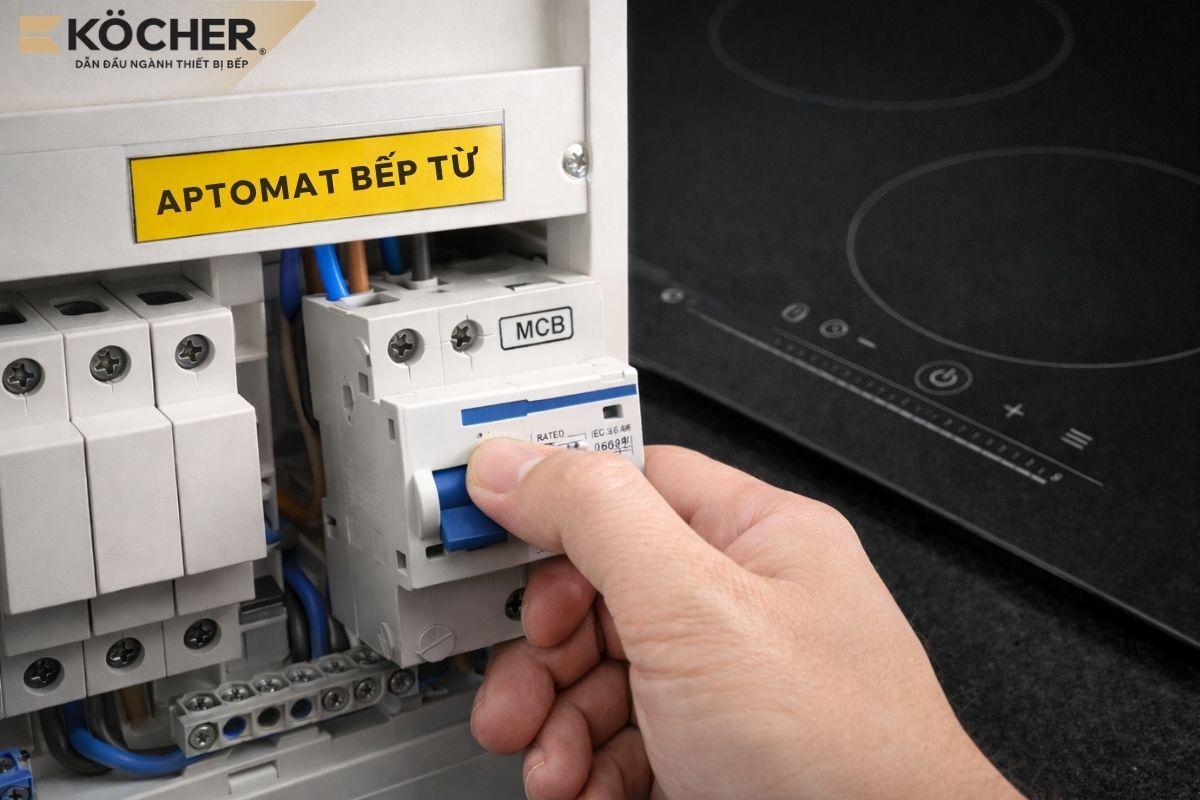 You should only turn off the circuit breaker when the cooktop has cooled down, not immediately after cooking while the cooktop is still hot
Answers to questions about how to maintain Ceramic glass
Below are answers to some common questions when using the Ceramic glass induction cooktop.
Does a scratched Ceramic glass surface affect cooking performance?
No. Normal scratches mainly cause aesthetic loss but do not reduce the cooking performance of the induction cooktop. However, if the scratches are too deep or cracks appear, high temperatures can cause them to spread, posing a risk of electric leakage or breaking the glass, directly affecting safety during use.
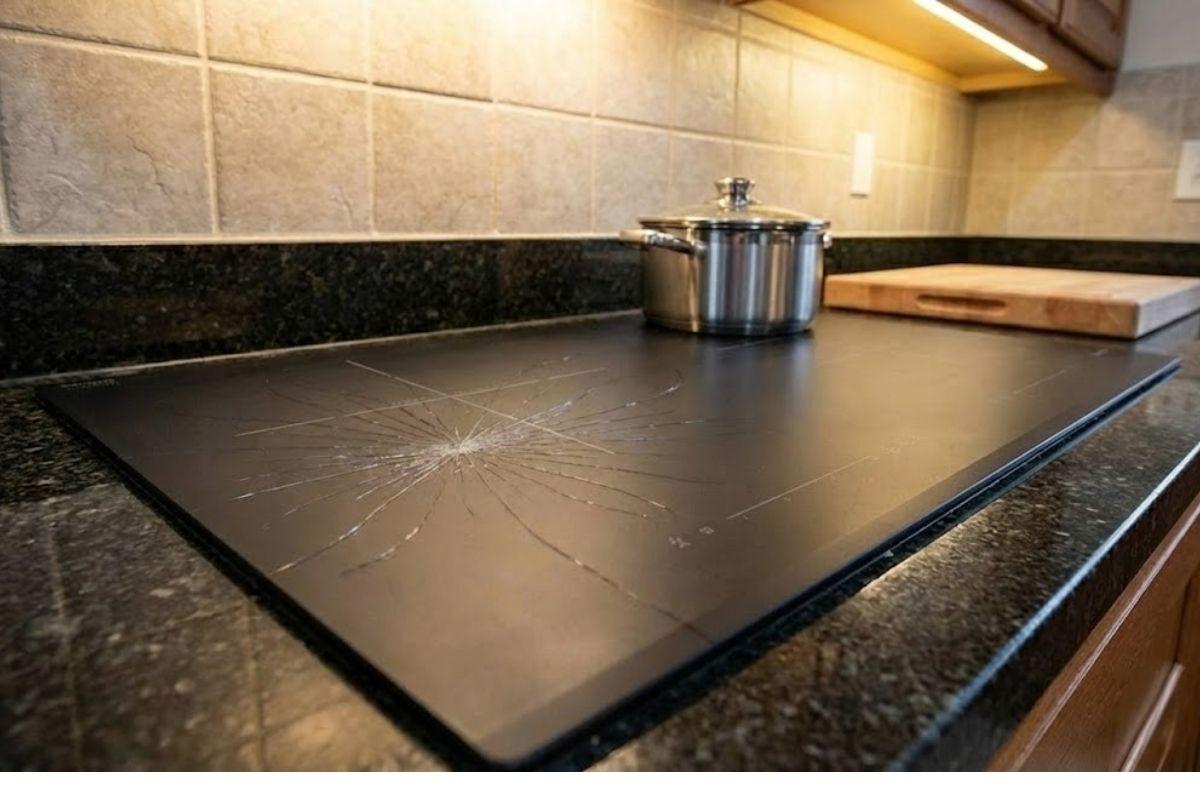 Large cracks can reduce the cooktop’s performance and are unsafe to use
Is it okay to use regular glass cleaner on the Ceramic cooktop?
Yes. You can use regular glass cleaner to clean the Ceramic glass induction cooktop after each cooking session. However, for tougher stains, you should prioritize specialized solutions for induction cooktops or natural ingredients like lemon and vinegar for safe cleaning.
Why does my cooktop have blotchy stains like oil spills even though I use it carefully?
This situation is often due to mineral deposits in the water or grease residues that have discolored due to high temperatures, creating a multicolored film resembling oil spills. Additionally, using dirty cloths or dish soap with too many bubbles can also leave streaks after drying, making the cooktop look blotchy.
Above are the summarized ways to keep the Ceramic glass induction cooktop always clean, tips for dealing with stubborn stains, and common mistakes to avoid when using the Ceramic glass induction cooktop. We hope this information will help you use the cooktop more effectively, maintain its durability, and keep your kitchen looking as beautiful as new over time.
If you are looking for an induction cooktop that minimizes scratches, resists dirt, and is easy to clean every day, you can refer to the X-Nano induction cooktop line from Köcher. The cooktop features X-Nano matte glass developed exclusively for Köcher in Vietnam by EuroKera (France), helping to resist scratches 5 times better, reducing actual scratches by 60 – 80%, cleaning quickly in about 30 seconds, and maintaining long-term durability and aesthetics.
Köcher induction cooktop pioneers German technology – For detailed product information, please contact:
|