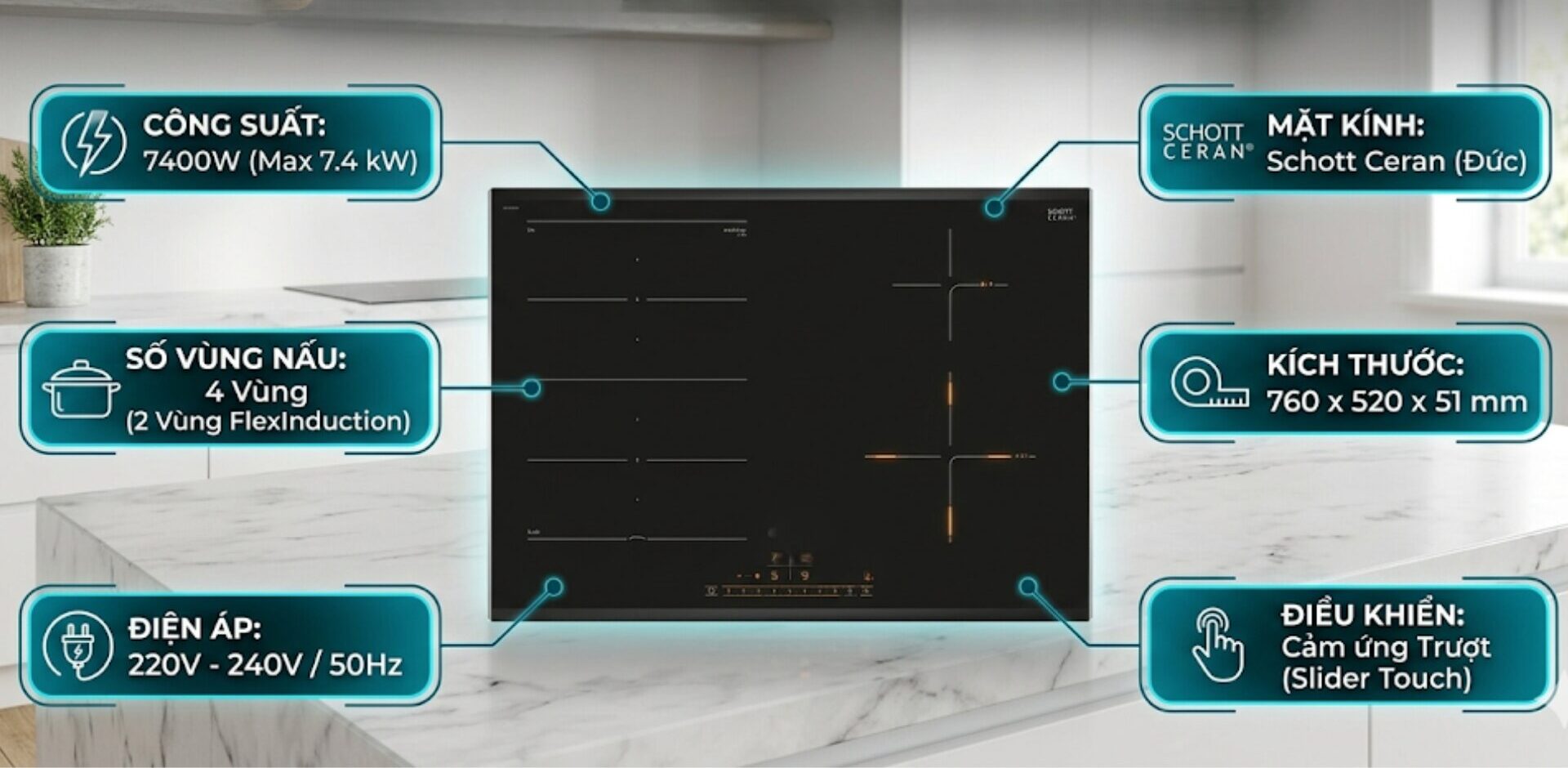
German induction cooktops are famous for their durable, heat-resistant glass, but they need to be maintained properly to keep their shine and avoid scratches. If not cared for meticulously, dirt, grease, and food residues will accumulate, diminishing the beauty and cooking efficiency of the cooktop. Let’s explore the detailed guide on how to clean German induction cooktops correctly right below.
Why is it necessary to clean German induction cooktops regularly?
Maintaining a regular and proper cleaning habit for German induction cooktops plays a very important role for the appliance:
- Maintain optimal cooking performance: A clean cooktop helps the temperature transfer from the coil to the bottom of the pot more efficiently, minimizing energy waste and shortening cooking time.
- Extend the lifespan and durability of the appliance: If not cared for meticulously, dirt, grease, and food residues that accumulate over time at high temperatures will burn, reducing operational efficiency and easily leading to unnecessary breakdown risks. Besides cleaning, if you notice the touch system functioning abnormally or the cooktop displaying strange symbols on the LED screen, you should proactively look up information on the error code chart for German induction cooktops to have a timely troubleshooting plan.
- Ensure aesthetics: Keeping the high-quality glass surface always clean and shiny enhances the luxurious and sophisticated beauty of the entire kitchen space.
- Safety during use: Eliminating the risk of fire from burnt food residues sticking to the cooktop or the damp condition that breeds bacteria.
Prepare specialized cleaning tools for induction cooktops
To achieve the highest cleaning efficiency without causing any damage to the high-quality glass surface, preparing a specialized and suitable cleaning kit is an essential step.
- Soft cloth: You should prioritize using cloths made from microfiber. This type of ultra-fine synthetic fiber is extremely soft and has excellent dust and grease absorption without leaving any lint or causing scratches on the glass surface. Absolutely do not use steel wool, abrasive pads, or rough cloths.
- Gentle cleaner: Prepare regular dish soap that does not contain harsh chemicals or strong acids. Mild dish soap combined with warm water will be a great “weapon” to safely eliminate newly formed grease layers.
- Specialized cleaning solution: For stubborn stains, you should equip spray bottles of specialized cleaners specifically for induction cooktops (such as Cif, Astonish, Domax…). These products are formulated with special formulas that help dissolve dirt quickly while still protecting the nano coating of the glass surface.
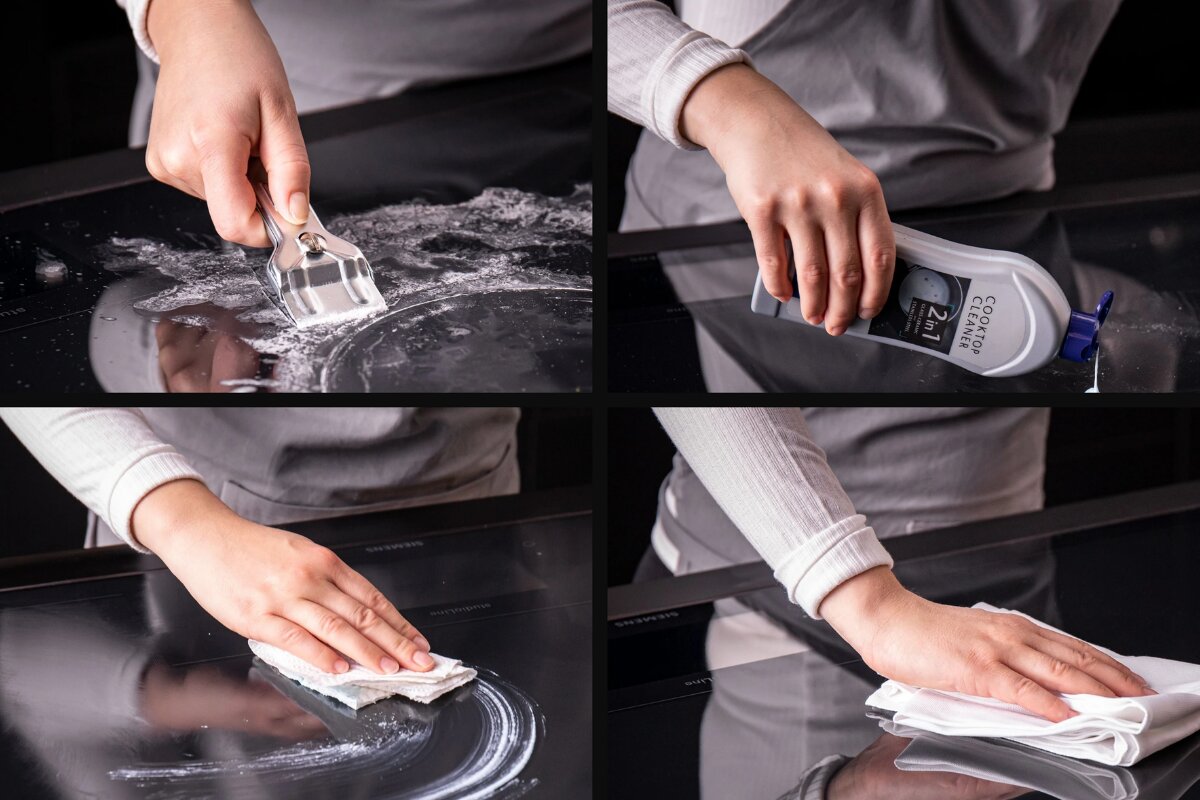
- Specialized glass scraper: This is a useful tool when needing to handle burnt stains or stubborn residues. This type of scraper has a flat, thin blade designed to scrape off residues on the glass surface without causing scratches.
Guide to cleaning German induction cooktops correctly
Before starting to apply any of the methods below, you must turn off the cooktop, disconnect the power (if necessary), and wait at least 10 to 15 minutes for the cooktop to cool completely. Cleaning while the cooktop is still hot not only poses a danger (burning hands) but also leads to thermal shock, which can cause the high-quality glass to crack immediately.
How to clean the cooktop surface daily
This method applies to quick clean-ups after each meal when the cooktop only has light dust or fresh grease splatters.
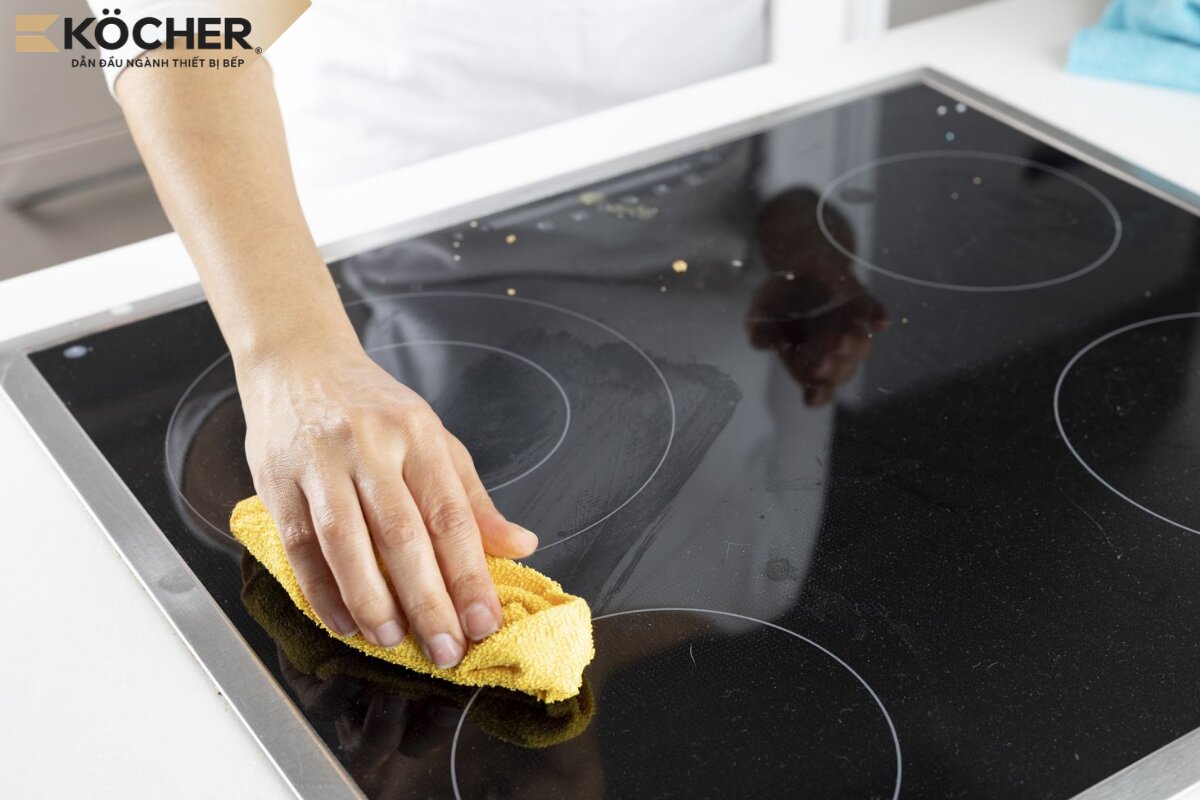
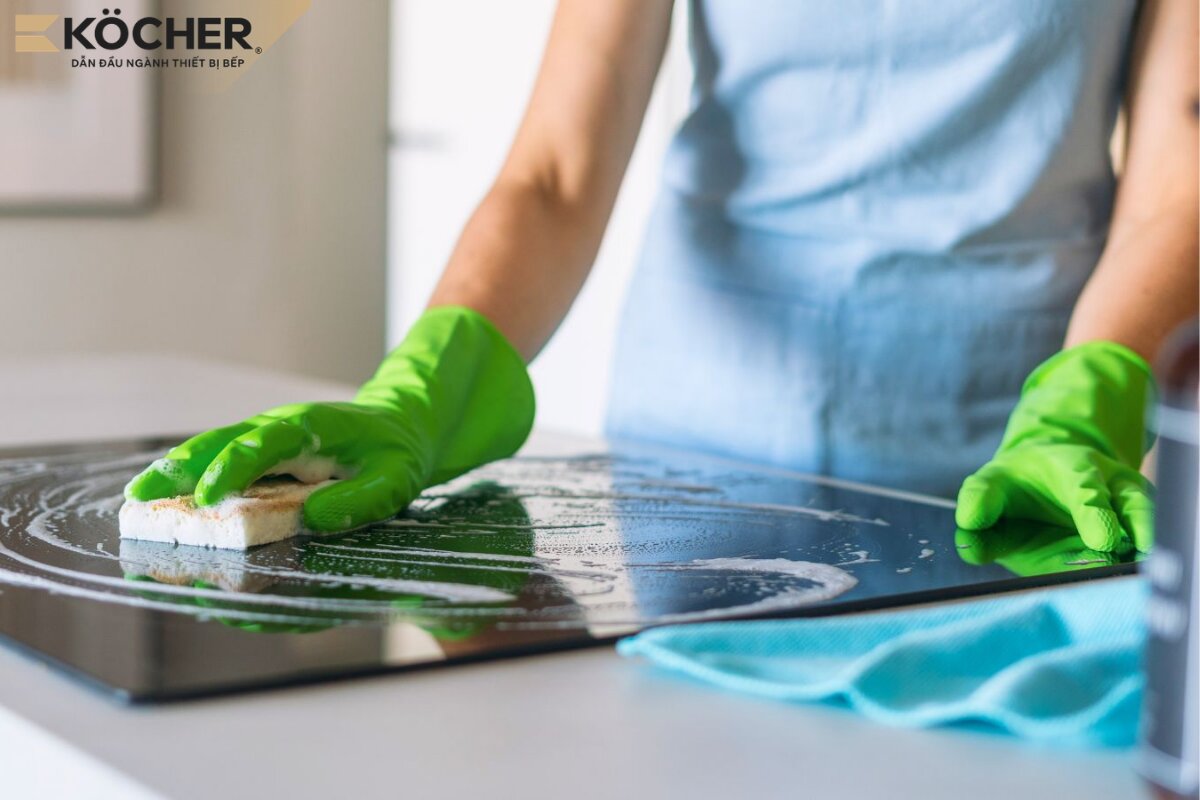
- Step 1: Gather food scraps and wipe down. After the cooktop cools, use a damp microfiber cloth with clean water to gently wipe around the cooktop to collect all food scraps and surface dirt.
- Step 2: Clean grease with dish soap. Apply a small amount of mild dish soap to another damp cloth (or dilute with warm water), and wipe evenly over the cooking area to completely dissolve any sticky grease.
- Step 3: Dry thoroughly. Use another dry and clean microfiber cloth to thoroughly wipe the entire cooktop surface. This drying helps prevent the glass from having foggy streaks from steam, keeping the cooktop shiny as new.
How to handle stubborn stains and burnt residues
For stains and food residues that have stuck for a long time, you can flexibly apply the following methods:
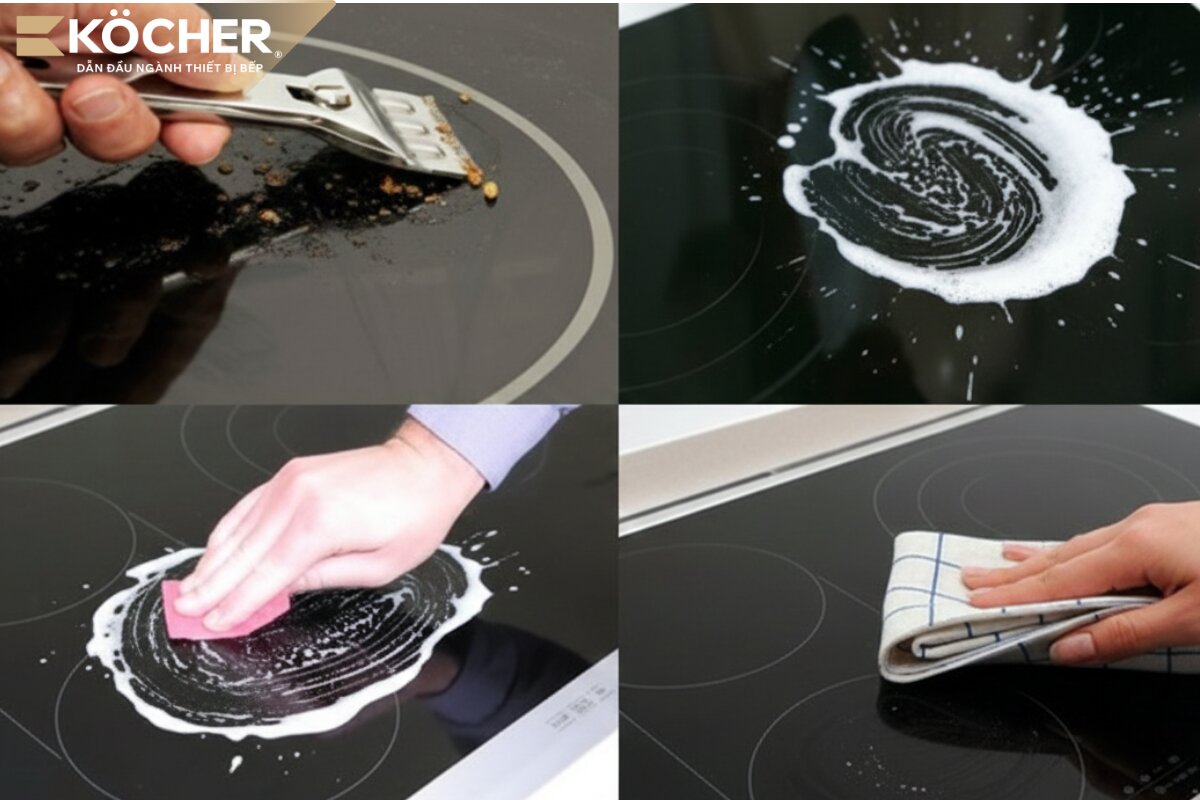
- Use a specialized scraper: Hold the scraper at a 30 – 40° angle to the glass surface, gently scrape to detach the residue from the cooktop. Only use the flat surface of the scraper, avoiding sharp corners that could scratch the glass.
- Use Baking Soda and Vinegar: Sprinkle baking soda over the cooktop surface, then add a little white vinegar or lemon juice, wait for the bubbling reaction for about 3 – 15 minutes, then wipe clean with a soft damp cloth.
- Use specialized cleaning solution: Spray the specialized cleaning solution directly onto the glass surface, wait for about 3 – 5 minutes, then gently wipe with a soft cloth.
- Use boiling rice water: Soak a soft cloth in boiling rice water and apply it to the cooktop surface. As the rice water dries, it will absorb the sticky grease, and you just need to wipe away the dried rice water.
Serious mistakes to avoid when cleaning German induction cooktops
Due to the cooktop’s glass being high-tech ceramic glass, you need to avoid the following mistakes:
- Cleaning while the cooktop is still hot: This is the most common mistake. The sudden temperature change from the hot cooktop meeting cool cleaning water will cause severe thermal shock, leading to glass cracking. Additionally, cleaning chemicals at high temperatures can evaporate quickly, creating toxic fumes that are harmful to breathe.
- Using hard abrasive tools: Using steel wool, hard brushes, or sharp objects to scrape off stains is a “death sentence” for the glass surface. They will leave numerous scratches, making the cooktop cloudy, losing aesthetics, and more prone to dirt accumulation in the future.
- Abusing strong cleaning chemicals: Absolutely do not use drain cleaners, oven cleaners, or regular glass cleaners containing ammonia or overly acidic/alkaline solutions. These substances will corrode and permanently damage the protective nano coating against sticking and scratching of the German induction cooktop glass.
- Letting water seep into the internal components: When cleaning, use a damp cloth instead of pouring water directly onto the cooktop. Be careful not to let water overflow or seep into the ventilation slots, cooling fan system, or the touch control circuit area. Water entering can easily cause short circuits, damage the electronic circuit board, or create dangerous electrical leaks. In case your glass surface has already cracked severely due to physical shock or thermal shock, continuing to clean with water can completely damage the internal circuit board; at this point, the only solution is to replace the German induction cooktop glass to maintain the safe operation of the appliance.
Experience in preserving the beauty of German induction cooktops
To protect the German induction cooktop, besides cleaning it properly, you can refer to the preservation tips during daily use.
- Use appropriate cooking utensils: Only use pots, pans, and skillets specifically designed for induction cooktops (with flat, smooth, and magnetic bases). This helps optimize heat transfer efficiency, save energy, and protect the cooktop surface from scratches due to friction.
- Avoid letting food and liquids spill onto the cooktop: During cooking (especially for soups, hot pots, and broths), always pay attention to adjust the temperature moderately to avoid food spilling over. Clean the bottom of pots and pans before placing them on the cooktop.
- Store the cooktop in a dry place: Place the cooktop in a well-ventilated area, avoiding places with high humidity to protect the internal electronic components from oxidation or mold. Especially, if your family is using a hand-carried German induction cooktop, carefully preserving the components in a dry environment is even more important as finding compatible genuine replacement parts in the Vietnamese market may take longer.
Frequently asked questions about cleaning German induction cooktops
Can I use regular glass cleaner to clean German induction cooktops?
It is not advisable to use it regularly. Regular glass cleaners often contain ammonia or cleaning agents that are not optimized for heat-resistant ceramic glass. Prolonged use may cause the natural shine to fade and wear away the protective nano coating of the induction cooktop glass. You should replace it with diluted dish soap or a specialized solution for induction cooktops.
How often should I clean the German induction cooktop?
You should gently wipe with a damp cloth after each cooking session (when the cooktop has cooled) to remove new grease. For thorough cleaning with specialized solutions or natural tips, you should do it regularly once a week to ensure the cooktop always stays spotless.
Is Schott Ceran glass easily scratched?
Schott Ceran glass is very hard but can still be scratched if rubbed against rough pot bottoms or steel wool.
Understanding and applying the correct cleaning methods for German induction cooktops is not only an optimal solution to maintain the shiny, luxurious appearance of the cooking space but also a decisive factor for the durability and long lifespan of this premium appliance.
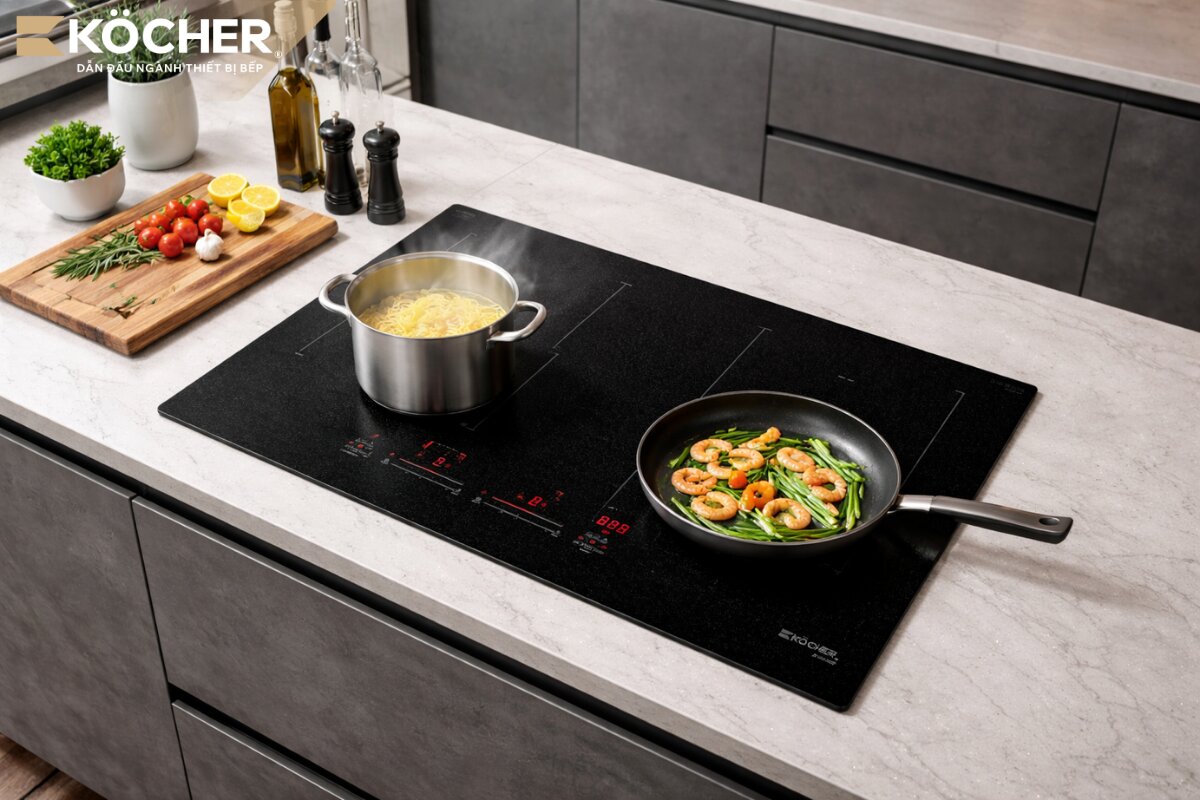
If you are looking for a German induction cooktop that is easy to clean and worry-free when scraping off burnt residues, models with a textured surface like Köcher X-Nano are a worthy consideration. With the 5-layer X-Nano crystal structure, it helps you clean the induction cooktop twice as fast while protecting the glass surface from scratches even during strong impacts.
|
Köcher induction cooktops pioneer German technology – For detailed product information, please contact:
|