
Is the induction cooktop glass easy to scratch? is a concern for many families who worry that scratches will detract from the elegance of the kitchen space. In fact, the durability of the surface largely depends on the glass material and daily usage habits. Understanding the causes of damage and protection tips will help you keep the appliance looking beautiful over time.
Is the induction cooktop glass easy to scratch?
In reality, common glossy or matte glass surfaces can still be easily scratched due to physical friction. In contrast, the X-Nano glass features a 5-layer crystal structure from EuroKera (France), developed exclusively for Köcher in the Vietnamese market, providing superior scratch resistance up to 5 times. The X-Nano glass is not only durable but also maintains its shiny aesthetic like new after many years of use.
In addition to scratch resistance, consumers often wonder when shopping if the induction cooktop glass is thick to ensure comprehensive load-bearing capacity. Typically, high-end European standard ceramic glass will have a standard thickness of about 4mm. This thickness is carefully calculated to optimize stable magnetic field transmission performance while providing a durable structure against daily cooking pressures.
5 causes of scratches on the glass surface and how to minimize them
Below are 5 common mistakes that cause the induction cooktop glass to quickly deteriorate and become covered with scratches, which users frequently make.
Note: These causes often occur on common glossy glass or glass with a matte surface coating. Specifically, for X-Nano glass, the ability to withstand external forces and friction has been upgraded to minimize these damages.
Habit of dragging pots and pans on the glass surface
The habit of sliding pots to move between cooking zones or shaking pans vigorously inadvertently creates significant friction, easily causing long scratches on the cooktop surface. With ordinary glossy glass, even a small grain of dust trapped under the pot can become a direct cause of surface damage. To maintain the shine, you should lift the pot when you want to move its position or use a heat-resistant silicone mat.
To completely eliminate this worry, you should use high-end induction cooktops like Köcher’s X-Nano product line. This line features a solid matte glass surface with a 5-layer crystal structure that minimizes the direct contact area between the pot’s bottom and the cooktop surface, providing superior scratch resistance up to 5 times. As a result, the cooktop not only withstands pressure well but also retains its elegant and durable appearance over time. Investing in a high-quality scratch-resistant induction cooktop not only protects aesthetics but also allows cooks to feel more comfortable during vigorous cooking actions like stir-frying and searing.
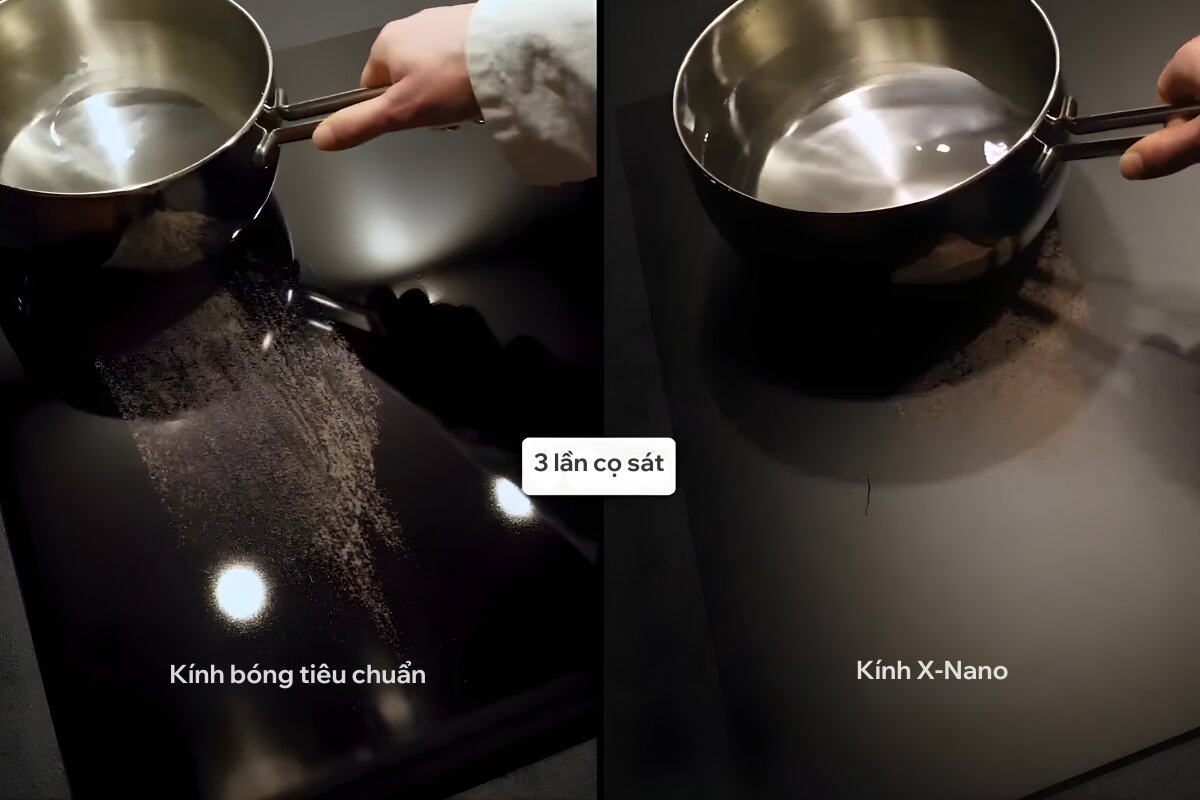
Rough or deformed pot bottoms
Rough cast iron or low-quality stainless steel pot bottoms often have a rough surface, containing tiny metal “edges” that can damage the cooktop. These sharp points can dig deep, leaving scratches on the cooktop surface. When checking the pot bottom before cooking, if you find it uneven, you need to smooth it out with fine sandpaper to protect the induction cooktop glass surface. This is an extremely important note even if you own a scratch-resistant induction cooktop, as removing sharp mechanical factors will help extend the lifespan of the glass surface.
Dust, sand, and spilled spices
Grains of sand, salt, or sugar spilled on the cooktop can become “abrasive particles,” causing small scratches on the surface. To remedy this, always use a dry cloth to clean the cooktop and the pot bottom before cooking. If you accidentally spill spices, you need to pause cooking and immediately wipe it clean with a damp cloth to prevent melted sugar/salt from sticking tightly, creating hard-to-clean stains.
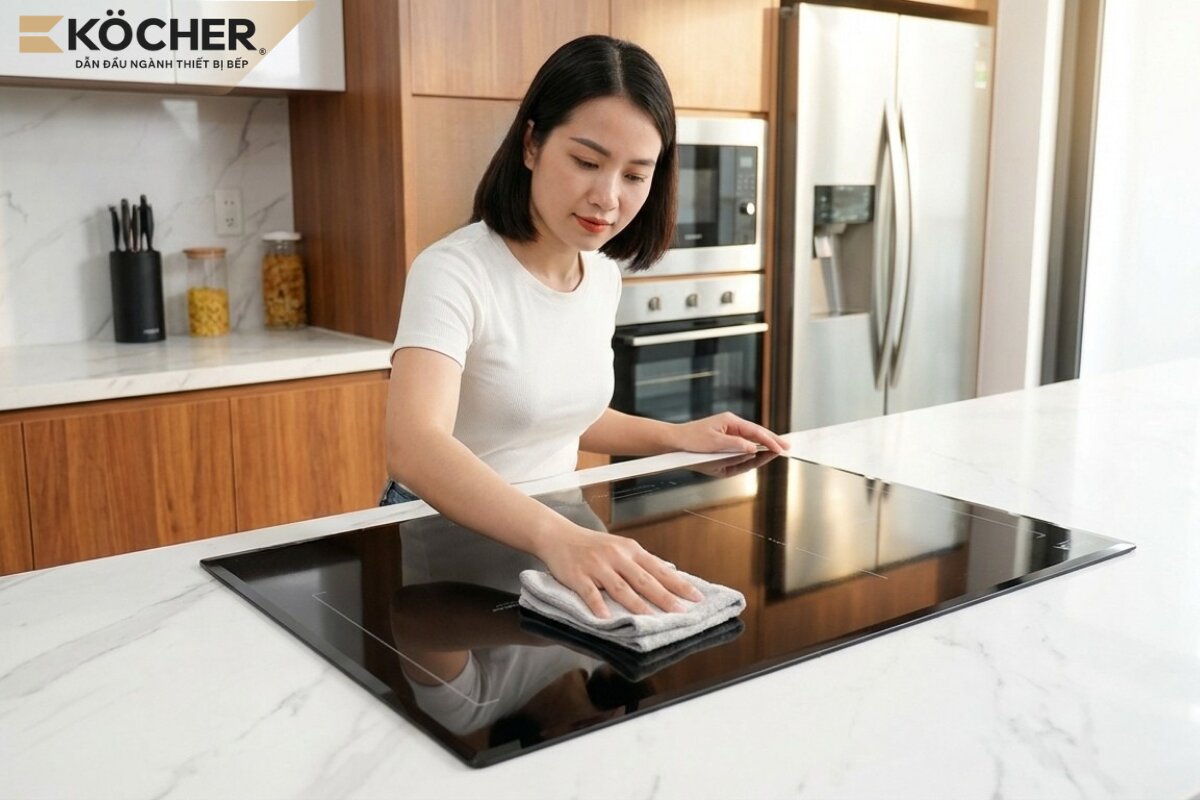
Using overly sharp or hard cleaning tools
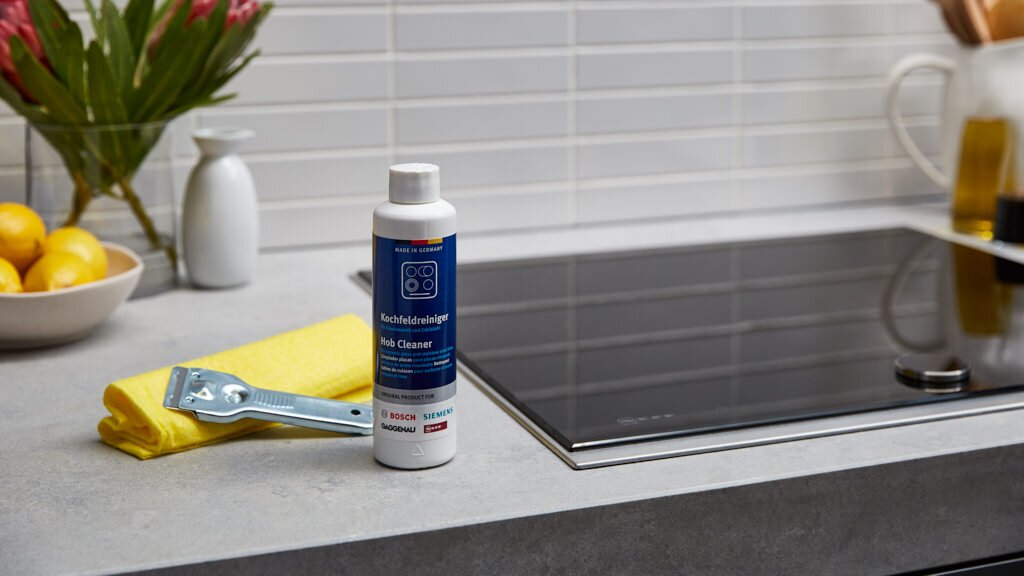
The habit of using steel wool to scrub pots or using knife or scissors tips to remove stubborn burnt food on the surface can scratch and dull the cooktop’s shine. Instead, you should use a specialized glass scraper, holding it at a 30 – 45 degree angle to the cooktop and gently pushing, the burnt residue will come off without scratching the glass. You can also use specialized induction cooktop cleaning cream or solution to soften the stains before wiping with a soft fiber cloth (microfiber).
Collisions with heavy or sharp objects
Dropping heavy metal tools like knives, scissors, or pot lids from above or striking the edge of the glass can cause deep scratches, even leading to cracks in the glass surface. To minimize risks, you should not install heavy item racks directly above the cooking area.
Additionally, choosing a glass edge design can also help reduce mechanical damage during impacts. Many people often wonder if the beveled edge induction cooktop is durable against physical impacts? In fact, the elegant beveled edge design not only enhances the luxury of the space but also eliminates sharp right angles – sensitive points that easily accumulate pressure, thus increasing the load-bearing capacity of the entire cooktop. You can also prioritize choosing cooktops with stainless steel or alloy edging around the glass edge to protect the edges from physical impacts.
3 ways to handle scratches on the induction cooktop glass
The induction cooktop glass can still develop unwanted scratches during use. You can apply the following methods to improve aesthetics and blur scratches right at home.
Blur scratches with toothpaste
This method is suitable for ultra-fine, shallow, and blurred scratches on the surface. The ultra-fine abrasive particles in toothpaste will gently polish the scratch edges and fill in the gaps, helping to refract light more evenly, making the scratches less visible.
With this method, apply a small amount of white toothpaste to the scratch, using a soft cloth to rub evenly in a circular motion for 2 – 3 minutes. Then, wipe clean with a damp cloth.
Using a Baking Soda mixture
This mixture is suitable for medium-depth scratches or scratches accompanied by stubborn residue. Baking soda acts as a mild abrasive and has cleaning properties, helping to wear down the sharp edges of the scratch while restoring the shine to the glass surface.
Mix baking soda with water in a 3:1 ratio to create a paste, then apply it to the scratched area. Use a clean soft cloth to gently scrub in a circular motion for a few minutes, then rinse thoroughly with water.
Using specialized glass polishing cream
This solution is optimal for high-end cooktops with noticeable scratches or surfaces that have dulled after prolonged use. The specialized active ingredients help fill in deep scratches and create a temporary protective layer.
Pour a small amount of cream directly onto the scratch, then use a soft sponge or microfiber cloth to polish the area in a circular motion. Finally, use a clean cloth to wipe away excess cream, restoring the cooktop surface to a smooth finish.
5 notes when removing scratches from the induction cooktop glass
To ensure the scratch removal process is safe and achieves the highest aesthetic effect, you need to follow the important technical principles below:
- Carefully assess the condition of the cooktop: If it is just a surface scratch, the cooktop still operates normally. If there is a deep crack that catches your fingernail or a long crack appears, you must stop using it immediately. To thoroughly remedy the situation, learning about how to replace the induction cooktop glass correctly through the official warranty center is the only safe solution to avoid the risk of electric leakage or glass explosion.
- Only handle when the cooktop is cool: Absolutely do not clean or remove scratches when the glass surface is still hot. High temperatures can alter the active ingredients in toothpaste or cleaning solutions, causing permanent stains and posing a burn risk. To keep the surface always perfect, you should learn more about how to maintain scratch-resistant induction cooktops from technical experts for proper daily cleaning.
- Clean the surface before handling: You need to completely remove dust, grease, and fine sand with a damp cloth before addressing the scratch.
- Test on a small area first: Before using mixtures like baking soda or toothpaste on the entire scratched area, you should test on a small area of the cooktop. This helps limit any adverse reactions that may affect a larger area of the cooktop.
- Do not scrub too hard: Always perform the action gently and evenly in a circular motion with a soft cloth. Using too much force will not help the scratch disappear faster; instead, it may cause the scratched area to spread further.
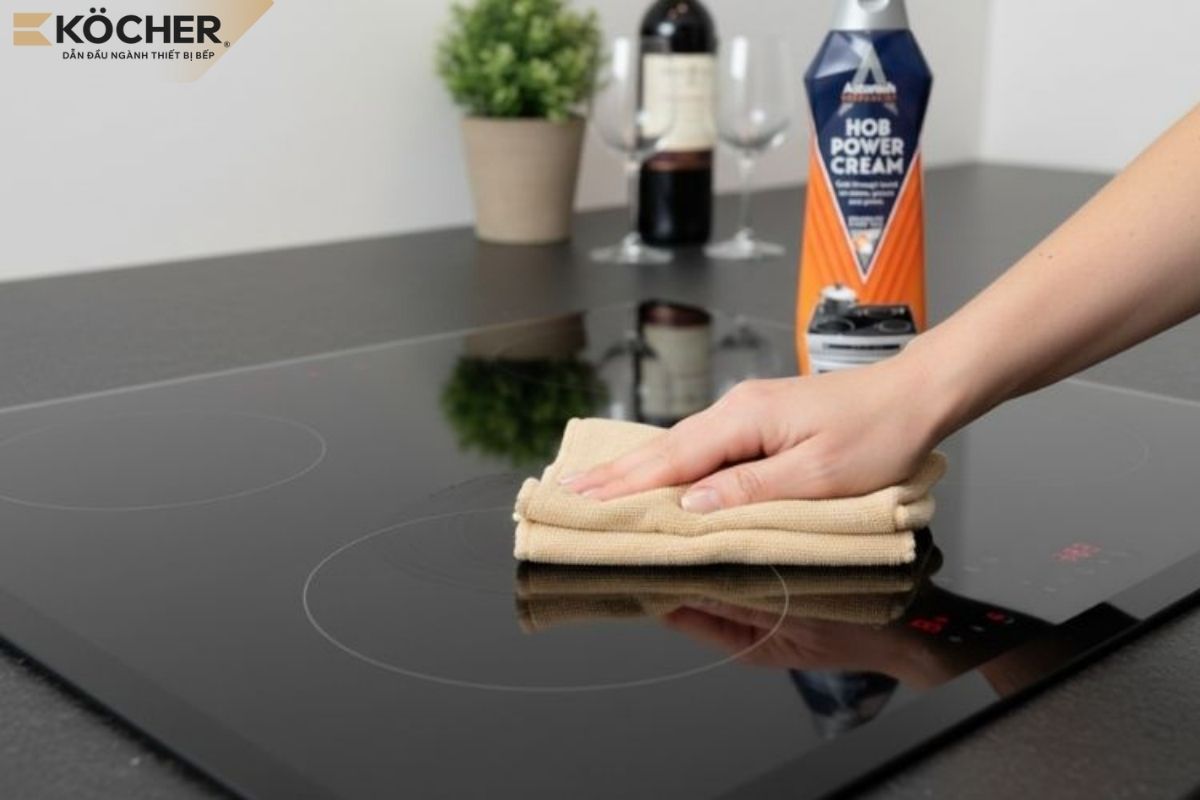 Use a soft cloth and do not scrub too hard when cleaning the induction cooktop glass
X-Nano Induction Cooktop – 5 times scratch-resistant solution, always with a 10-year glass warranty
Köcher positions itself as a brand developing induction cooktops in the German spirit with the philosophy of “Smart Design – Easy Cooking.” Instead of showcasing features, Köcher focuses on technical standards and minimalist design to optimize the real experience. This is the result of researching the core values that modern users prioritize: ease of use, durability, safety, and long-term efficiency.
The X-Nano induction cooktop line such as X-NANO 9, X-NANO 8 Plus, X-NANO 8, X-NANO 7, X-NANO 6 PLUS, X-NANO 6 PRO, X-NANO 6… is a testament to this breakthrough with outstanding advantages:
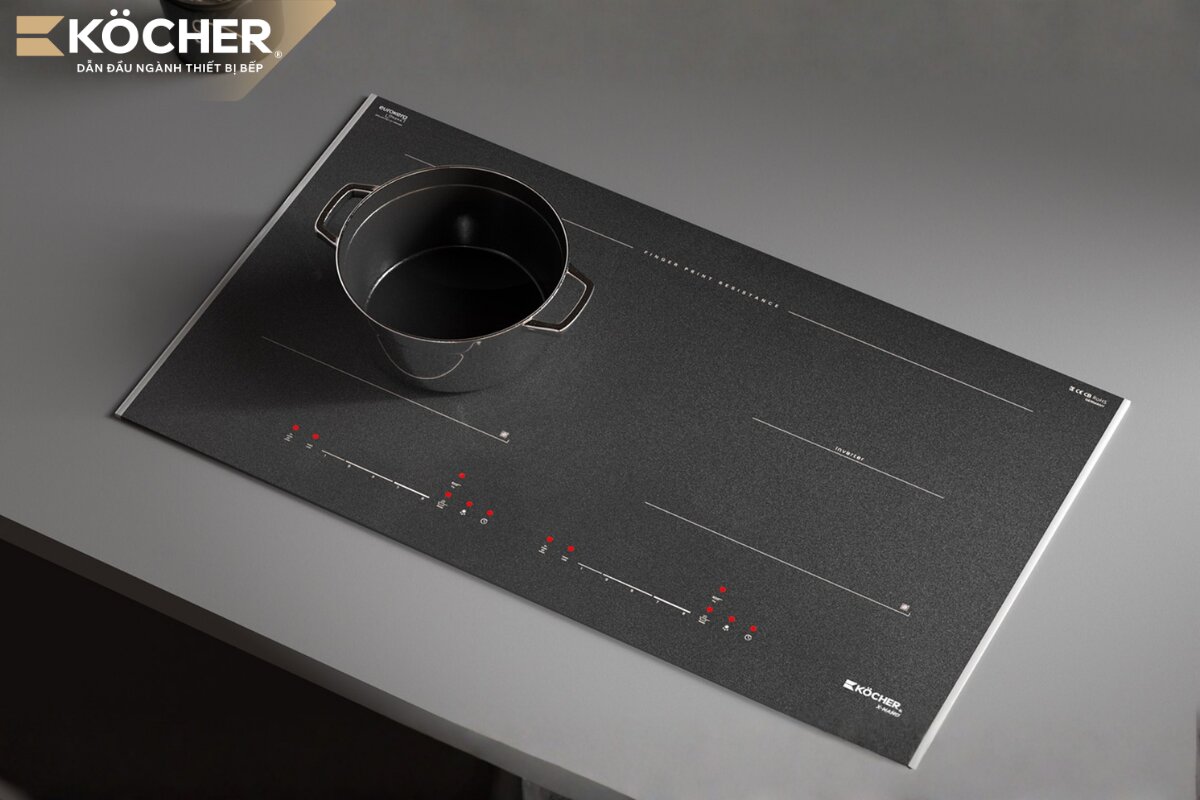
- 5 times scratch-resistant: The matte surface structure along with the 5-layer X-Nano crystal structure helps reduce friction and direct contact area, minimizing scratches even during strong impacts.
- Secure pot placement: The ultra-fine textured structure creates stable friction, helping pots and pans stay firmly in the heat center, without slipping or shaking even when boiling vigorously or stirring.
- High heat and thermal shock resistance: The glass surface is stable at 750°C and thermal shock resistant up to 250°C, ensuring safe, durable operation without deformation or cracking due to sudden temperature changes.
- Reduces fingerprints and stains: The nano crystal structure helps reduce oil adhesion, combined with multi-directional light scattering to “hide” fingerprints, keeping the cooktop always clean and elegant.
- Glare reduction, easy observation: The light absorption mechanism helps reduce reflection by up to 80%, eliminating glare under high-intensity lights, making it easy for users to locate the cooking area and control panel.
- Quick and easy cleaning: The matte glass surface prevents oil from spreading, just a light wipe within 30 seconds is enough to make it shine, reducing cleaning time by 2 times compared to ordinary glossy glass.
Hopefully, the information above has helped you answer the question of whether the induction cooktop is easy to scratch, while also understanding the causes and effective ways to handle scratches at home. We hope these insights will help you choose the right cooktop and always keep the surface shiny and beautiful over time!
|
Köcher induction cooktops pioneer German technology – For detailed product information, please contact:
|