Induction cookers and infrared cookers differ mainly in their heating mechanisms, leading to differences in pot types, efficiency, and applications. Many families are confused when faced with the choice between induction and infrared cookers.The following article will analyze each criterion in detail to help you make the most suitable choice for your family’s needs.
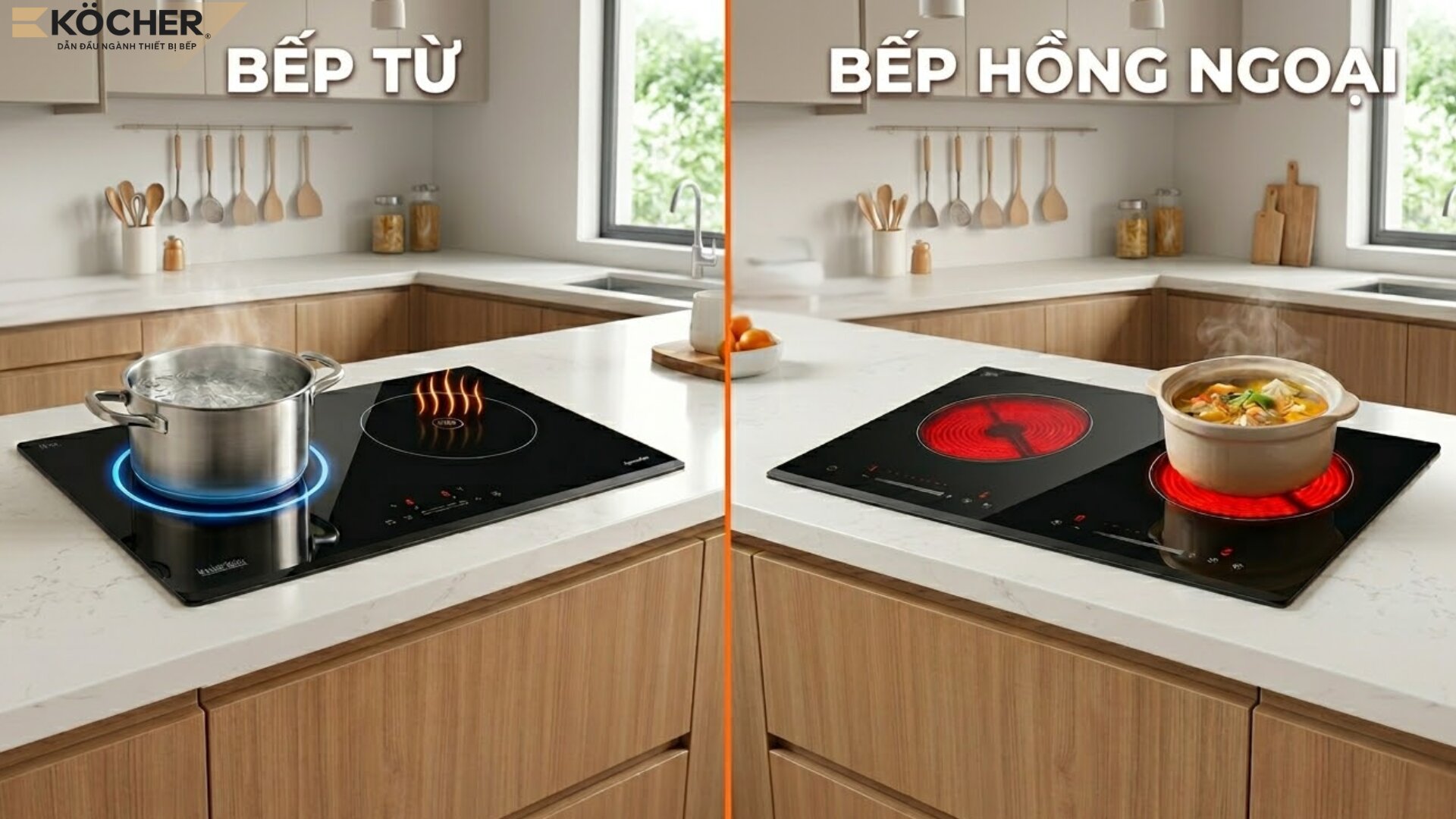
Below is an overview table of the differences between induction cookers and infrared cookers:
| Criteria | Induction Cooker | Infrared Cooker |
| Operating Principle | Copper coils create a fluctuating magnetic field, affecting the ferromagnetic base of the pot to generate heat directly at the pot. | Uses carbon wires or halogen bulbs to heat the cooktop, transferring heat to the pot. |
| Energy Efficiency | Achieves about 90 – 95%. Heat is concentrated directly at the pot’s base, with almost no loss to the environment. | Achieves about 60 – 70%. Heat warms the glass surface before transferring to the pot, resulting in significant heat loss. |
| Cooking Speed | Very fast (boiling 1 liter of water takes only about 2 – 3 minutes). | Slower (boiling 1 liter of water takes about 5 – 7 minutes) due to the time needed to heat the glass surface and the pot. |
| Safety | Very high. The cooktop does not get hot (or only slightly hot due to heat reflection from the pot), and it automatically shuts off when there is no pot. | Average. The glass surface gets very hot during cooking and remains hot after cooking (with residual heat warning), posing a burn risk if touched. |
| Cleaning Ability | Easier to clean due to the cooktop cooling quickly and food spills not burning. | Harder to clean, food that falls onto the hot glass will burn and stick, requiring special tools to clean. |
| Operating Costs | More energy-efficient due to high efficiency, about 107,000 – 140,000 VND with a 2000W cooker in one month | More electricity consumption than induction cookers due to lower efficiency and longer cooking times, about 300,000 – 380,000 VND with a 2000W cooker in one month |
Operating Principle (the biggest difference)
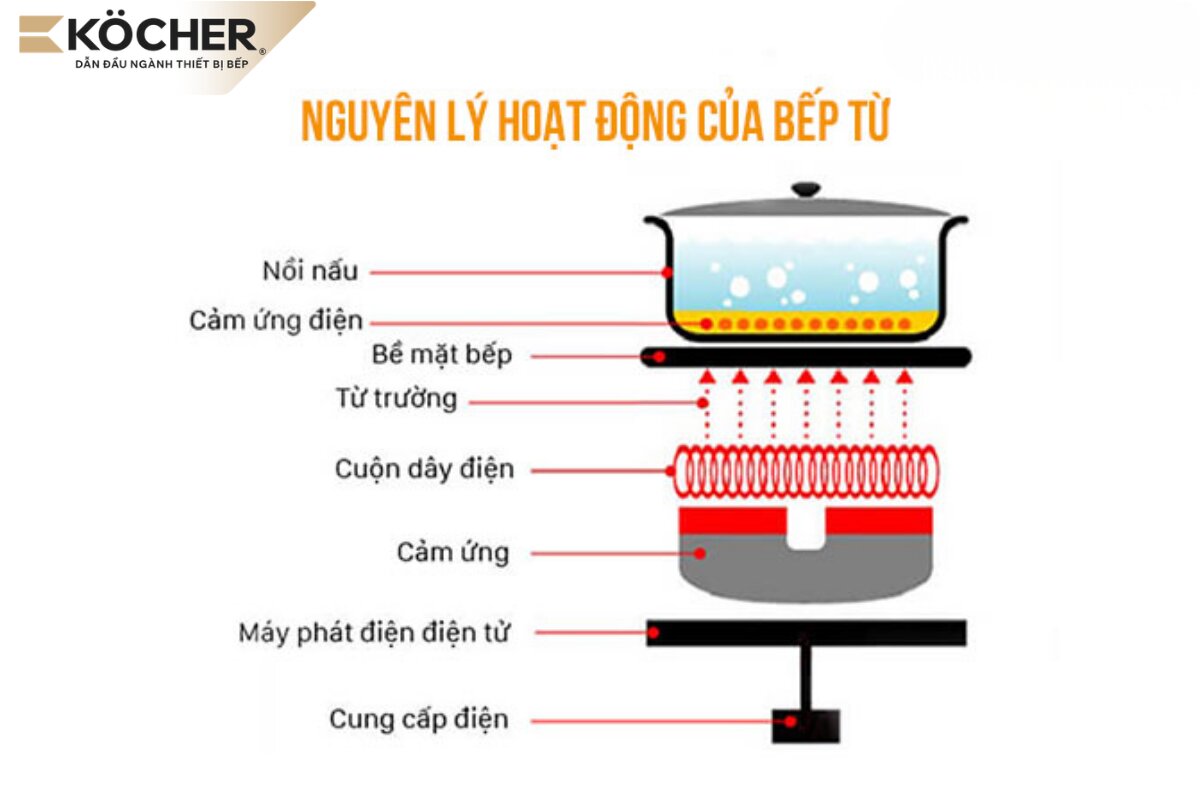
Induction cookers operate on the principle of electromagnetic induction, generating heat directly at the pot’s base. In contrast, infrared cookers operate based on thermal radiation, transferring heat indirectly through the glass to the pot’s base:
- Induction Cooker: Operates on the principle of electromagnetic induction. The copper coil under the glass creates a fluctuating magnetic field, stimulating eddy currents in the ferromagnetic base of the pot and generating heat only at the pot’s base.
- Infrared Cooker: Infrared cookers operate based on the thermal radiation of infrared rays. Instead of using a magnetic field like induction cookers, infrared cookers use electrical energy to heat internal components, generating heat that is transferred directly to the pot’s base.
Efficiency
The efficiency of converting electrical energy into useful thermal energy is a criterion that directly reflects the level of savings and cooking speed of each type of cooker.
- Induction Cooker: Efficiency reaches about 90 – 95% because the heat is generated right at the pot’s base, with almost no loss to the surrounding environment. This is why induction cookers boil water significantly faster than traditional cookers.
- Infrared Cooker: Efficiency only reaches about 60% because the heat must go through an intermediary step of heating the glass surface before transferring to the pot. The heat lost to the surrounding air is considerable, causing the kitchen to be hotter when in use.
Power Consumption
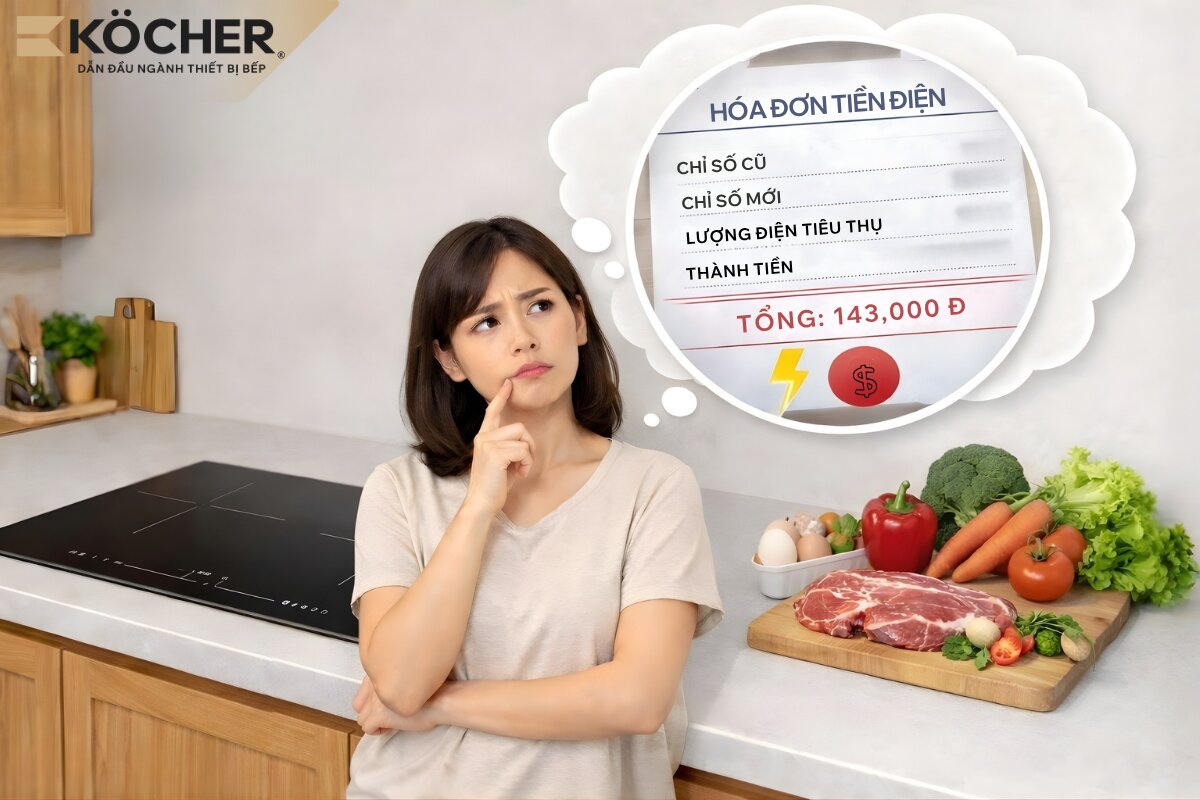
Thanks to superior efficiency, induction cookers consume less electricity than infrared cookers to complete the same cooking tasks. To thoroughly answer the question Do infrared cookers consume more electricity than induction cookers?, let’s look at the actual numbers below:
- Infrared Cooker: Due to lower efficiency, electric cookers need to consume more electricity to reach the same temperature. With daily cooking habits, the electricity cost from electric cookers usually ranges from 300,000 – 380,000 VND with a 2000W cooker in one month.
- Induction Cooker: Thanks to high efficiency, induction cookers consume significantly less electricity than electric cookers, only about 107,000 – 140,000 VND with a 2000W cooker in one month.
Type of Pot Used
This is one of the most practical factors that cooker buyers need to consider, especially when they already have a set of pots and pans at home.
- Induction Cooker: Only works with pots that have a ferromagnetic base (can be attracted by a magnet). Types of 430 stainless steel, cast iron, or ferromagnetic base pots can be used. Aluminum, regular glass, ceramic pots, and 304 stainless steel pots without a ferromagnetic base cannot be used on induction cookers.
- Infrared Cooker: Compatible with most types of pots and pans, including aluminum pots, clay pots, heat-resistant glass pots, or ceramic pans. This is a significant advantage of infrared cookers for families that do not want to replace their old cookware.
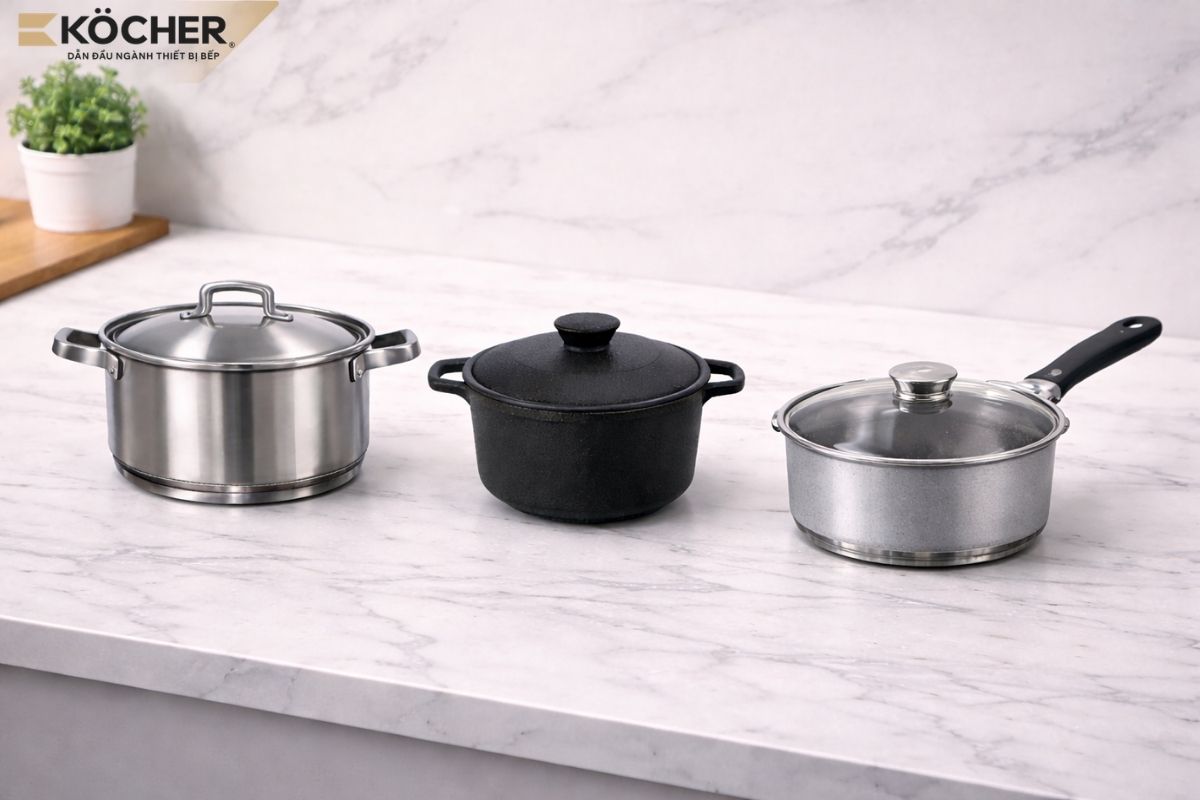 Induction cookers can only use pots with ferromagnetic bases, cast iron pots, and aluminum alloy pots.
Cleaning Ability After Cooking
The flat glass surface of both types of cookers gives a feeling of ease in cleaning, but the actual cleaning experience differs quite a bit.
- Induction Cooker: Because the glass surface does not get hot directly, food spills do not burn onto the cooktop. Therefore, you only need to use a damp cloth to wipe lightly, and the surface will be clean and shiny, without the need for scraping tools or special solutions for regular stains.
- Infrared Cooker: The glass surface gets very hot during cooking, and food splatters will burn and stick tightly to the surface. To thoroughly clean, users need to wait for the cooker to cool down completely, then use a specialized cleaning solution combined with a scraping tool for the glass surface, which takes significantly more time.
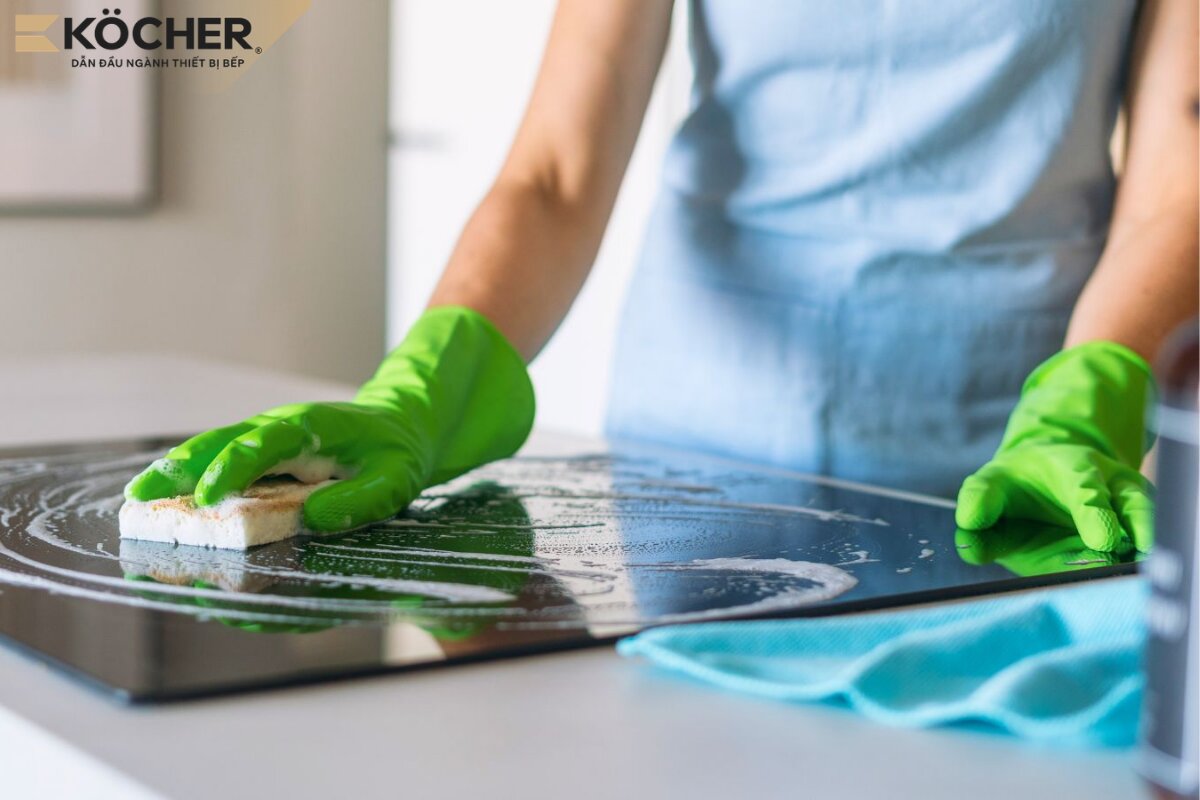 The glass surface of induction cookers is cleaner because food that falls onto the cooktop is less likely to burn.
Durability of Components
The lifespan of the cooker depends significantly on the operational characteristics and working temperature of the internal components.
- Induction Cooker: Important components such as IGBT and copper plates operate at lower temperatures because thermal energy is not concentrated on the glass. Induction cookers are equipped with a cooling fan system and temperature sensors to actively protect the circuit board, helping to extend the lifespan of the components.
- Infrared Cooker: Carbon heating wires or halogen bulbs are the main consumable components, enduring high temperatures continuously during each use. These components tend to age faster over time and often need to be replaced after 3 – 5 years of regular use.
Safety
Safety is a top priority, especially for families with young children or elderly individuals.
- Induction Cooker: The glass surface only gets slightly warm due to heat reflection from the pot’s base, not because the cooker directly heats the glass surface. The cooker automatically shuts off when it does not detect a pot on the cooktop, reducing the risk of burns and explosions. This is a safer choice for families with children or elderly individuals who may forget to turn off the cooker.
- Infrared Cooker: The glass surface reaches very high temperatures (possibly over 400 degrees Celsius) during cooking and retains heat for a while after being turned off. Most infrared cookers are equipped with residual heat warning lights; however, the risk of burns from accidentally touching the cooktop is still higher compared to induction cookers.
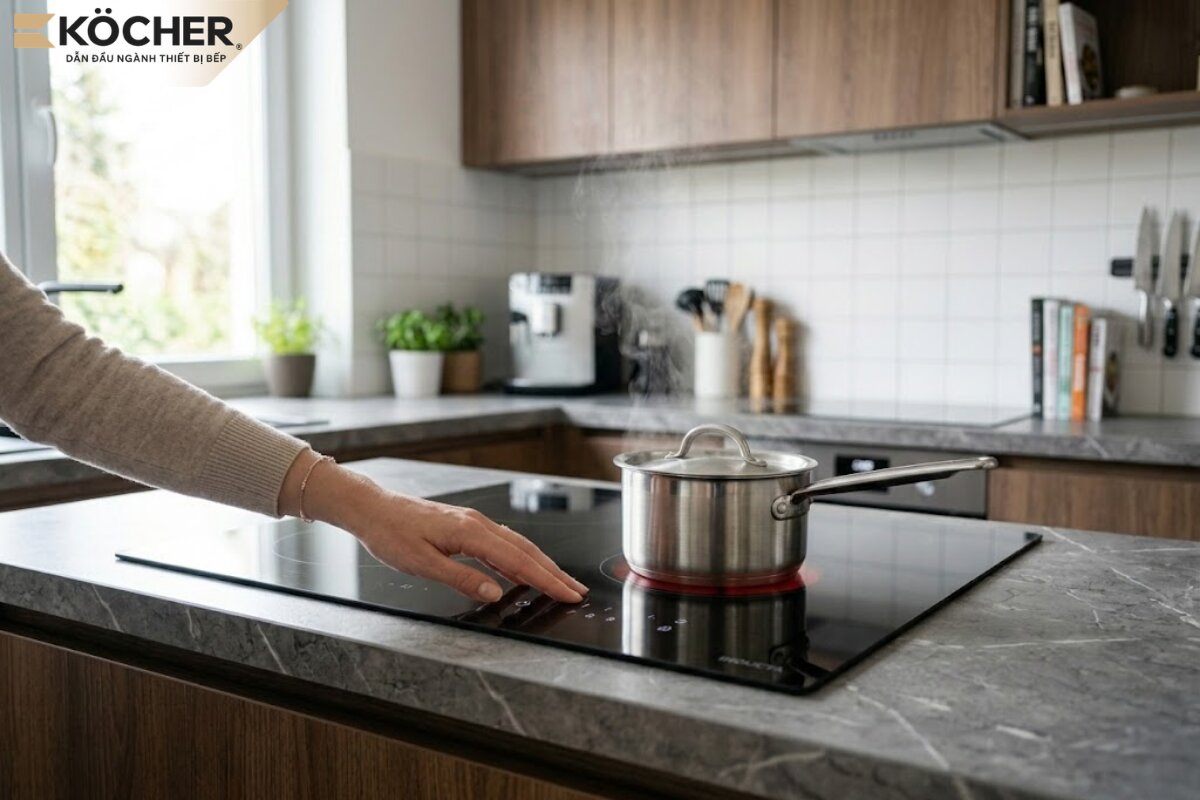 Infrared cookers heat the glass surface, posing a burn risk when accidentally touching the cooktop.
Cost of Buying a Cooker
The initial investment price is a factor that many people consider first when choosing between the two types of cookers.
- Induction Cooker: The common selling price ranges from 1 – 20 million VND depending on the brand and features. Mid-range induction cookers with good quality components usually range from 5 – 10 million VND, suitable for most family budgets.
- Infrared Cooker: Usually has a lower starting price, from 500,000 – 10 million VND. This is an advantage in terms of initial investment costs; however, it is necessary to consider electricity costs and component replacement costs in the long run to compare total ownership costs.
Operating Costs
The monthly operating costs of induction cookers can be significantly lower than those of infrared cookers:
- Induction Cooker: Although the initial purchase cost may be higher, the monthly electricity cost is lower due to superior efficiency. Additionally, induction cookers have fewer component failures, resulting in lower repair and maintenance costs throughout the product’s lifespan.
- Infrared Cooker: Higher electricity costs due to lower efficiency, plus the cost of replacing heating wires or halogen bulbs over time. The total operating cost over 5 – 7 years is usually higher compared to induction cookers in the same segment.
Aesthetic Space
In terms of appearance, both types of cookers have modern, luxurious designs with flat glass surfaces. However:
- Electric Cooker: Usually has a red heating element when operating, creating a warm feeling, but over time it can easily leave stains on the glass surface if not cleaned promptly.
- Induction Cooker: The glass surface is cleaner because the lower heat at the surface means food that falls onto the cooktop is less likely to burn, making it easier to clean and maintain its shine longer.
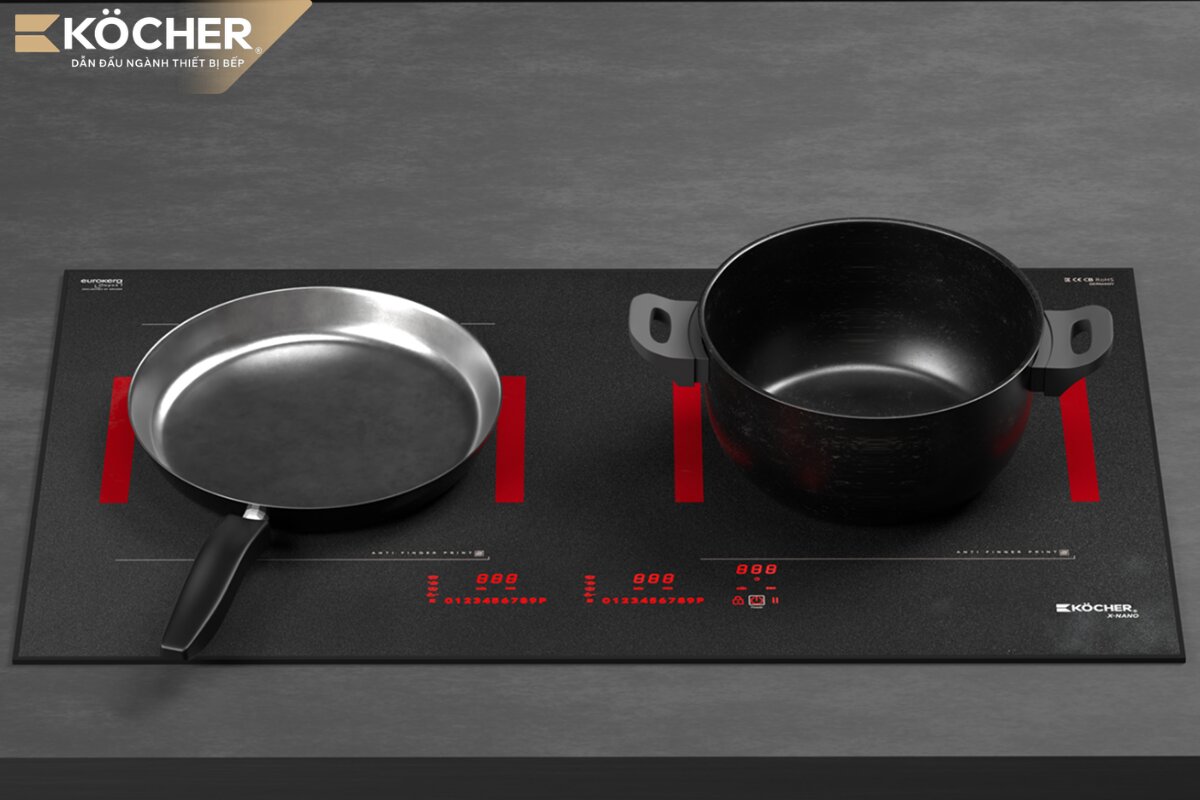 Induction cookers are more suitable for modern, minimalist kitchen spaces.
Should You Choose an Induction Cooker or an Infrared Cooker for Your Family?
Overall, induction cookers excel in efficiency, safety, and long-term electricity savings, while infrared cookers offer more flexibility in the types of pots used and have lower initial investment costs. Below is a brief suggestion to help you make a decision on which type of cooker is suitable for your family:
- Choose an Infrared Cooker if: You want to utilize your entire existing set of pots and pans (aluminum, ceramic, glass), frequently fry or grill at high temperatures, and the initial investment budget is your top priority.
- Choose an Induction Cooker if: You want to cook quickly, save electricity in the long run, ensure safety for children and elderly individuals in the house, and do not mind investing in compatible pots and pans.
- Consider a Combination Induction Cooker: If you are unsure whether to buy a combination induction and infrared cooker, then this integrated product line (1 induction zone and 1 infrared zone) is an optimal and flexible solution worth considering for families with diverse cooking needs.
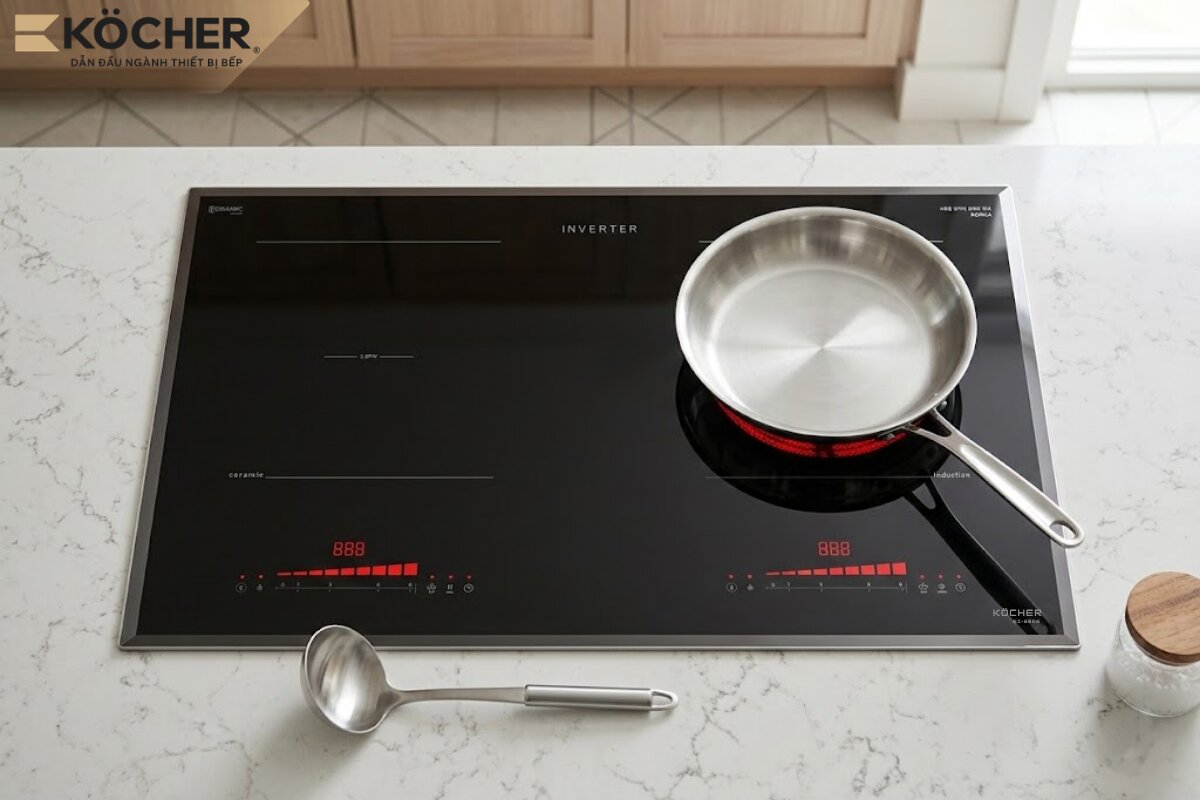 Choose a combination induction cooker when you want to take advantage of the benefits of both types of cookers.
We hope this article has helped you understand the differences between induction and infrared cookers based on specific criteria. As we enter a new technological phase, finding optimal cooking solutions for your family through the guide Latest 2026: Should you use a gas cooker or an induction cooker? The economic equation and 4 golden criteria will provide you with a comprehensive perspective to make an informed purchasing decision. Each type of cooker has its own strengths; the important thing is to correctly understand your family’s actual needs to choose the appropriate equipment, ensuring durability and optimal performance in your kitchen.
As a leading brand in the kitchen equipment industry, along with E.G.O standard German components and a super quiet fan design, Köcher proudly offers durable and safe cooking equipment for your family.
|
Köcher induction cookers pioneer German technology – For detailed product information, please contact:
|