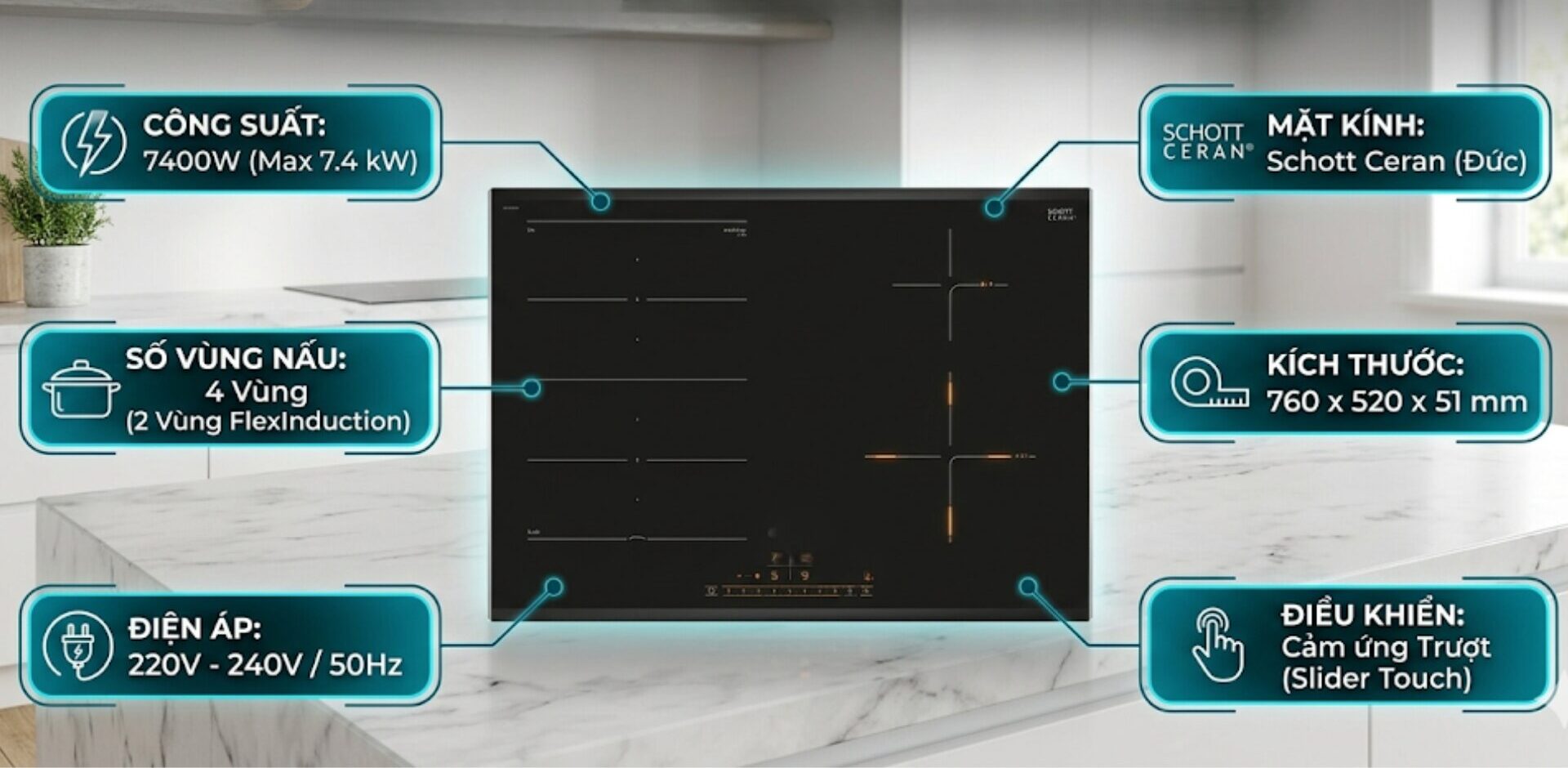
Electric cookers (including induction and infrared cookers) are fundamentally composed of a heat-resistant glass surface, heating elements, cooling fans,…. However, there will be slight differences between the two types of induction and infrared cookers. This article will delve into the details of each component that makes up a standard electric cooker, helping you gain the most comprehensive overview before making a purchase decision.
Cooktop Glass
The glass surface is the part that directly contacts the bottom of pots and pans and is also a key factor determining the aesthetic appeal of the product.
- Material: Typically made from specialized glass types such as Schott Ceran (Germany), EuroKera (France), or heat-resistant ceramic glass. These types of glass have good impact resistance and can withstand thermal shock up to 700°C – 1000°C. If users accidentally spill sugar or food that sticks for a long time creating black stains, learning about How to handle a burned electric cooktop with specialized cleaning solutions or glass scrapers will help restore the surface to a shiny, like-new condition without scratching the glass.
- Main function: Protects the internal components, completely insulates the user, and makes cleaning after cooking easier.
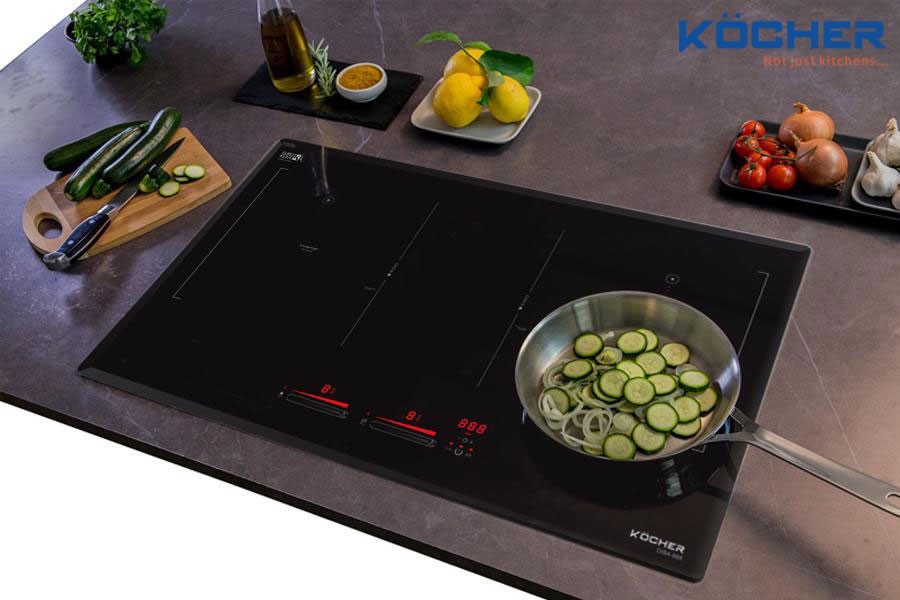
The electric cooktop glass directly contacts the bottom of pots and pans
Heating Element/Induction Coil
This is where electrical energy is converted into thermal energy, generating heat for the electric cooker. This is the core difference between induction and infrared cookers.
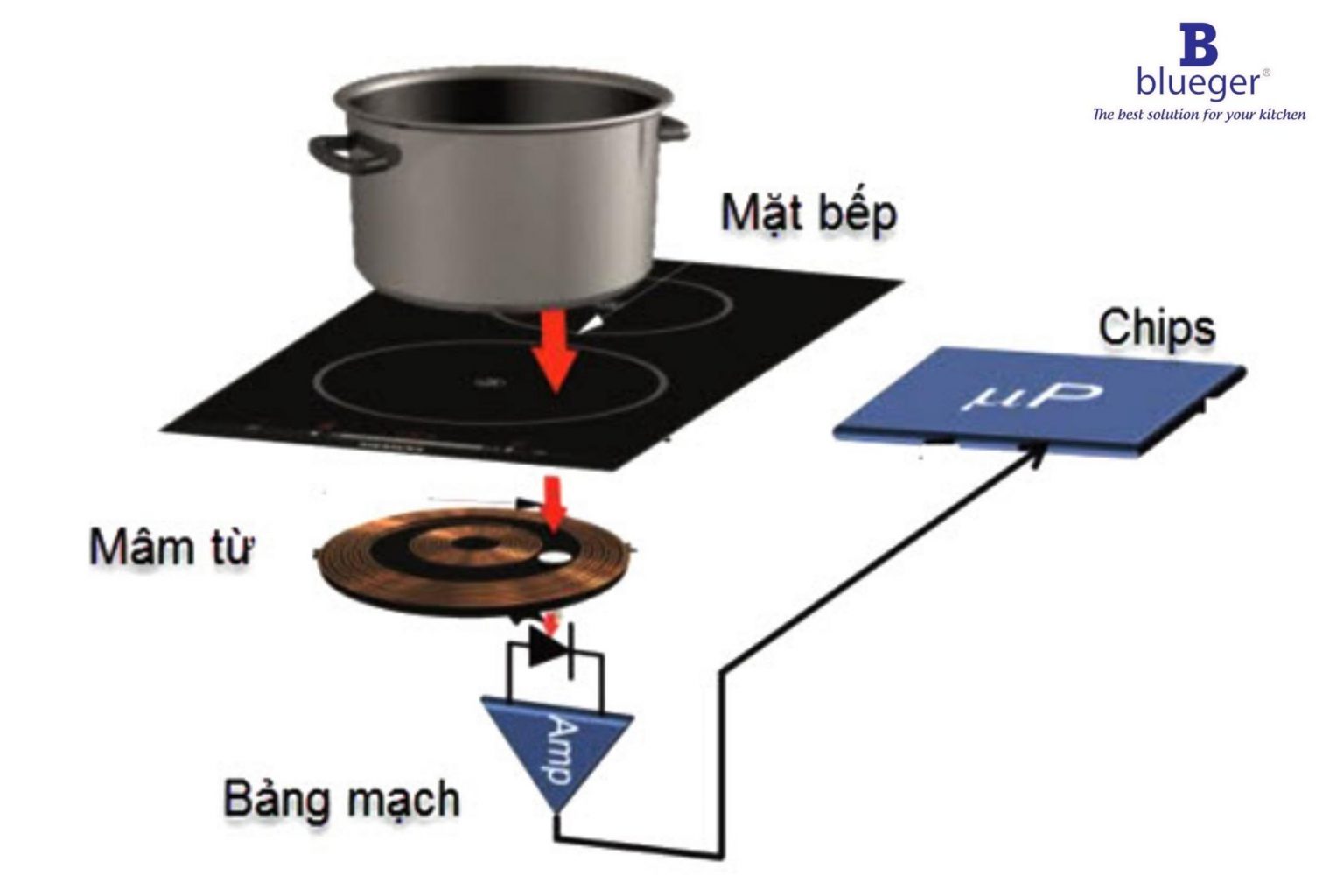
- Induction coil of induction cookers: uses a copper coil located beneath the glass surface, creating a variable magnetic field. It only heats the bottom of ferromagnetic pots directly, the cooktop does not heat or only heats slightly due to heat from the pot being transferred back.
- Heating element of infrared cookers: previously often used halogen bulbs or heating wires, but now uses super durable carbon wires, certified by experts to have a lifespan of up to 8000 hours (about 21 years) for heating.
The difference between the two types of induction coils and heating elements makes the functions of induction and infrared cookers clear:
- Induction Cooker: Heats the bottom of the pot directly through the magnetic field, the glass surface does not heat or heats very little due to heat from the pot being transferred back. And it can only cook with pots that have a ferromagnetic bottom.
- Infrared Cooker: Heats the heating element first, then transfers heat through the glass surface to heat the pot, so the glass surface gets hot, and it can cook with all types of pots.
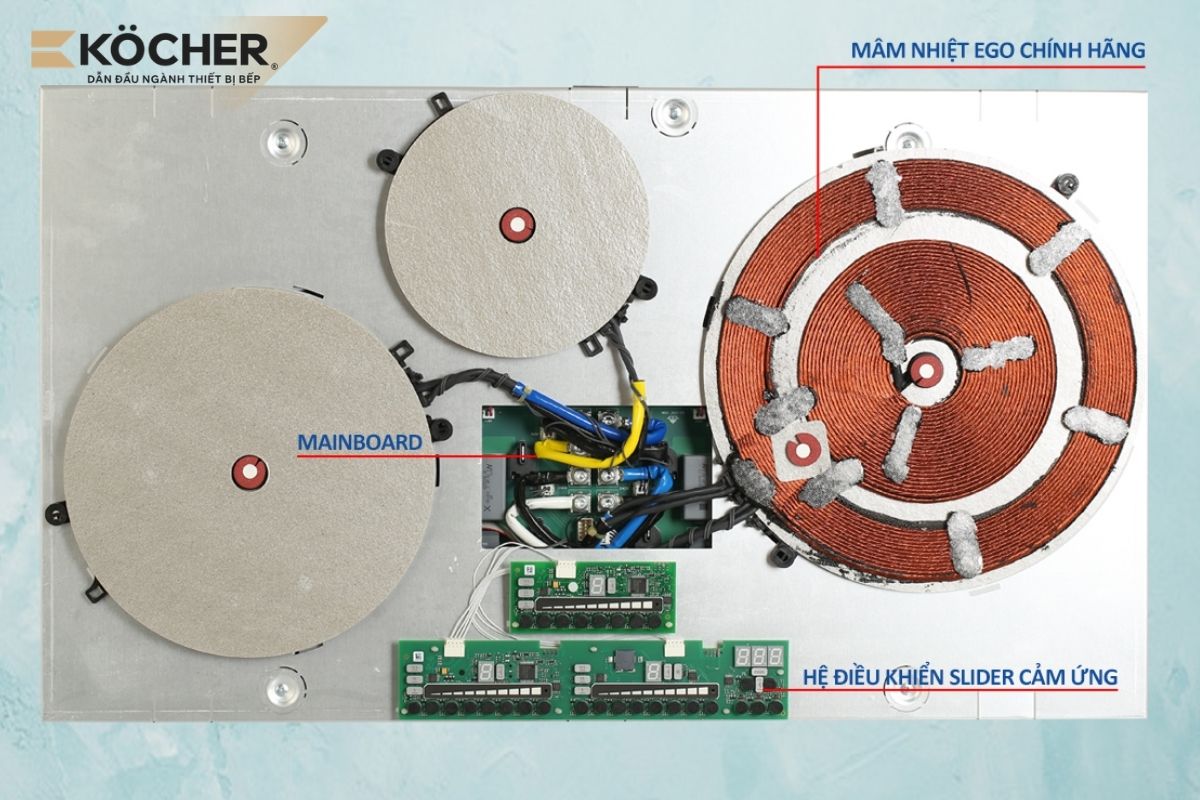
The induction coil of induction cookers differs from the heating element of infrared cookers
Electronic Circuit Board
The circuit board is the central control unit, determining the intelligence and efficiency of the cooker. The circuit board receives signals from the user, processes temperature and current sensors, and distributes energy to the heating element. A good circuit board (like the E.G.O board) will help the cooker operate stably, save energy, and extend the lifespan of the device.
Cooling Fan (Cooling System)
Inside the electric cooker, a large amount of heat is generated from the electronic components during operation. The cooling fan helps circulate air, pushing hot air from inside out through the heat vents on the cooker body. This helps:
- Protect components: capacitors, ICs, and circuit boards from overheating, leading to fire or damage.
- Ensure user safety: prevents the cooker surface from becoming too hot, causing burns to users.
- Save energy: properly cooled components will help the electric cooker operate more efficiently, saving energy and electricity costs.
Control Panel (User Interface)
Most modern cookers use a touch control panel (Touch or Slide) or physical buttons. This panel allows users to adjust power, temperature, set timers, and smart cooking modes (Booster, Inverter, child lock). The sensor under the glass surface will detect changes in capacitance from the finger to execute commands.
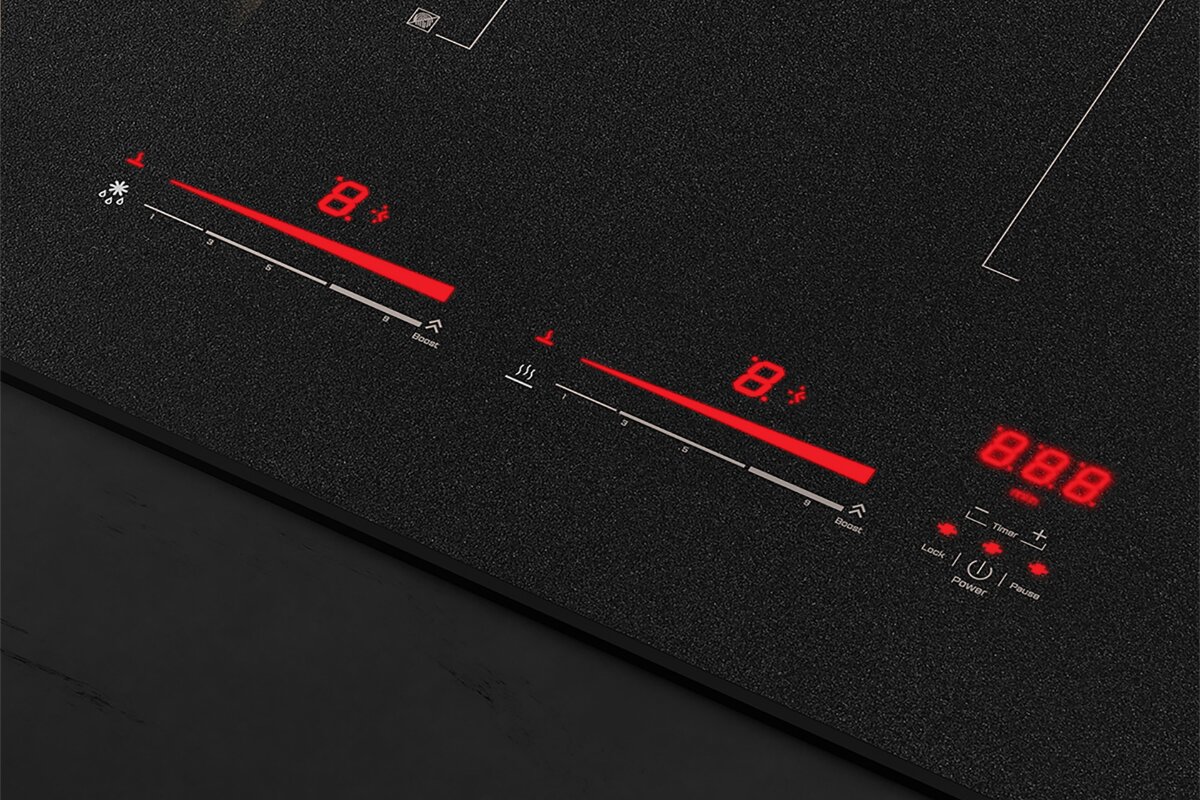
The control panel allows users to operate easily
Body and Base of the Cooker (Outer Frame)
This is the outer frame that encloses all the components beneath the glass surface. Typically made from powder-coated steel or high-quality fire-resistant plastic. This outer frame is designed based on the installation standards of each space, helping consumers understand the structure of what built-in electric cookers are with the entire base being recessed under the countertop, providing a neat and aesthetically pleasing appearance. The body of the electric cooker helps support the glass surface, protects components from external environmental impacts (moisture, insects), and is where the cooling fan and power cord are installed.
Hopefully, through this article, you will understand the structure of electric cookers – a unified system from the glass surface, heating element to the control circuit board. Understanding these components helps you identify which cookers use high-quality components (like E.G.O heating elements, Schott glass) for maximum durability, and helps quickly identify faults when the cooker encounters issues.
If you are looking for high-quality induction cookers, please refer to the induction cookers and electric induction cookers from Köcher. As a leading brand in the kitchen appliance industry, Köcher is proud to be a pioneer in Vietnam bringing German technology into induction cookers, providing durable and high-class cooking solutions for your family, with superior scratch-resistant X-Nano glass technology and E.G.O standard German components.